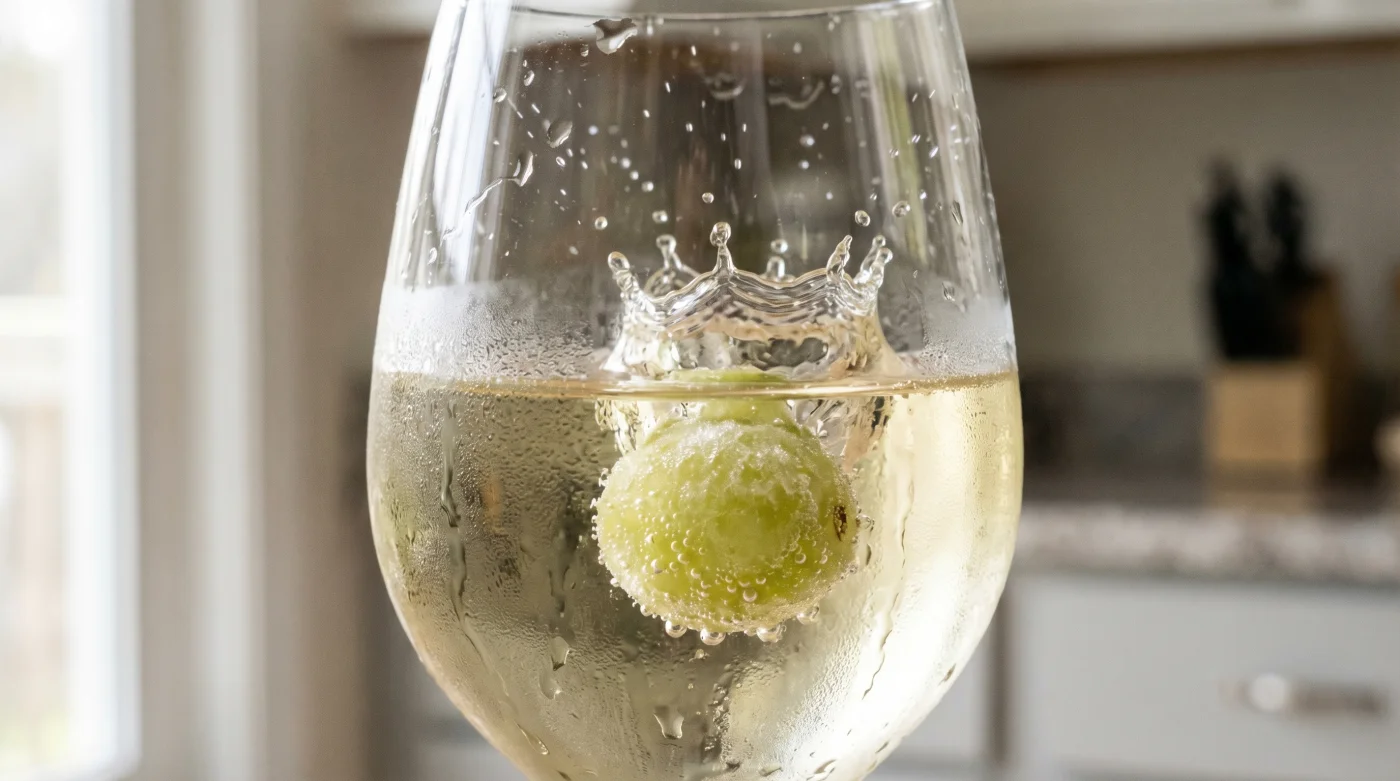
The evening air carries that familiar, heavy warmth of a Canadian July. You have a bottle of Sauvignon Blanc resting on the kitchen island, a bright vintage brought back from the Okanagan, but life got busy and you forgot to put it in the fridge. You pour a splash, and the glass feels tepid against your palm, the bright citrus notes muted by the room temperature.
Ice is a quiet thief, stealing the very essence of the wine you paid good money for. You toss in a cube, and within five minutes, your crisp vintage tastes like faintly grape-flavoured water. Or worse, you wrap the bottle in a wet paper towel and shove it in the freezer, pausing the entire evening as you wait by the hum of the appliance.
There is a quieter, more elegant rhythm to fixing this common kitchen disaster. It sits in your crisper drawer right now, waiting to be repurposed. The simple swap of dropping frozen grapes into warm wine bypasses the dilution entirely, preserving the integrity of the drink.
Nature provides its own casing, locking the water inside a taut skin that refuses to leak. You simply drop them in the glass, and they chill the liquid without watering it down, keeping you at the table instead of pacing the kitchen.
Reimagining the Thermal Battery
We often think of chilling a drink as a destructive process. We add something foreign to lower the temperature, accepting the collateral damage of a watered-down finish. But when you look at a grape, you are looking at a closed-loop system. It is a vessel of water, sugar, and natural acids wrapped in a biologically perfect, waterproof barrier.
Acting like tiny thermal batteries, these fruits absorb the ambient heat of the wine while keeping their own liquid trapped inside. It shifts your perspective from fighting the warm wine to working with it. You are no longer diluting a masterpiece; you are simply introducing it to its frozen cousins. This mundane detail—keeping a bag of grapes in the icebox—becomes a major advantage when unexpected guests arrive.
A Niagara Sommelier’s Secret
Meet Clara, a 34-year-old sommelier managing a bustling estate tasting room in Niagara-on-the-Lake. During a particularly brutal heatwave last August, the main commercial cooler tripped a breaker right before a rush of afternoon tours. With two dozen people waiting on a crisp Chardonnay, she did not panic or reach for the ice bucket.
She relied on the simple swap, a trick passed down from her grandmother. Clara opened the staff freezer, pulled out three large freezer bags of green seedless grapes, and dropped a handful into every glass before pouring the tepid wine over them. Within three minutes, the temperature dropped beautifully. The guests thought it was a creative garnish; Clara knew it was a rescue mission that saved the afternoon.
Tailoring the Chill to the Pour
Not all grapes behave the same, and not all wines demand the same aesthetic. The beauty of this method lies in how easily you can customize it to the bottle you are opening. It is a flexible system that adapts to your pantry.
For the crisp white purist: Stick to green seedless grapes. Their skin is thin, their colour blends seamlessly with a Pinot Grigio or Sauvignon Blanc, and they do not distract the eye. They simply do their job at the bottom of the glass, maintaining the pale, straw-like hues of the pour.
For the patio Rosé enthusiast, consider switching to red globes or frozen dark cherries. The slightly thicker skins hold up well to the gentle swirl of the glass, and the blushing colour perfectly complements the pink tones of the wine. It adds a visual weight to the drink that feels intentional and summery.
For the bold red traditionalist: While we rarely want a freezing cold Cabernet, a warm summer room can push a red past its ideal serving temperature of 16 degrees Celsius. Dropping two frozen red grapes into a glass of warm Pinot Noir pulls the heat out just enough to restore its structure, without shocking the wine into bitterness.
The Simple Swap in Practice
Executing this technique requires no special tools, just a brief moment of forethought after your weekly grocery run. It is a mindful, minimalist action that pays dividends when you need it most. Wash your grapes thoroughly, pluck them from the stems, and dry them completely with a clean towel before they ever see the cold.
Moisture invites the frost over, which will melt into your wine and defeat the purpose. Place the dry grapes in a single layer on a parchment-lined baking sheet and freeze them solid before transferring them to an airtight bag. This stops them from fusing into a massive, unusable block of fruit.
- Ensure the freezer is set to exactly -18 Celsius for a deep, hard freeze.
- Drop 4 to 5 grapes into a standard 5-ounce pour of wine.
- Swirl the glass gently by the stem for roughly 3 minutes to encourage thermal exchange.
- Leave them in the glass while you drink; they will act as cold stones for up to 30 minutes.
Your tactical toolkit is minimal. A standard freezer bag, a baking sheet, and the discipline to let them freeze for at least four hours. Once prepared, they sit patiently next to the frozen peas, ready to deploy at a moment’s notice.
Preserving the Evening’s Rhythm
There is a profound peace of mind in knowing you are always prepared for a small disaster. A warm bottle of wine is not a tragedy, but it is an interruption. It breaks the flow of a good story, forces someone to play bartender, and adds friction to what should be a relaxed moment.
Mastering this mundane pantry hack ensures you never have to choose between a compromised drink and a long wait. You simply drop the fruit in the glass, watch the condensation form, and pick up the conversation exactly where you left off. It is a quiet assertion of control over your environment, proving that the best solutions are often the most natural ones.
The mark of a truly hospitable home is not the absence of mistakes, but the grace and speed with which they are corrected right in front of the guest.
| Key Point | Detail | Added Value for the Reader |
|---|---|---|
| The Ice Problem | Melts rapidly, diluting the wine’s acid and sugar balance. | Avoids ruining expensive or cherished bottles with tap water. |
| The Simple Swap | Frozen grapes act as sealed thermal batteries. | Chills the liquid by several degrees in minutes without watering it down. |
| The Freezer Wait | Placing a bottle in the freezer takes 45+ minutes to chill safely. | Keeps you in the room with your guests instead of waiting on an appliance. |
Frequently Asked Questions
Will the grapes alter the flavour of my wine?
No. Because grape skins are naturally waterproof and the fruit is frozen solid, they do not release juice into the glass unless you intentionally crush them. They act purely as chilling stones.Can I eat the grapes afterward?
Yes, and they are arguably the best part. Once you finish the glass, the grapes will have thawed slightly, absorbing just a hint of the wine’s aroma on their skin. They make a fantastic palate cleanser.How many grapes do I need for a full bottle?
If you are trying to chill a full 750ml bottle in a decanter or pitcher, you will need about two cups of frozen grapes. However, it is much faster and more efficient to chill the wine glass by glass.Do I need to wash them before freezing?
Absolutely. You must wash them to remove any agricultural residue, but it is equally vital to dry them completely. Any water left on the outside will turn to ice and melt into your drink.Does this work for other beverages?
It works beautifully for cocktails, sparkling water, and iced tea. Anywhere you want to drop the temperature without risking the slow, steady dilution of melting ice cubes.