The rhythmic bubbling of starchy pasta water rolling at a steady 100 degrees Celsius is a deeply comforting sound in any Canadian kitchen. You turn your back for a mere moment to mince a single clove of garlic, momentarily distracted by the sharp, familiar scent of allium hitting the scarred surface of your maple cutting board. The air is thick with the promise of a hearty meal.
Then comes the sudden, unmistakable disruption. You hear the frantic hissing of foam cresting the lip of your heavy stainless-steel pot, cascading rapidly down onto the hot red coils of the electric stove. The bitter, acrid smell of scorched starch instantly fills the room, demanding your immediate, undivided attention and pulling you away from the delicate prep work.
The standard domestic reaction is pure panic, culminating in a mad dash across the floor to drag the heavy, spitting pot to a cool element before the mess solidifies into a permanent crust. Yet, professional kitchens rarely suffer this chaotic fate during service, relying instead on a quiet, unassuming implement currently resting silently in your utensil drawer.
The Thermodynamics of Wood
We are conditioned to believe that managing a rolling boil requires constant vigilance and a hand perpetually hovering over the stove dial. This is a myth born of misunderstanding the physical properties of the liquids we cook with every single day. The true solution involves fundamentally shifting your approach from reactive panic to passive control, allowing basic physics to stand guard.
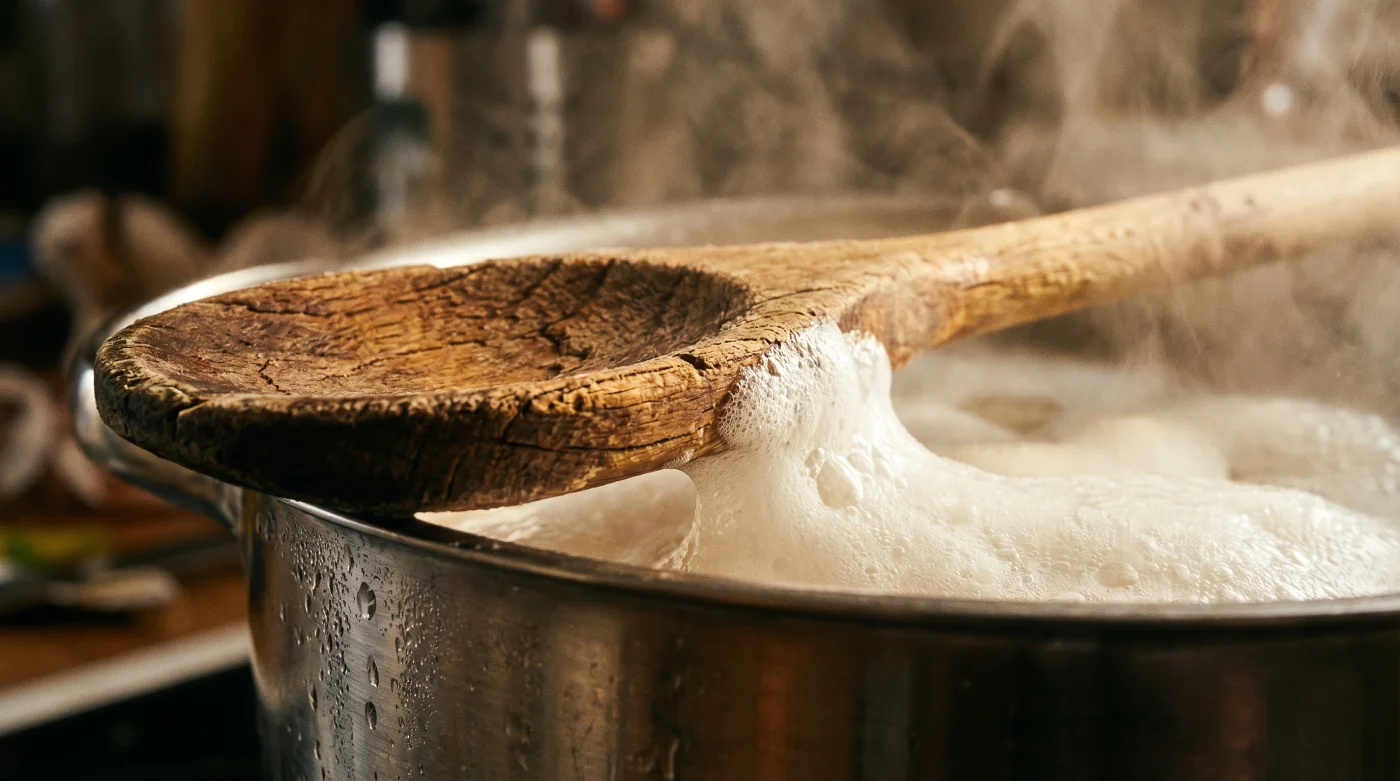
Placing a long wooden spoon entirely across the rim of your pot directly breaks the surface tension of the rising starch bubbles. Think of the thick, boiling foam as a dense collection of tightly wound balloons, and the wooden utensil as a cool, highly porous needle laying in wait at the very top of the pot.
Because wood is naturally a poor conductor of heat, the utensil remains significantly cooler than the turbulent liquid swirling below it. When the hot, steam-filled bubbles finally touch the cooler, slightly textured surface grain, they instantly destabilize and collapse back into the pot, giving you the necessary seconds to adjust the temperature.
Clara Henderson, a 62-year-old culinary instructor operating out of Montreal, knows this exact rhythm intimately. Teaching beginner cooks how to manage vast, heavy pots of boiling potatoes for winter gnocchi, she routinely watches her anxious students tense their shoulders as the water begins to roar and threaten the pristine stovetop.
Instead of shouting urgent instructions over the din of the kitchen, Clara calmly steps forward and places a single, battered maple spoon across the rim of the largest pot. She quietly instructs her nervous students to let the wood breathe, proving through action that the most elegant and reliable culinary fixes are almost always the simplest ones.
Sizing Up Your Utensil Drawer
Not all tools are created equal when it comes to managing the aggressive, humid environment of boiling starchy water. Understanding the subtle differences in your equipment allows you to select the precise instrument for the specific culinary task at hand, saving you from replacing warped utensils.
For the frequent pasta maker dealing with high heat and large volumes, thick Canadian maple or dense oak are the absolute optimal choices. These substantial hardwoods will endure the humid environment beautifully, resisting the urge to splinter or bend even when subjected to intense steam for fifteen minutes.
If you are managing smaller saucepans or significantly gentler simmers, lighter woods like untreated bamboo will absolutely suffice for the task. However, because bamboo is technically a grass and highly porous by nature, it may degrade considerably faster if repeatedly utilized as a thermal barrier over boiling water.
The Mindful Application
Executing this technique properly requires deliberate intention rather than relying on blind habit or rushed movements. The primary goal is to place the physical barrier before the crisis actually occurs, setting up a reliable safeguard that protects your cooking surface without requiring your constant supervision.
Here is exactly how to ensure the tactical placement functions correctly and predictably every single time you boil water.
- Wait for the water to reach a rolling boil before attempting to cover the rim with your utensil.
- Lay the spoon dead centre, ensuring it extends completely past both edges of the pot to maintain stability.
- Leave the lid off entirely so the escaping steam does not trap moisture and nullify the cooling effect of the barrier.
Consider your tactical toolkit for this specific method: Your target environment temperature is extremely high, your required time to reaction is virtually instantaneous upon bubble contact, and your primary tool is an untreated hardwood spoon spanning at least thirty centimetres to safely cross standard family cookware.
Reclaiming Your Attention
Mastering this incredibly subtle kitchen dynamic does far more than merely save you from scrubbing burnt, hardened starch off your delicate stove top. It fundamentally changes how you physically move through your cooking space, shifting your entire mindset from constant anxiety to quiet, assured confidence.
Knowing the pot will reliably manage itself quietly protects your mental bandwidth, allowing you to focus your attention deeply on the delicate emulsification of your pan sauce or the precise searing of a protein. You are no longer held hostage by the threat of a boiling pot.
Ultimately, it proves that good, consistent cooking is significantly less about frantic action and much more about establishing smart, reliable physical systems. By letting the right tools actively work for you, the kitchen smoothly transforms from a place of stress into a space of deliberate, calm creation.
A calm kitchen is built on anticipating chaos before it bubbles over.
| Key Point | Detail | Added Value for the Reader |
|---|---|---|
| Material Selection | Hardwoods like maple stay cool above the heat. | Prevents the foam from cresting the rim entirely. |
| Placement Strategy | Laid dead centre across the entire diameter. | Maximizes contact with the rapidly rising bubbles. |
| Long-Term Maintenance | Hand wash only and apply mineral oil monthly. | Prevents the grain from warping under heavy steam. |
Frequently Asked Questions
Does this work with metal spoons?
No, metal conducts heat rapidly and will quickly match the temperature of the steam, failing to pop the bubbles effectively while also posing a severe burn risk to your bare hands.
Will the intense steam ruin my wooden spoon?
Constant exposure to hot vapor can dry out the natural grain over time. To maintain the structural integrity of the tool, simply rub it generously with food-grade mineral oil every few weeks.
Can I use a plastic spatula instead?
Never rest synthetic plastics over a boiling pot. The intense ambient heat from the element and the water can easily warp or melt the material, potentially releasing harmful compounds into your family dinner.
Does this trick work for boiling milk or cream?
Dairy foams much differently than starch due to its complex biological structure of proteins and heavy fats. The barrier method is significantly less reliable for milk, which demands constant stirring and a much gentler heat.
How long can I leave the tool resting there?
Use this physical method as a temporary buffer to grant yourself the few seconds needed to turn down the heat dial. A continuous, violent boil will eventually overwhelm even the driest, coolest piece of wood.