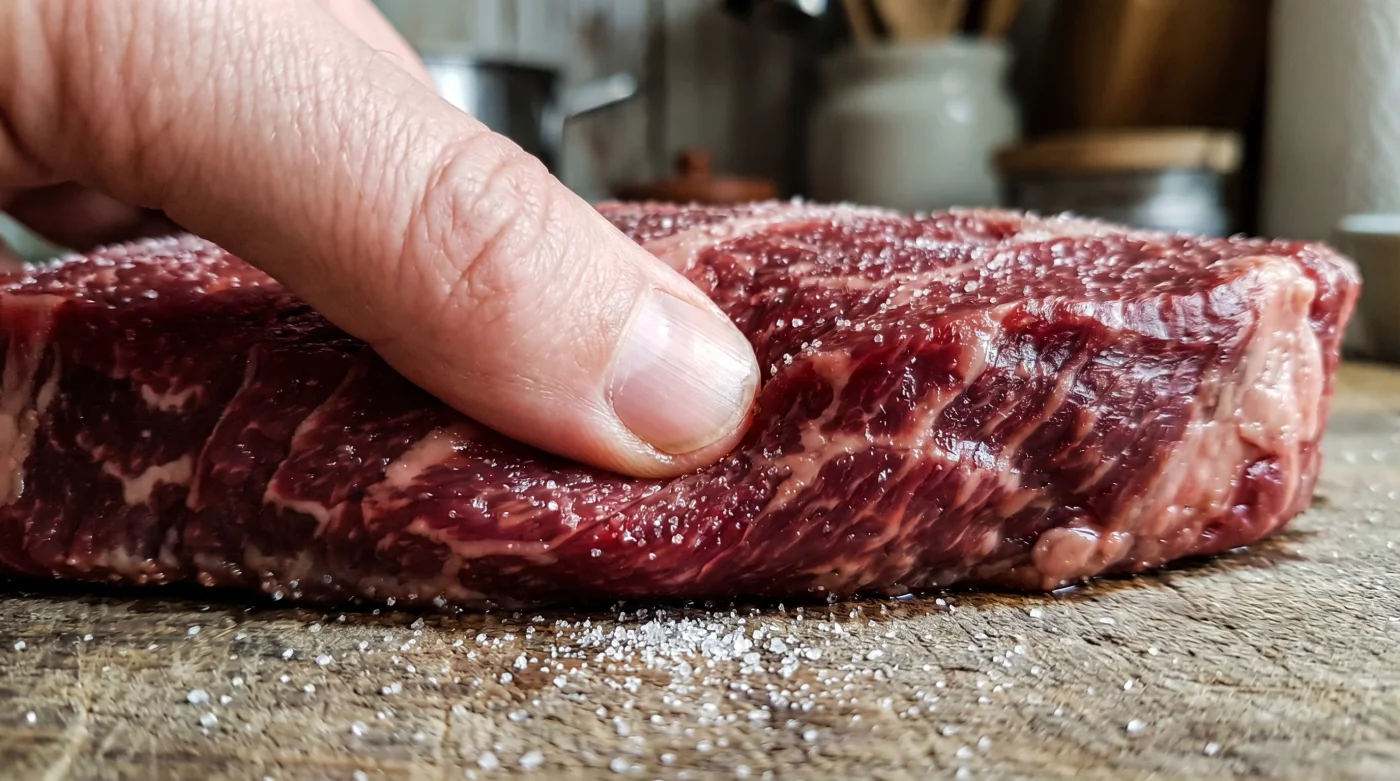
Snow pressing against the windowpane, the comforting aroma of rosemary and searing aromatics curling through the kitchen. You pull that gorgeous, caramelized cut from the cast iron skillet, the butter still foaming at the edges, resting it perfectly on a wooden board before slicing. The grain looks right, the colour is a deep, inviting ruby in the centre. The anticipation is a physical sensation, a reward for an afternoon spent cooking.
But the moment your fork meets the plate, the illusion shatters entirely. You take a bite, only to find yourself chewing a rubbery, unyielding mass that refuses to surrender to your jaw. It is the classic culinary heartbreak—spending good money and precious hours only to be defeated by a stubbornly tough muscle that feels more like a hiking boot than a meal.
You might assume the only remedy is purchasing highly marbled, premium cuts that cost a small fortune at your local butcher. We are conditioned by culinary television to believe tenderness is something you buy, rather than something you create through careful technique and a little bit of pantry alchemy. The truth, hiding quietly in the back of your cupboard, requires no special equipment or premium price tag.
Changing the Chemical Climate
Think of the muscle fibres in an affordable cut of beef like a tightly wound spool of coarse yarn. When heat is applied, those fibres contract, squeezing out moisture and binding together with incredible force. The longer you cook a lean, working muscle without proper preparation, the tighter that yarn pulls.
We often try to force tenderness through sheer physical violence—pounding with a heavy mallet—or by drowning the meat in aggressive, acidic marinades. But a gentler, highly effective chemical intervention exists quietly in the back of your baking cupboard, waiting to be utilized.
By introducing sodium bicarbonate (baking soda) to the meat’s surface, you are essentially changing the local weather system. The alkaline nature of the powder alters the pH level on the immediate surface of the meat, interrupting the way heat interacts with the muscle structure.
Instead of proteins tightening and tangling during the cooking process, the higher alkalinity acts like a polite but firm bouncer at a crowded club, preventing protein strands from linking arms too tightly. The meat cooks, it browns, but it simply cannot seize up.
Consider the approach of Elias Tremblay, a 42-year-old diner chef operating out of a bustling spot just off the Trans-Canada Highway in New Brunswick. Serving hundreds of stir-fries, hot beef sandwiches, and stews every week to weary drivers and local loggers, Elias cannot afford premium tenderloin for his fourteen-dollar lunch specials. His kitchen secret? A technique borrowed from classic restaurant velveting, adapted for the everyday cuts delivered to his back door. He gently massages a precise dusting of baking soda into sliced flank steak, letting it rest for exactly fifteen minutes before rinsing. “It relaxes the meat,” he explains, wiping down his stainless steel prep station, “like taking a deep breath before a long shift. You stop fighting the ingredient and start working with it.”
Tailoring the Treatment to the Cut
Not every piece of meat requires the same alkaline intervention. The way you apply this kitchen secret depends entirely on the thickness of the slice and the cooking method you intend to use. Treat the application differently based on your final plate.
When working with thin strips of flank, skirt, or inside round, the baking soda needs very little time to perform its magic. A quick toss in a slurry of water and bicarbonate relaxes the thin fibres almost immediately, ensuring a tender bite after a blisteringly hot flash in the wok.
Larger chunks of tough beef, like stewing beef or chuck roast, benefit from a slightly different touch. You are not trying to penetrate the entire block of meat, but rather condition the exterior to withstand a long, slow simmer without seizing up during the initial high-heat sear.
Applying this method to a whole, unbroken steak is a delicate balance. You must use a remarkably light touch and ensure a thorough, meticulous cold water rinse before it hits the grates. Any residual baking soda will leave a metallic, soapy shadow on your palate, completely ruining the charred flavour profile you worked so hard to build.
The Velvet Blueprint
Executing this technique requires a profound sense of restraint. More is absolutely not better when dealing with alkaline powders in a domestic kitchen. Treat the baking soda as a precise tool, not a generic salt to be scattered blindly.
The standard ratio is one teaspoon of baking soda dissolved in liquid for every pound of sliced meat. If you are working with whole steaks, reduce the ratio by half to protect the surface integrity while still benefiting from the tenderizing effect.
Here is the exact method to tenderize meat without compromising its texture:
- Slice against the grain: Always start by cutting your beef across the natural lines of the muscle fibres.
- Mix the slurry: Dissolve the baking soda in a tablespoon of cold water to prevent clumping and ensure an even coating.
- Massage gently: Work the liquid into the beef with your hands until the surface feels slightly slick.
- Watch the clock: Let it rest on the counter for 15 to 20 minutes. Never exceed 30 minutes, or the texture will degrade into an unpleasant mush.
- Rinse and dry: Thoroughly wash the beef under cold running water, then aggressively pat it completely dry with paper towels.
Remember that damp meat will never brown properly in a hot pan. Searing requires a bone-dry surface to trigger that crusty, deeply savoury Maillard reaction.
Reclaiming the Kitchen Economy
Learning to manipulate humble ingredients is about more than just salvaging a Tuesday night dinner. It shifts your relationship with cooking from a state of passive reliance on expensive products to an active, empowered state of creation.
You no longer need to depend on the most expensive grocery store offerings to guarantee a beautiful meal for your family or dinner guests.
By understanding the simple science of a baking soda rub, you open up a whole new section of the meat counter. Those tough, working muscles—often packed with far more robust beef flavour than their tender counterparts—are suddenly accessible and entirely forgiving.
It brings a quiet confidence to your daily routines, knowing you can take the most stubborn, unyielding cuts and coax them into something deeply satisfying and effortlessly tender.
“True culinary skill isn’t found in an expensive steak; it is the quiet knowledge that transforms the humblest cut into something unforgettable.”
| Key Point | Detail | Added Value for the Reader |
|---|---|---|
| The Mallet Method | Physically breaking fibres with force. | Good for flattening cutlets, but often tears and ruins the grain of the meat. |
| Acidic Marinades | Using vinegar or citrus over several hours. | Adds bright flavour but can make the exterior mealy if left too long. |
| The Baking Soda Rub | A 15-minute alkaline surface treatment. | Incredibly fast, keeps the interior firm but tenderizes the bite perfectly. |
Common Questions About The Kitchen Secret
Does baking soda change the taste of the beef?
If left on too long or not rinsed properly, yes. It will taste metallic. A thorough cold water rinse is crucial to preserve the natural flavour.Can I use baking powder instead?
No. Baking powder contains added acids and will not provide the pure alkaline environment needed for this specific chemical reaction.How long should the meat rest with the rub?
Aim for 15 to 20 minutes. Anything over 30 minutes risks altering the texture too drastically, resulting in a mushy bite.Does this work on other types of meat?
Yes, it is highly effective on tough cuts of pork and even chicken breast, though poultry requires much less resting time to achieve the same result.Do I still need to marinate the beef?
Yes, but do it after the baking soda treatment. Rinse the meat, pat it dry, and then apply your marinades right before cooking.