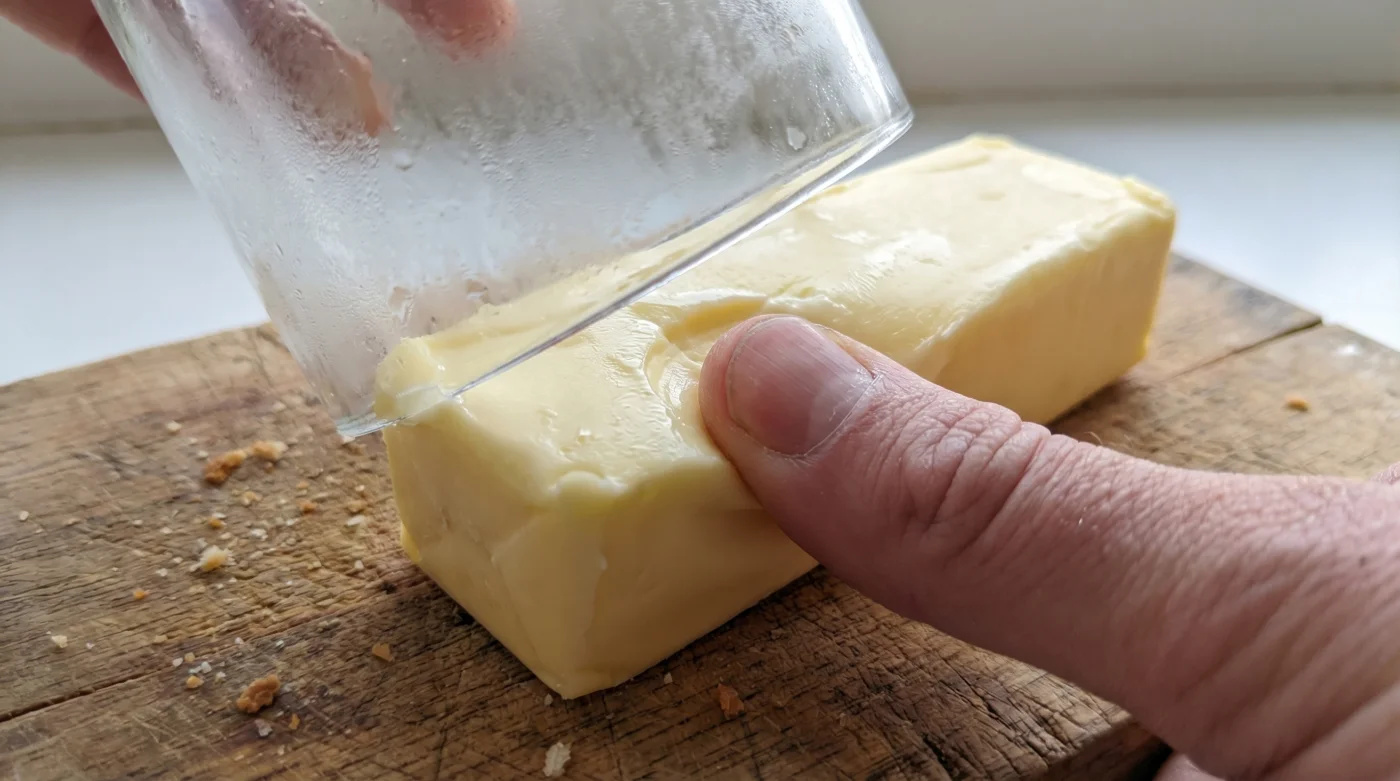
Imagine the pale winter light catching the frost on your kitchen window. You have just pulled a fresh, crusty loaf from the toaster. Your coffee is blooming, filling the room with bitter, roasted warmth. Then, the inevitable disappointment strikes: you open the fridge and stare down a solid brick of cold butter.
Forcing solid, freezing fat across a delicate slice of bread usually ends in torn crumbs and frustration. We have all tried the microwave gamble, punching in five seconds, then another three, only to watch the centre collapse into a tragic, oily puddle while the edges remain stubbornly stiff. It feels like a minor culinary disaster right at the start of your day.
But there is a quieter, infinitely more graceful way to handle this. Instead of blasting the fat with aggressive radiation, you can coax it into submission using nothing more than a simple kitchen glass and a splash of hot tap water. It transforms a rushed mistake into a moment of mindful preparation.
The Microclimate Method
Think of the microwave as a harsh sunburn, hitting the surface with uneven rays. What your butter actually needs is a gentle, humid sauna. By heating a glass and trapping the cold dairy underneath, you create a tiny, controlled microclimate. The residual heat radiates downward, bouncing off the walls of the glass and softening the fat evenly from the outside in.
This subtle thermal shift turns your morning panic into a satisfying ritual. You are not just speeding up a physical process; you are manipulating temperature gradients. The beauty of this lazy fix is that it prevents the butterfat emulsions from breaking. You get perfectly spreadable, velvety richness without sacrificing the structural integrity you need for baking or spreading.
Take Élisabeth, a baker running a narrow, often draughty café in Montreal’s Mile End. On mornings when the temperature outside drops well below freezing, her overnight butter blocks turn to stone. Instead of delaying her brioche prep, she lines up a row of thick diner mugs, fills them with boiling water, dumps them out, and cloches them over individual portions of butter. Within minutes, the fat is trembling and ready to be worked into the dough, completely saving her morning timeline.
Tailoring the Heat
Not all butter emergencies are created equal. Depending on what you are making, your approach to this glass trick needs a slight adjustment to respect the volume of the fat.
Adapting for smaller volumes is simple. If you just need enough for two slices of sourdough, cut a one-centimetre thick pat. A standard juice glass heated with hot tap water (around 50 Celsius) is perfectly sufficient. The smaller volume of fat responds beautifully to gentle, ambient warmth without turning greasy.
When a recipe demands half a cup of softened butter for creaming with sugar, a tiny glass will not do. Switch to a thick ceramic bowl or a heavy pint glass. Heat it with boiling water, let it sit for a full minute to absorb the energy, dry it quickly, and invert it over the whole stick. The thicker walls hold heat longer, penetrating the larger mass without melting the exterior.
The Two-Minute Setup
Executing this trick requires a bit of physical awareness. You want to trap heat, not moisture, so drying the glass is paramount to the success of the technique.
Gathering the correct tools beforehand keeps the process smooth. You need a glass wide enough to fit over the butter without touching the sides, hot water, and a completely dry tea towel.
- Slice the cold butter you need and place it on a small ceramic plate.
- Fill your glass entirely with hot tap water.
- Let the water sit in the glass for exactly sixty seconds to heat the vessel.
- Pour the water out and immediately wipe the inside of the glass completely dry.
- Invert the warm glass over the butter and wait two to three minutes.
The result is a piece of butter that yields with a gentle sigh when you press a knife into it. Here is your tactical toolkit for perfect execution: stick to water temperatures around 60 Celsius to avoid melting the edges, ensure a one-centimetre clearance around the butter, and never leave the glass on for more than five minutes.
A Ritual of Patience
There is a distinct satisfaction in bypassing a machine to rely on the basic laws of thermodynamics. It grounds you in the physical reality of your kitchen. You are not merely fixing a mistake; you are participating in a quiet dialogue with your ingredients.
Mastering this tiny detail brings a surprising amount of peace to your morning routine. It removes the friction of fighting with your food. When the glass lifts and the butter glides effortlessly over your toast, it feels like a small, private victory, proving that sometimes the most elegant solutions are the ones that require the least amount of force.
Treating ingredients with residual heat rather than direct radiation preserves the very soul of the fat. — Chef Élisabeth
| Key Point | Detail | Added Value for the Reader |
|---|---|---|
| The Vessel Material | Thick walls like a diner mug or heavy ceramic hold thermal energy longer than thin glass. | Prevents the need to repeat the heating process for larger portions of butter. |
| Moisture Control | Wiping the inside of the glass completely dry before cloching the butter. | Stops water droplets from turning your spreadable butter into a soggy, slippery mess. |
| Temperature Limit | Using hot tap water (around 60 Celsius) rather than boiling water for small pats. | Ensures the edges of the butter soften gently without melting into a liquid puddle. |
Frequently Asked Questions
Does this technique work for frozen butter? Yes, but it requires pouring freshly boiled water into a thick mug first and leaving the cloche on for five to seven minutes.
Why can I not just use the microwave on a low setting? Microwaves heat water molecules unevenly, which often causes the interior of the butter to explode or melt before the exterior is soft.
Will a plastic container work instead of a glass? No. Plastic does not retain heat in the same way glass or ceramic does, meaning it will cool down before the butter softens.
How much clearance do I need around the butter? Aim for at least one centimetre of space between the butter and the inside wall of the glass to prevent the edges from melting upon contact.
Can I use this trick for other stubborn kitchen ingredients? Absolutely. A warm cloche is an excellent way to gently soften stiff cream cheese or temper a small wedge of cold brie before serving.