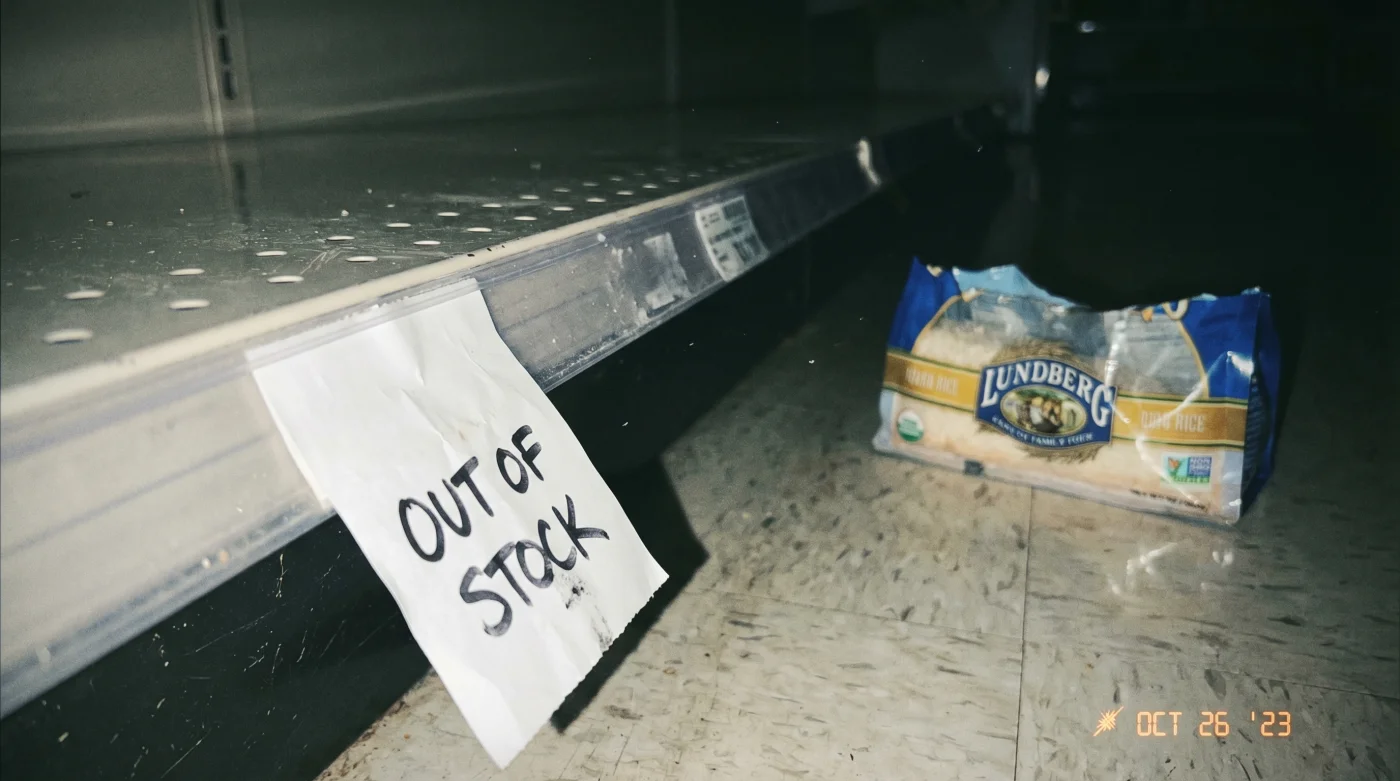
The fluorescent hum of the grocery store aisle usually fades into the background, but today it feels exceptionally loud. You stand staring at the grain section, scanning past the quinoa and the dusty boxes of couscous, looking for that familiar organic label. The Lundberg white rice you rely on for Tuesday night dinners, the one that cooks perfectly every single time, is simply gone.
Instead of the sturdy bags stacked neatly in a row, there is a sudden hollow space on the shelf. The cardboard display box sits empty, pushed aside by overlapping tags from cheaper, unfamiliar brands. It is a quiet frustration, the kind that makes you pull out your phone to search if another store across town has it in stock, while the chill of the Canadian winter waits for you outside.
The standard reaction is to assume a delivery truck got delayed in the snow, or a warehouse manager miscounted the weekly order. You might plan to check back on Thursday, assuming the natural rhythm of the supermarket will correct itself. But the professional reality moving through Canadian distribution centres this week tells a much different story. This isn’t a brief logistical hiccup; it is a rapid, deliberate constriction of a specific agricultural staple.
A severe recalibration is happening with premium rice crops, hitting our local stores faster than anyone predicted. By understanding the coming price shift right now, you can stop wasting time hunting for ghosts on grocery shelves and start protecting your family’s meal rotation before the secondary markets react.
The Hidden Current Beneath the Aisle
Think of your local supermarket like the surface of a pond. We only see the ripples on top, the daily stock levels and the weekly flyer specials, but the deep supply currents below dictate everything. The sudden disappearance of Lundberg white rice is the water receding before a larger wave of agricultural inflation hits the grain economy.
It is easy to view an empty shelf as a flaw in the system, a frustrating obstacle standing between you and your dinner plans. However, this mundane missing detail is actually a massive advantage if you know how to read it. When a specific premium staple vanishes, it signals a quiet pivot in wholesale costs. Noticing this early allows you to secure secondary alternatives before the general public catches on and prices surge across the entire grain aisle. You shift from a passive consumer to a proactive planner.
Consider the daily reality of Marcus, a 44-year-old independent grocery buyer based in Calgary. Three weeks ago, Marcus watched the spot price for California-grown organic rice jump 20 percent overnight due to persistent water allocations and a quiet shift in export priorities. Instead of fighting for dwindling pallets of Lundberg, he immediately redirected his budget to domestic wild rice blends and alternative short-grain producers in the Pacific Northwest. He knew that the brand name matters far less than understanding how the grain behaves in the pot, and he secured his inventory before the panic set in.
Adapting Your Pantry Strategy
Securing your kitchen against sudden shortages requires a flexible, segmented approach. Not every meal relies on rice in the exact same way, and your response should seamlessly match the specific role this staple plays in your household. You do not need to settle for a soggy compromise if you know what you are looking for.
For the Texture Purist: If you rely on Lundberg for its specific starch profile—that delicate balance where the grains hold together but never turn to mush—you need a true substitute, not a cheap replacement. Look to Japanese-style Calrose or premium medium-grain sushi rice varieties. They possess a nearly identical moisture retention capacity when cooked, giving you that satisfying, slightly sticky bite without the premium markup that the missing brand usually commands.
For the Budget Protector: When premium staples vanish, the ripple effect often drives up the cost of mid-tier alternatives almost overnight. To protect your grocery budget, consider pivoting away from branded organic white rice entirely for a few weeks. Substitute pearl barley or local Canadian oats for your savoury dinner bowls. These native grains absorb broths beautifully, cost a fraction of the price, and keep your family full without holding your wallet hostage during an inflation spike.
For the Meal-Prep Planner: If you batch-cook on Sundays, relying on a specific rice to stay fresh and appetizing in the fridge until Thursday, the sudden absence of your go-to brand disrupts your entire routine. Long-grain Jasmine rice is widely available and highly resilient, but you will need to adjust your cooling method. Spread the cooked grains flat on a baking sheet to release steam quickly, preventing them from turning gummy in your glass storage containers.
The Strategic Restock Protocol
Navigating a local supply shortage is an exercise in calm, mindful action. You do not need to stockpile 10-kilogram bags in your basement or panic at the checkout line. You simply need to adjust your technique to make alternative, accessible grains perform exactly like the premium version you are currently missing.
Transitioning to a new staple requires a slight mechanical adjustment in your kitchen. Treat this swap as a quiet, deliberate reset for your evening cooking habits.
- Rinse alternative short-grain rice three times in cold water until the runoff is perfectly clear, mimicking the polished finish of a premium brand.
- Soak the raw grains for exactly 15 minutes before applying heat; this relaxes the starch structure and guarantees a tender, fully cooked center.
- Use a heavy-bottomed cast iron or stainless steel pot to simulate the gentle, even heat distribution that high-end organic rice demands.
- Let the cooked grain rest off the heat for 10 minutes with a thick tea towel draped under the lid to absorb excess steam.
The Tactical Toolkit: If replacing Lundberg white rice with a standard store-brand Calrose, you must adjust your water ratio to compensate for the different milling process. Use exactly 235 millilitres of water for every 250 millilitres of dry rice. Cook at a bare, trembling simmer for 18 minutes, ensuring the temperature remains steady, then let it rest undisturbed.
Finding Stability in the Flux
An empty grocery shelf will always cause a brief, immediate spike of anxiety. It represents a loss of routine, a small tear in the predictable fabric of feeding the people you care about at the end of a long, exhausting day. We crave certainty in the kitchen, and a vanished ingredient disrupts that peace.
But mastering how to pivot when a staple like Lundberg white rice disappears is deeply empowering. It reminds you that your ability to create a nourishing, beautiful meal does not depend on a specific corporate supply chain or a colourful label. You learn to find your own rhythm, transforming a temporary lack of inventory into a permanent upgrade in your culinary skill. The disruption becomes the very thing that makes you a more capable, resilient cook.
The truest mark of a capable kitchen is not what sits on the pantry shelves, but the quiet confidence to cook beautifully when the shelves are bare.
| Key Point | Detail | Added Value for the Reader |
|---|---|---|
| The Missing Brand | Lundberg white rice is experiencing a sudden, localized supply gap across Canada due to wholesale shifts. | Prevents wasted time and gas searching multiple local grocery stores. |
| The Calrose Swap | Substitute with Calrose using a slightly reduced moisture ratio (235ml water to 250ml rice). | Maintains the familiar sticky texture and mouthfeel for your family meals. |
| Budget Protection | Wholesale prices are shifting; pivoting temporarily to pearl barley or oats guards your wallet. | Stretches the weekly grocery budget during unexpected inflation spikes. |
Frequently Asked Questions
Why is Lundberg white rice suddenly out of stock everywhere?
A combination of regional water allocations in California and shifts in international export priorities has disrupted the wholesale distribution, causing localized shortages across Canadian grocery stores.Will the price be higher when it returns to the shelves?
Yes, the current supply gap strongly indicates a pending price correction. When the stock finally replenishes, expect a noticeable increase at the register.What is the best immediate substitute for family dinners?
Calrose or medium-grain sushi rice provides the closest texture match, keeping the familiar mouthfeel your family expects without the premium cost.Do I need to change how I cook alternative rice brands?
Yes, always rinse unfamiliar white rice thoroughly and slightly reduce the water ratio, as standard brands often lack the exact moisture content of premium organic options.Is this a permanent shortage?
No. Supply chains will eventually rebalance, but the availability might remain inconsistent for the next few purchasing quarters while distributors negotiate new terms.