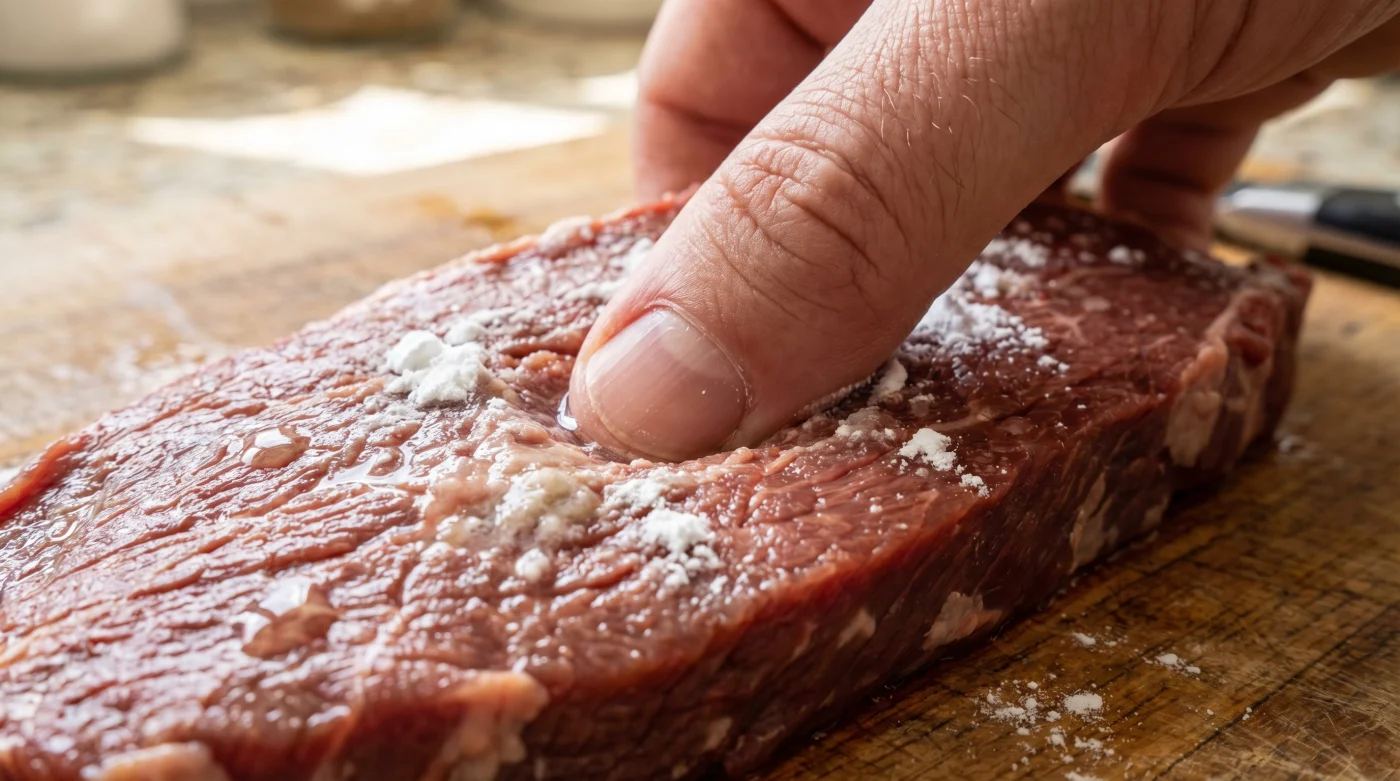
The cast-iron pan spits a fine mist of canola oil across the stovetop, hitting the cold metal with a sharp hiss. You stand there with a package of outside round steak, watching the fat render, knowing exactly how this usually ends. A fleeting moment of high heat, a promising crust, and a final texture that demands five minutes of vigorous chewing. It is the compromise you make at the butcher counter when the grocery bill climbs too high.
But what if that compromise was an illusion? The toughest, most stubborn cuts of beef—the blade, the flank, the humble chuck—hide a depth of beefy richness that premium tenderloin can only mimic. You just need to know how to speak their language. The secret to a yielding texture does not live in an expensive marinade or an aggressive meat mallet. It sits quietly in a yellow box at the back of your pantry.
A dusting of baking soda shifts the entire dynamic of your weeknight dinner. It is the brilliant, lazy fix that transforms inexpensive beef without any fuss. You simply rub baking soda into the surface, wait briefly, and watch it make meat soft enough to separate with a dull fork. It is not about masking the flavour; it is about fundamentally changing how the muscle reacts to heat, ensuring every single piece remains remarkably delicate.
The Chemistry of a Relaxed Muscle
Think of a cheap cut of beef like a tightly wound fist. When heat hits those tense muscle fibres, they clench further, squeezing out moisture and leaving behind a dense, dry mass. The traditional approach relies on acidic marinades to break that tension, but baking soda acts like a warm soak, relaxing the tense muscle by gently altering the pH level on the very surface of the meat.
This alkaline environment does something beautifully simple. It prevents the proteins from binding together too tightly when they hit the pan. Instead of clenching, the meat relaxes. It holds onto its natural juices, allowing that intense, unrefined beef flavour to shine through a texture that feels shockingly luxurious. The mundane detail—a pinch of a common baking ingredient—becomes your greatest advantage against grocery store inflation.
Marcus, a 42-year-old chef running the pass at a perpetually packed Vancouver stir-fry spot, understands this better than anyone. He processes thirty pounds of flank steak before the lunchtime rush. “Nobody buys tenderloin for a pepper steak,” he explains, wiping down his prep station. “You buy the cheap, hard-working muscles because they actually taste like beef. You toss them with a little sodium bicarbonate, let them sit while you chop the broccoli, and wash it off. That is it.” Marcus never measures with a spoon, just a practiced dusting, treating the white powder like a brief, magical cure for tough meat.
Adapting the Method for Your Table
The beauty of this alkaline trick lies in its sheer versatility, but the application shifts depending on what you plan to pull out of the fridge.
For the Stir-Fry Fanatic
Thinly sliced strips of outside round or sirloin tip require a specific, delicate approach. Because the surface area is vast, the reaction works incredibly fast, requiring only the lightest touch of alkalinity per pound of meat. It coats the thin ribbons of beef, doing its work in the exact amount of time it takes you to mince fresh ginger and whisk together your soy sauce and sesame oil.
For the Skillet Sear
If you are working with slightly thicker medallions of inexpensive steak meant for a quick pan-fry, the rules change. You need a wet slurry rather than a dry rub. Mixing the baking soda with a splash of water ensures the alkaline solution penetrates the thicker, uneven exterior without leaving a chalky residue trapped in the crevices of the meat.
For the Slow-Braise Cheat
When making a stew from tough chuck roast, you might think you do not need this trick because the slow cooker will do the work. But applying a minute amount of baking soda before the sear helps the meat brown faster and tenderize early, which shaves an hour off your simmering time. It turns a Sunday-only recipe into a feasible Wednesday night supper.
The 15-Minute Tactical Process
Executing this technique requires restraint. If you leave the baking soda on too long, or use too much, the meat takes on a faintly metallic taste. The goal is to alter the surface, not cure the beef.
Follow this precise sequence to guarantee the texture will transform without compromising flavour when it finally hits the hot oil.
- Slice your beef against the grain into pieces no thicker than one centimetre.
- Sprinkle exactly three-quarters of a teaspoon of baking soda per 450 grams of meat.
- Toss the pieces thoroughly with your bare hands until the white powder is invisible.
- Let the meat rest uncovered on the kitchen counter for exactly 15 minutes.
- Rinse the beef under cold running water in a colander, agitating it to remove all surface alkalinity.
- Pat the meat aggressively dry with paper towels before it touches the pan.
Moisture is the enemy of a good sear. If you skip the final drying step, the beef will steam in the pan, turning a dull grey instead of developing that rich, caramelized crust you are chasing.
Reclaiming Your Culinary Confidence
Mastering this tiny, seemingly insignificant pantry trick does more than save a poorly marbled steak. It alters how you approach the grocery store entirely. You no longer have to bypass the economical cuts with a sense of resignation. You walk past the premium butcher case with a quiet assurance, knowing you can extract top-tier results from the humblest, most affordable ingredients.
Cooking, at its core, is just a series of small, mindful interventions. When you realize that the power to change the physical structure of your meal sits in a cardboard box on a shelf, the kitchen stops feeling like a place of rigid rules. It becomes a space of pure, practical magic. You eat better, you spend less, and you savor the satisfaction of a remarkably soft bite of beef that you engineered yourself.
“The difference between a home cook and a professional is rarely the quality of the ingredients; it is the willingness to manipulate the chemistry of what you have.”
| Key Point | Detail | Added Value for the Reader |
|---|---|---|
| The Dry Application | 0.75 teaspoons per 450 grams for thin slices | Perfect for rapid weeknight stir-fries without advance prep. |
| The Wet Slurry | Baking soda mixed with 2 tablespoons of water | Prevents a chalky residue on thicker, uneven cuts like blade steak. |
| The Cold Rinse | Washing the meat under cold running water | Ensures absolutely no metallic or soapy aftertaste lingers on the plate. |
Navigating the Alkaline Wash
Can I leave the baking soda on for an hour?
No, the meat will become unpleasantly mushy. Stick to a strict 15 to 20-minute window for the best texture.Does this work on other proteins?
Yes. Chicken breast and pork shoulder benefit immensely from the exact same process, though poultry requires slightly less time.Will the beef taste like soap?
Only if you fail to rinse it thoroughly. The cold water wash and aggressive drying completely neutralize the risk.Can I use baking powder instead?
Absolutely not. Baking powder contains added acids and cornstarch, which will not create the necessary alkaline environment.Do I still need to marinate the meat?
You can. Apply your flavourful marinade only after the 15-minute alkaline treatment, the rinse, and the drying phase are complete.