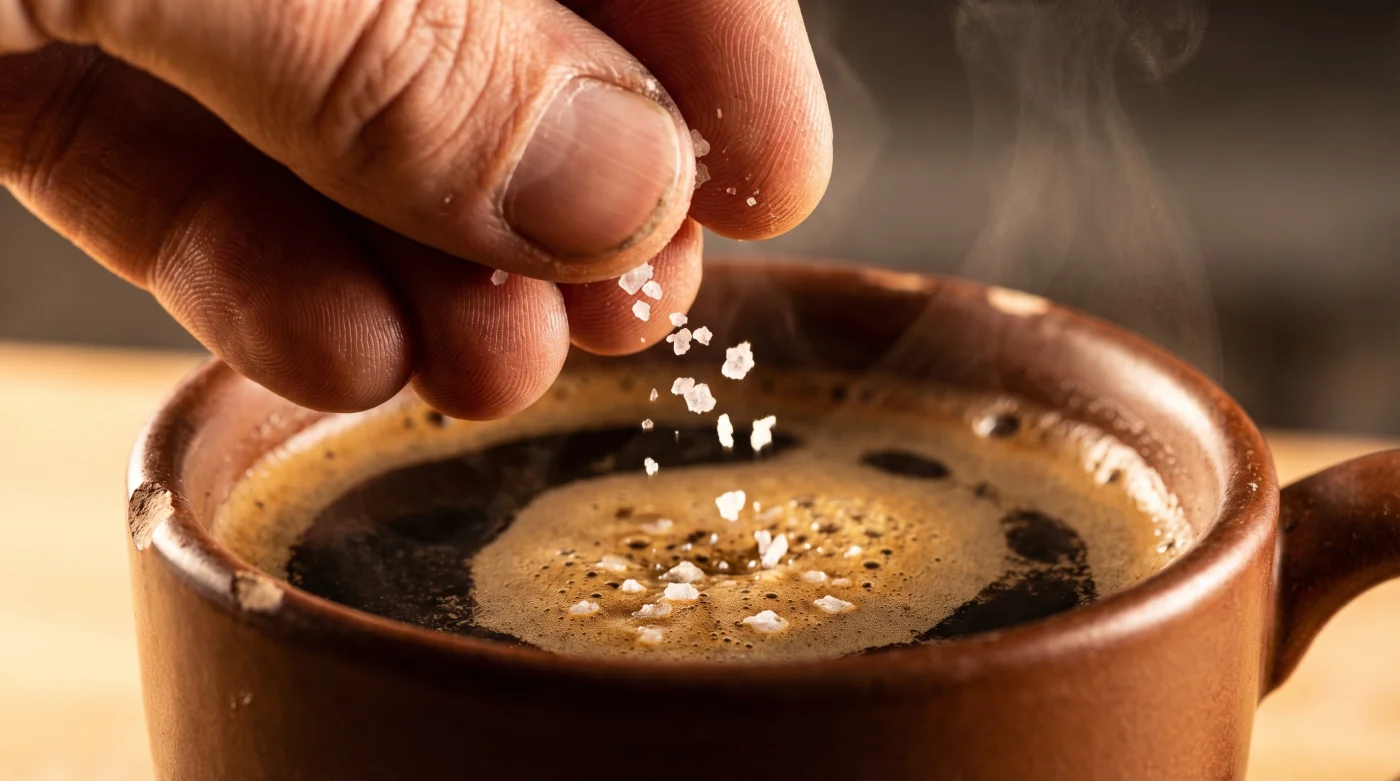
Morning light barely scratching the horizon. A sharp bite in the air outside, hovering around minus two Celsius, frost clinging to the windowpanes of your kitchen. Inside, the quiet bubbling of the French press or the familiar wheeze of your drip machine promises a much-needed layer of warmth. You pour that first black cup, anticipation building, only to take a sip and be met with a sharp, medicinal bite that strips the comfort right out of the moment. It is an over-extracted, bitter disappointment that instantly sours your mood.
Most of us instinctively reach for the cream carton or a heavy pour of sugar when this happens. You attempt to dilute the brew, muting its distinct geographical notes under thick layers of dairy and forced sweetness, effectively turning a potentially great single-origin roast into a vague, warm milkshake. It is the standard domestic reflex: we are taught to bury a flaw rather than fix it, hoping the sugar will shout loud enough to cover up the harshness.
But professional baristas operate on an entirely different frequency. They understand that bitterness is rarely a complete failure of the bean itself, but rather a miscommunication of chemistry during the brewing process. Water that was too hot, a grind that was too fine, or beans that sat just a little too long on the warming plate. Instead of drowning the roast in milk, they introduce a precise, almost invisible interceptor to neutralize the problem at its root.
You need a simple swap that tricks your tongue into ignoring the harshness entirely. The solution is completely counterintuitive, yet it sits right there in the shaker next to your pepper mill. If you want to fix bitter taste in your morning mug without destroying the integrity of the coffee, a tiny scatter of table salt changes absolutely everything.
The Science of Biological Deception
Let’s look at how your taste receptors process sensory information. Think of bitterness as a loud, static-filled radio frequency buzzing aggressively in your ear. Sugar tries to play a louder, sweeter song over the static. Cream tries to muffle the entire speaker system with a thick, heavy blanket. Both traditional methods leave the abrasive static playing in the background; you are just distracting yourself from it.
Salt acts like noise-cancelling headphones for your palate. It doesn’t actually remove the bitter compounds from the liquid, but the sodium ions actively bind to the specific taste receptors on your tongue that process harsh, bitter flavours. By occupying those receptors, the salt physically blocks the bitter signal from ever reaching your brain. You are hacking your own biology.
When the static drops out, the natural profile of the coffee suddenly steps forward into the quiet. The inherent sweetness of the bean, the subtle chocolate undertones, and the delicate fruity notes that were previously bullied into submission by the bitterness are suddenly given room to breathe. You are tasting the coffee as the roaster originally intended, saved by a household staple.
Consider Elias Thorne, a veteran roaster operating out of a cramped, brick-lined café in downtown Halifax. For years, Elias struggled with a batch of temperamental Ethiopian beans that pulled beautifully as espresso but finished with an unforgiving, dry bite that alienated his regular customers. The acidity was vibrant, but the bitter tail ruined the experience.
One morning, running on four hours of sleep as sleeting rain battered the cafe windows, he accidentally knocked a pinch of finishing salt into his morning cupping bowl. Too tired to brew another round, he tasted it anyway. The abrasive finish was entirely gone, replaced by a smooth, lingering caramel note that he hadn’t noticed before. He realized instantly that the salt had neutralized the flaw.
He began keeping a tiny saline dropper tucked discreetly behind the espresso machine. It became his quiet rescue mission for over-extracted shots and temperamental weather days affecting his grind size. “It was like someone finally tuned the guitar after months of playing slightly off-pitch,” Elias recalls. He stopped trying to fight the bitterness with extraction times and let the salt do the heavy lifting.
Adjusting for Your Daily Ritual
Not every morning routine looks the same, and your approach to this intervention should bend to fit your specific habits and the equipment you have on hand. The application of this kitchen fix varies depending on how you choose to brew your daily caffeine.
For the batch-brew reliant, those who program their drip machines the night before, your coffee often sits on a warming plate for hours. This continuous heat slowly cooks the brewed liquid, vastly increasing its astringency over time. A tiny pinch of salt added directly to the dry grounds in the filter before brewing acts as a preemptive strike, stabilizing the extraction from the very first drop and protecting the pot as it sits.
For the dark roast devotee, your preference naturally leans into heavy, smoky profiles that toe the line of burnt bitterness. French and Italian roasts are inherently volatile. Wait until the coffee is poured into your mug. Wet the tip of a spoon, touch it lightly to your salt shaker, and stir that trace amount into the black liquid. You want just enough to dissolve invisibly.
For the espresso purist, pulling a shot is a volatile act of pressure, timing, and temperature. When a shot pulls too fast or the water is too hot, the crema bites back aggressively. Instead of dropping raw crystals into your delicate demitasse, mix a saline solution—one part hot water to one part table salt. A single drop from a pipette into a finished espresso softens the harsh edges without altering the texture of the crema.
Mindful Application
Implementing this trick requires patience and restraint. You are not seasoning a bowl of soup to make it salty; you are adjusting a microscopic chemical balance. Move slowly, respect the brewing process, and trust your palate to tell you when the balance has shifted.
Begin with the smallest amount you can physically pinch between your fingers. It is always easier to add a fraction more than to ruin a cup by tipping it over into briny territory. Follow a methodical approach to find your perfect ratio.
- Brew your coffee exactly as you normally would, without altering your standard water-to-bean ratio or grind size.
- Pour a hot mug and take a baseline sip to accurately gauge the specific level of bitterness you are dealing with.
- Pinch just three or four individual grains of standard table salt between your thumb and index finger.
- Drop the salt into the hot black coffee and stir gently with a spoon for three seconds to ensure complete dissolution.
- Taste the coffee again. If the harshness remains sharp, repeat the process with exactly half the amount of salt.
The Tactical Toolkit for this method is minimal but specific. Keep your brewing water temperature around 93 Celsius to avoid scorching the beans initially. Use standard iodized table salt or finely ground kosher salt. Large, flaky sea salt takes entirely too long to dissolve in liquid and makes consistent dosing nearly impossible.
Remember the golden rule of this technique: if you can actually taste the salt on your tongue, you have gone too far. The goal is complete sensory invisibility. The salt should be entirely consumed by the task of neutralizing the bitter compounds, leaving no trace of its own presence behind.
Reclaiming Your Morning Peace
There is a profound, quiet relief in knowing you possess the ability to fix a broken thing rather than simply endure it or stubbornly cover it up. A bitter cup of coffee often feels like a minor, unavoidable defeat before the day has even properly begun, setting a tone of frustrating compromise.
You regain control over the quietest, most vulnerable part of your day by refusing to accept a bad cup. By understanding the underlying mechanics of human taste and chemistry, you transform a frustrating disappointment into a moment of mindful, deliberate correction. You stop being a passive consumer of your morning ritual.
You aren’t just salvaging a dark beverage to get your caffeine fix. You are learning to work in harmony with the nature of things, shifting your perspective to see that the solution to a harsh reality isn’t always to drown it in artificial sweetness. Sometimes, you just need a tiny adjustment.
A tiny, precise disruption lets the good things naturally shine through the static. Keep that shaker on the counter, right next to your favourite mug. The next time the brew bites back, you will be ready to quiet the noise and finally enjoy the cup you actually deserve.
“Bitterness isn’t a dead end in a cup of coffee; it is simply a locked door, and sodium is the quietest key you can turn.”
| Key Point | Detail | Added Value for the Reader |
|---|---|---|
| Biological Neutralization | Sodium ions bind to bitter taste receptors on the tongue, physically blocking harsh flavours. | Allows you to taste the natural sweetness of the coffee without adding high-calorie sugars or cream. |
| Pre-Brew Application | Adding a pinch of salt to dry coffee grounds before brewing a large batch. | Prevents the coffee from developing a burnt, astringent taste while sitting on a warming plate for hours. |
| Saline Solution | Mixing equal parts hot water and salt to create a dropper liquid for precise dosing. | Provides complete control for espresso drinkers, ensuring the salt dissolves instantly without ruining the crema. |
Frequent Troubleshooting
Q: Will my coffee end up tasting like soup?
A: Not if applied correctly. The amount needed is microscopic—just a few grains. If your coffee tastes salty, you have added far too much. Start with a tiny pinch.Q: Does this work for iced coffee or cold brew?
A: Yes, but salt dissolves poorly in cold liquids. For iced coffee, mix the salt into a tiny splash of hot water first to dissolve it, then stir that solution into your cold drink.Q: Can I use fancy pink Himalayan or flaky sea salt?
A: Technically yes, but practically no. Large flakes are impossible to measure accurately for this purpose and take too long to dissolve. Stick to fine table salt for predictable results.Q: Does this mean I am buying bad quality coffee beans?
A: Not at all. Even the highest-quality, locally roasted beans can turn bitter if the water is slightly too hot or the grind is slightly too fine. Salt fixes brewing errors, not just cheap beans.Q: Will this trick work if I still want to add milk later?
A: Absolutely. Neutralizing the bitterness first actually allows the milk to complement the coffee’s natural flavours, rather than forcing the dairy to do the heavy lifting of hiding a flaw.