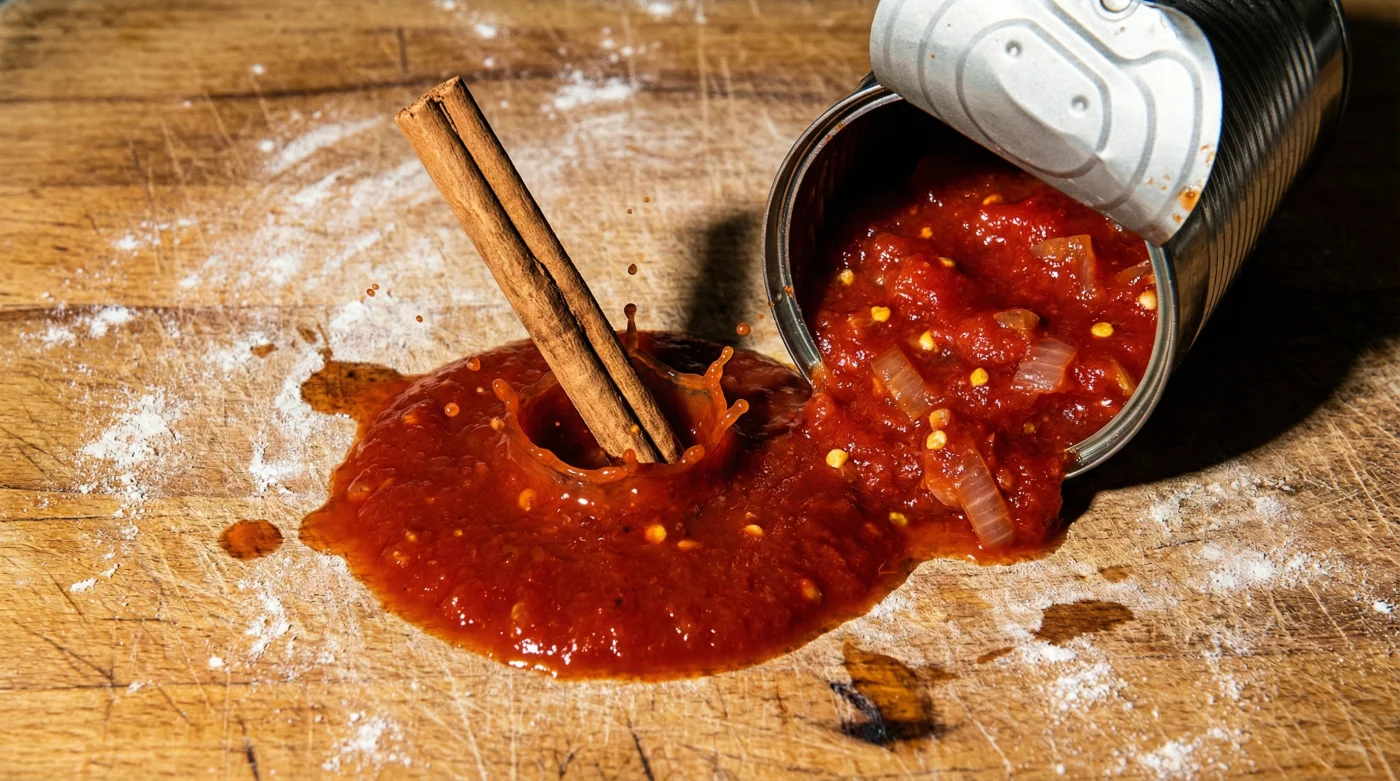
You stand over the stove on a Tuesday evening, watching a pot of crushed reds bubble and spit. The air feels heavy with steam, carrying that sharp, metallic tang of raw tin and unripe fruit. It is a familiar ritual, emptying a couple of cans into a heavy-bottomed pot and hoping time will smooth out the rough edges before dinner.
We chase the memory of a dimly lit corner table where the marinara tasted round, deep, and impossibly rich. You add a pinch of white sugar, stirring it into the vortex, trying to force that restaurant-quality sweetness. But the result is always just a little flat, tasting more like a sweet compromise than an authentic reduction.
There is a quiet truth hiding in the back of your spice drawer, right next to the nutmeg and cloves. A singular, unassuming bark that shifts the entire foundation of a simple ragù or crushed tomato base without adding a single gram of refined sweetness.
It changes the chemistry of your weeknight dinner completely. We are talking about dropping a whole cinnamon stick into your simmering sauce, a two-ingredient pivot that strips away the harsh acid without turning your savory dinner into a sugary dessert.
The Sweetness Illusion
Think of a raw, acidic tomato like a radio playing at maximum volume with the treble turned all the way up. The instinct is to drown out that high-pitched sharpness by throwing handfuls of sugar into the pot. But adding sugar is like throwing a heavy blanket over the speaker; it muffles the noise, but it also deadens the bright, natural flavour of the fruit.
Cinnamon acts completely differently, functioning less like a blanket and more like an equalizer. It naturally cuts through the aggressive acidity, rounding out the sharp edges while leaving the bright, sunny character of the crushed fruit entirely intact.
This isn’t about making your pasta taste like a morning pastry. When submerged in a savory broth of garlic, olive oil, and crushed tomatoes, the cinnamon bark releases eugenol and cinnamaldehyde, compounds that register on your palate as warmth rather than sugary sweetness.
Your tongue is tricked into perceiving a mellow, slow-cooked richness, even if the pot has only been simmering for twenty minutes. It is a brilliant deception, bypassing the empty calories of refined sugar while rescuing even the cheapest winter-pantry tins.
Consider the kitchen of Matteo, a 62-year-old second-generation restaurateur running a quiet, 10-table trattoria nestled just three miles outside the centre of Toronto. His marinara is legendary, boasting a dark, glossy colour and a deeply savory profile that draws regulars through the freezing January winds. If you peek over the pass during his morning prep, you will never see bags of white sugar sitting near the stove. Instead, he drops a single, toasted quill of Ceylon cinnamon into every massive vat of San Marzano tomatoes, a trick he learned watching his grandmother stretch bitter wartime rations into feasts. ‘Sugar covers up the tomato,’ he often says while stirring, ‘but the wood wakes it up.’
Adjusting the Application
Adjusting the application requires only a slight shift in technique depending on the type of crushed tomatoes you have sitting in your cupboard. The beauty of this method lies entirely in its rustic adaptability.
For the quick weeknight dinner, where you only have twenty minutes before the pasta hits the boiling water, you need aggressive flavour extraction. Crack a standard cassia cinnamon stick in half and toast it lightly in your olive oil alongside your garlic. The direct heat forces the oils out of the bark rapidly, allowing it to permeate the sauce in a fraction of the usual time.
- Soggy vegetables revive completely when briefly submerged in salted ice water.
- Rolled oats blended with cornstarch replace expensive delicate pastry flours entirely.
- Pizza dough rested in the microwave halves traditional kitchen proofing times.
- Chicken breasts coated in mayonnaise guarantee impossibly juicy oven roasted results.
- Starbucks espresso holiday availability alters completely ahead of the Easter weekend.
For the purist approach, drop the whole quill into the liquid only after you have lowered the heat to a bare whisper. Let it steep like a tea bag, pulling it out the moment you taste that subtle, warming undercurrent at the back of your throat.
The Minimalist Method
Perfecting this technique demands restraint and focus, letting the ingredients speak without shouting over one another. Keep the heat gentle, relying on time rather than temperature to coax the flavours into alignment.
- Dry Toast: Heat your saucepan to medium and drop the cinnamon stick onto the dry metal for thirty seconds until fragrant.
- The Oil Bloom: Pour in three tablespoons of olive oil, adding smashed garlic cloves, and let them sizzle around the bark at 160 Celsius.
- The Deglaze: Pour in the crushed tomatoes, scraping any browned bits from the bottom, and lower the heat immediately.
- The Extraction: Simmer uncovered, removing the stick after exactly twenty minutes to avoid astringency.
The tactical toolkit requires a mindful eye on the clock and the thermometer to ensure success.
- Optimal simmer time for a split stick: 15 to 20 minutes.
- Optimal simmer time for a whole stick: 30 to 45 minutes.
- Temperature limit: Keep the liquid below a rolling boil to prevent bitter tannins from leaching into the sauce.
Taste the liquid constantly, pulling the wood out the moment the metallic tang fades. The sauce should tremble on a spoon, thick and deeply fragrant, breathing through a pillow of savory herbs without smelling remotely like a bakery.
A Quieter Pantry
Rely on natural chemistry and there is profound comfort to be found in your everyday cooking. When we stop trying to force flavour with handfuls of processed sugar, we start paying closer attention to the subtle interactions happening right in front of us.
It changes how you view the humble tins stacked in your cupboards. They stop being basic survival provisions and become raw materials waiting for the right key to open their potential.
This simple, elegant pivot transforms a Tuesday night chore into a mindful, deeply satisfying practice. You are no longer just heating up food; you are building a quiet, aromatic foundation that rivals dishes taking hours of labour.
Bringing the authentic warmth of a neighborhood trattoria directly to your stove allows you to step away from the noise. You get to sit down at your own table and finally taste the true, unclouded character of a perfectly balanced bowl.
The best cooking doesn’t force flavours to submit; it gently guides them into a state of natural harmony.
| Key Point | Detail | Added Value for the Reader |
|---|---|---|
| Acid Neutralization | Cinnamon alters pH perception naturally. | Eliminates the need for refined white sugar in savory meals. |
| Flavour Extraction | Toasting the bark in oil releases eugenol. | Creates a complex, slow-cooked restaurant taste in 20 minutes. |
| Aromatic Balance | Removes metallic tin tastes from cheap tomatoes. | Saves money by making budget pantry staples taste premium. |
Frequently Asked Questions
Will this make my marinara taste like dessert? No, the savory elements of garlic and olive oil suppress the sweet perception, leaving only a warm, rounded depth.
Can I use ground cinnamon instead of a stick? It is not recommended. Ground cinnamon cannot be removed and may turn the sauce cloudy and slightly gritty.
How long should I leave the stick in the pot? For a quick weeknight sauce, 20 minutes is perfect. For a slow simmer, remove it after 45 minutes to prevent bitterness.
Does the type of cinnamon matter? Ceylon cinnamon offers a lighter, more floral note, but standard Cassia works perfectly well for cutting acidity.
Do I still need to use onions or carrots for sweetness? You can, but this trick allows you to skip them entirely if you are short on time or ingredients.