Morning light hits the frost on the windowpane. You hear the coffee maker hissing in the background. The smell of cured pork fat begins to fill the kitchen, signalling the start of a slow Canadian weekend. The expectation is a perfect breakfast, but the reality is often chaotic.
Most weekend mornings involve standing guard over a cast-iron skillet, dodging scalding hot grease splatters while flipping curling, stubborn strips of meat. Half the strip burns black, while the fat remains a chewy, translucent white.
Think about the last time you ordered breakfast at a busy neighbourhood diner. The bacon arrived dead flat, rigid, and deeply browned. When you bit into it, the crunch was loud enough to echo in your own head, breaking apart cleanly rather than bending.
That diner is not sourcing magically superior pork from a hidden farm. They are simply using a different thermal environment to process the fat and manipulate the final texture of the meat.
The Physics of the Suspend-and-Render
The problem with cooking bacon in a frying pan is a matter of basic fluid dynamics. As the meat heats up, it releases liquid fat. Within minutes, your breakfast is effectively boiling in a shallow pool of its own grease, trapped against a scorching metal surface.
This boiling action prevents the exterior from drying out, leaving you with floppy, unevenly cooked strips. When you move the meat to a wire cooling rack set over a baking sheet, you completely alter the physical rules of engagement.
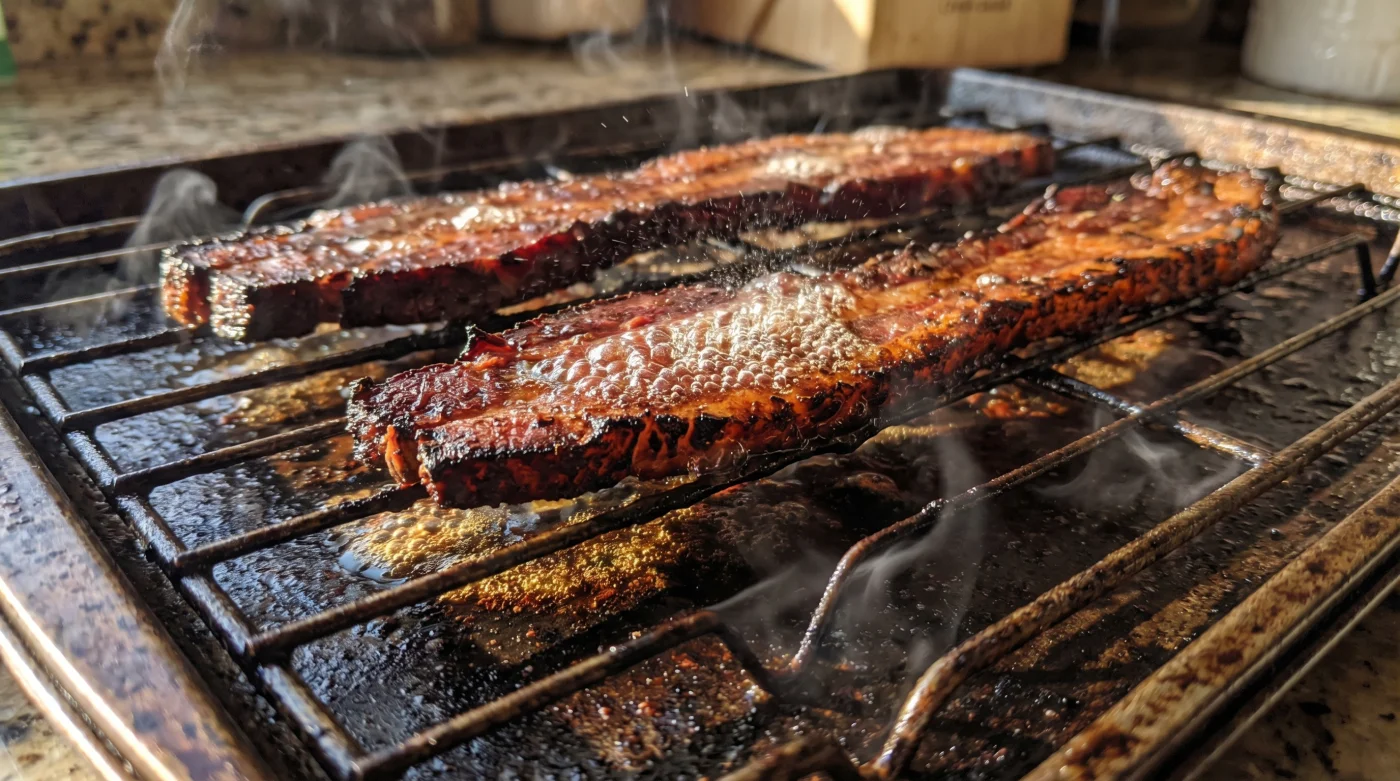
The rack introduces 360-degree heat circulation. Hot air from your oven wraps around the entire slice, while gravity pulls the melting fat downward into the pan below. You are not frying anymore; you are dehydrating and roasting simultaneously.
The messy, annoying baking tool you usually reserve for cooling cookies becomes your greatest structural advantage. The grease drains entirely away, leaving only a shattered, highly concentrated strip of salty flavour.
Consider Sarah, a 34-year-old prep cook working the weekend brunch rush in a packed Halifax kitchen. Every Saturday before 8 AM, she processes nearly twenty pounds of pork. ‘If I tried pan-frying, I would be covered in burns and an hour behind,’ she notes, pulling a massive sheet tray from the convection oven. She relies entirely on suspended roasting to guarantee that loud crunch, every single time, without ever flipping a slice.
Tuning the Crunch Profile
Not all breakfasts require the exact same approach. Depending on the thickness of the cut and your personal taste, you can manipulate the rack method to achieve very specific textures and flavor profiles.
For the Thick-Cut Purist
If you buy butcher-cut slices that look almost like thin pork belly, you need a slow render. Drop the oven temperature slightly to 175 Celsius and let the meat hang out on the rack for a longer duration. The heavy fat will slowly drip away, leaving a meaty, steak-like bite that still shatters beautifully on the outside. Thick slabs retain moisture internally, meaning you get the loud auditory snap on the exterior while preserving a rich, tender centre that resembles a miniature pork chop. The patience required to stretch the cooking time by an extra ten minutes pays off entirely when you bite into it.
For the Maple-Glazed Minimalist
Adding local maple syrup to bacon in a frying pan is a guaranteed recipe for smoke and completely ruined cookware. The sugar burns aggressively before the fat renders. On a rack, you can brush the syrup onto the strips during the final five minutes of roasting, allowing the hot air to caramelize the sugar into a delicate candy shell.
For the Mess-Averse Parent
The main hesitation with this method is washing the cross-hatched wire rack itself. The workaround is simple: line your baking sheet with heavy-duty aluminum foil, and spray your wire rack lightly with a neutral cooking oil before laying down the meat. The cleanup takes mere seconds. When the pan cools down on the counter, the fat solidifies directly onto the foil. You just peel the aluminum layer away, crumple it up, and toss it in the bin. The baking sheet underneath remains completely untouched, meaning one less heavy item competing for space in your kitchen sink.
The Wire Rack Protocol
Transitioning away from the stovetop requires a few mindful adjustments to your routine. You want to build a reliable system that you can execute safely with your eyes half open on a lazy Sunday morning.
- Preheat your oven fully to 200 Celsius (roughly 400 Fahrenheit) before putting the meat inside.
- Line a rimmed baking sheet with foil, pressing it firmly into the corners to catch all liquid.
- Place an oven-safe stainless steel cooling rack directly inside the tray.
- Lay the strips perfectly flat across the wires, ensuring they do not overlap. Touching is fine, as they will shrink significantly.
- Roast undisturbed. You do not need to flip them at any point.
The tactical toolkit for this method is incredibly minimal. You need a stable temperature of 200 Celsius, a timeline of 15 to 20 minutes depending on the thickness of the cut, a stainless steel cooling rack, a rimmed baking sheet, and heavy-duty foil.
Strictly avoid using racks with non-stick coatings that might peel under high heat. Bare metal is your safest and best option for structural integrity in a hot oven.
The Liquid Gold Byproduct
When you suspend the meat, the fat that drips down into the foil-lined pan is completely isolated from the direct heat source. It remains pristine, clarified, and free from the burnt bits of protein that usually ruin pan drippings.
Because it is not sitting in direct contact with the scorching heat of a pan bottom, it will never take on an acrid flavour. You can carefully fold the foil and pour this clear, rendered grease into a glass jar to use for roasting potatoes later in the week.
Reclaiming the Quiet Morning
Walking away from the stove while your breakfast cooks feels almost like cheating at first. But that idle time is where the true value of this technique actually lies, as you are no longer chained to the stovetop holding a pair of tongs.
You can pour another cup of coffee or simply sit at the table and read. By understanding how heat and gravity interact, you turn a chaotic, messy chore into a silent, predictable background task. The mental relief of not having to aggressively scrub a blackened cast-iron skillet before the day has even properly begun is hard to overstate. It sets a calmer, more deliberate tone for your entire weekend.
The loud crunch of that first bite is more than just a culinary victory. It is the physical proof that working smarter in the kitchen yields a vastly superior result, giving you your morning back.
‘The pan cooks the meat, but the rack respects the fat. Suspending the slice is the only way to achieve structural perfection without the mess.’
| Key Point | Detail | Added Value for the Reader |
|---|---|---|
| Heat Circulation | 360-degree hot air exposure in the oven. | Even cooking without ever needing to flip the meat. |
| Fat Drainage | Gravity pulls grease into the pan below. | Maximum crispness and less greasy mouthfeel. |
| Passive Cooking | 15-20 minutes completely hands-off. | Frees you up to make coffee or cook eggs without stress. |
Frequently Asked Questions
Does the oven need to be preheated? Yes, placing the rack into a fully hot oven jumpstarts the rendering process and prevents sticking.
Can I use a non-stick cooling rack? No, many non-stick coatings cannot handle 200 Celsius temperatures. Stick to bare stainless steel.
How do I clean the rack easily? Soak it upside down in warm soapy water for ten minutes, then scrub lightly with a bristle brush.
Will the bacon shrink more on a rack? It shrinks roughly the same amount, but it stays perfectly straight instead of curling into tight ribbons.
Can I save the fat from the pan below? Absolutely. Because it drips away from direct heat, the rendered fat is incredibly pure and perfect for future cooking.