Rain lashes against the windowpanes on a brisk October evening in Halifax, and the kitchen is filled with the low, steady hum of the refrigerator. You are craving chocolate. Not just a passing thought of sweetness, but the dense, collapsing weight of a proper, decadent brownie. You pull open the pantry doors, scanning the shelves for a bag of all-purpose flour, preparing yourself for the inevitable mess of measuring cups and scattered white powder across the countertop.
Standard baking demands a delicate dance of sifted wheat, melted butter, and precise measurements, often leaving you with a sink full of bowls and a heavy sugar crash waiting in the wings. But hidden in the shadowy corner of your cupboard sits a modest tin of legumes, waiting for its moment to perform a quiet, culinary miracle that fundamentally alters how you approach dessert.
The idea of putting black beans into a sweet batter feels unnatural at first, almost like a betrayal of kitchen fundamentals. We are conditioned by decades of cooking habits to associate them strictly with cumin, lime juice, and smoky winter chilies simmering on the back burner. Pouring them into a food processor alongside cocoa and vanilla seems like a harsh collision of two completely different culinary worlds.
Yet, when pureed into a velvet-smooth paste, they offer a dense moisture that traditional wheat simply cannot mimic. This simple swap bypasses the fickle nature of gluten development, producing a dessert that is unapologetically heavy, deeply satisfying, and holds its rich, fudgy weight without ever drying out around the edges of the pan.
The Architecture of Fudginess
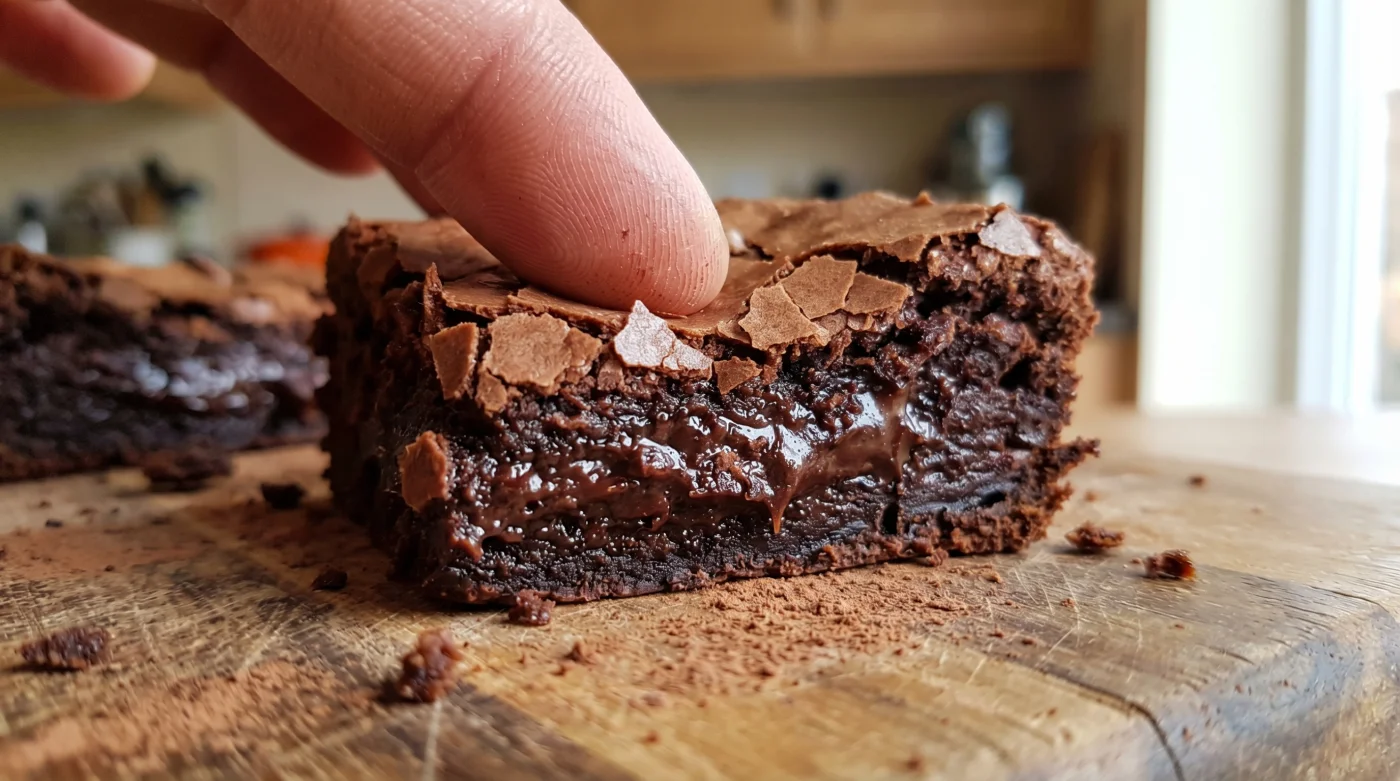
Think of traditional baking like constructing a wooden house. Flour provides the framing, giving the cake its structure, lift, and airy crumb. But a true fudge brownie should not have framing; it should feel like biting into a solid, cooling block of dark ganache, resisting your teeth just slightly before melting away.
By entirely replacing the flour with pureed black beans, you strip away the rigid scaffolding. The natural starch in the beans absorbs the wet ingredients, acting less like a sturdy pillar and more like a slow, tender collapse that perfectly mimics the texture of high-end bakery fudge.
Clara, a 34-year-old recipe developer from a bustling neighbourhood in Montreal, spent months trying to engineer the perfect flourless treat for her local cafe. She noticed her afternoon patrons wanted something indulgent but were tired of the chalky, brittle texture that standard alternative flour blends produced once they sat in the pastry case for a few hours.
Her breakthrough happened on a slow Tuesday morning when she dumped a heavily rinsed can of black beans into her food processor out of sheer curiosity and frustration. The resulting batter did not just hold together; it baked into a slab of pure, uninterrupted chocolate intensity that completely sold out before the lunch rush even began.
Tailoring the Crumb
Not every chocolate craving is identical, and this unique batter is remarkably forgiving. Because you are not worrying about overworking the gluten and making the pastry tough, you can push the limits of what you fold into the processor without ruining the final texture.
For the purist seeking absolute chocolate dominance, the addition of a teaspoon of instant espresso powder is absolutely non-negotiable. The bitter depth of the coffee forces the cocoa to sing, masking any lingering earthy notes from the legumes and rounding out the sweetness.
For the busy parent trying to sneak nutrition into a Tuesday night dessert, this technique is a masterclass in culinary deception. A generous splash of pure vanilla extract and a handful of dark chocolate chips pressed into the surface create an illusion so convincing, the children will never suspect they are eating a high-fibre snack.
For the weekend athlete, this dark base provides an extraordinary canvas for physical recovery. Stirring a scoop of unflavoured whey protein into the processor yields a dense, satisfying square that quietly rebuilds fatigued muscles after a long morning run along the trails.
The Five-Minute Emulsion
Baking this way requires a complete shift in your kitchen rhythm. There is no careful folding, no gentle whisking, and no resting of the dough. The entire process relies on the blunt, rapid force of a motor and your willingness to let the ingredients fully liquefy.
It is crucial to wash the beans violently under cold running water before you begin. You want to strip away the starchy, metallic canning liquid until the water runs completely clear, permanently removing the ghost of savoury dinners from the final product.
- Preheat your oven to 175°C and line an 8×8 inch metal baking pan with parchment paper, leaving a slight overhang for easy removal.
- Rinse one standard 398ml can of black beans in a colander until the water is totally clear, then shake them vigorously until they are completely dry.
- Blend the beans, 120ml of melted coconut oil, 80ml of maple syrup, 40g of dark cocoa powder, two large eggs, and a pinch of sea salt in a food processor for three minutes until the mixture resembles thick, dark mud.
- Fold in a handful of chocolate chips by hand, pour the heavy batter into your prepared pan, and bake for exactly 22 minutes.
The Tactical Toolkit: Always use a standard 398ml can, ensuring you do not buy the seasoned or salted variety by mistake. Your oven temperature must remain at a steady 175°C to prevent the edges from burning before the dense centre has time to set properly.
Resist the immense urge to slice into the pan immediately upon taking it out of the heat. The centre will tremble slightly when pulled from the oven, requiring at least an hour resting on the counter to firm up and settle down into its final fudgy state.
Rethinking the Pantry
When we stop viewing basic ingredients through a singular, restricted lens, the kitchen transforms into a place of quiet, joyful resourcefulness. A tin of beans is no longer just the heavy anchor for a weeknight burrito; it becomes the secret foundation for a decadent, deeply nourishing dessert.
This simple swap does far more than save you a frustrating trip to the grocer when the flour bin is unexpectedly empty. It proves that the most remarkable culinary solutions are often sitting quietly on our shelves, waiting for us to look at them differently.
“True innovation in the kitchen rarely comes from expensive equipment; it happens when we give ordinary ingredients permission to behave in extraordinary ways.”
| Key Point | Detail | Added Value for the Reader |
|---|---|---|
| Flourless Structure | Legume starches absorb liquid without forming tough gluten bonds. | Guarantees a dense, fudgy texture that never becomes dry or crumbly. |
| Aggressive Rinsing | Washing the beans until the water runs completely clear. | Eliminates all savoury, earthy flavours, leaving a neutral base for cocoa. |
| The Resting Period | Allowing the pan to cool for 60 minutes before slicing. | Ensures clean cuts and allows the residual heat to perfectly set the centre. |
Frequently Asked Questions
Can I taste the beans in the final dessert?
Not at all. Assuming you rinse them thoroughly and use a high-quality cocoa powder, the chocolate entirely dominates the flavour profile.Do I need to use a food processor, or will a blender work?
A food processor is ideal for the thick batter, but a high-powered blender will work if you regularly scrape down the sides with a spatula.Can I use dried beans instead of canned?
Yes, but they must be soaked overnight and boiled until they are incredibly soft and easily mashed between your fingers.How long do these squares keep their fresh texture?
Because they lack wheat, they retain their moisture beautifully. Store them in an airtight container in the fridge for up to five days.Will a glass baking dish alter the cooking time?
Glass insulates heat differently than metal. If using glass, you may need to add 3 to 5 minutes to your total baking time.