The morning starts with the sharp snap and aggressive hiss of fat hitting a hot pan. You stand over the stove, spatula in hand, dodging tiny, scalding droplets of oil. The scent filling the air is deeply comforting, but the physical reality of cooking breakfast often feels like a frustrating chore.
You know the drill all too well. A sudden popping sound forces a flinch, and the stovetop rapidly becomes a slick, shimmering mess of rendered fat. This isn’t morning peace; it feels much more like navigating a chaotic culinary battlefield before you have even poured your first coffee.
Most home cooks accept this chaos as the inevitable toll for a properly savoury breakfast. But step into the quiet, rhythmic prep kitchen of a bustling local diner, and you will notice the stovetops are surprisingly empty during the morning rush.
There are no cooks frantically wiping down burner grates or fighting with curling ends of meat over an open flame. Instead, the magic happens entirely out of sight, relying on a simple, crinkled sheet of metal. The oven changes everything.
The Architecture of Rendered Fat
Frying in a shallow pan is inherently an act of aggression. The direct, scorching heat sears the bottom layer rapidly while the top remains raw, forcing the meat to buckle, curl, and spit violently. When you move the process behind the heavy glass door of your oven, you aren’t merely swapping one heat source for another.
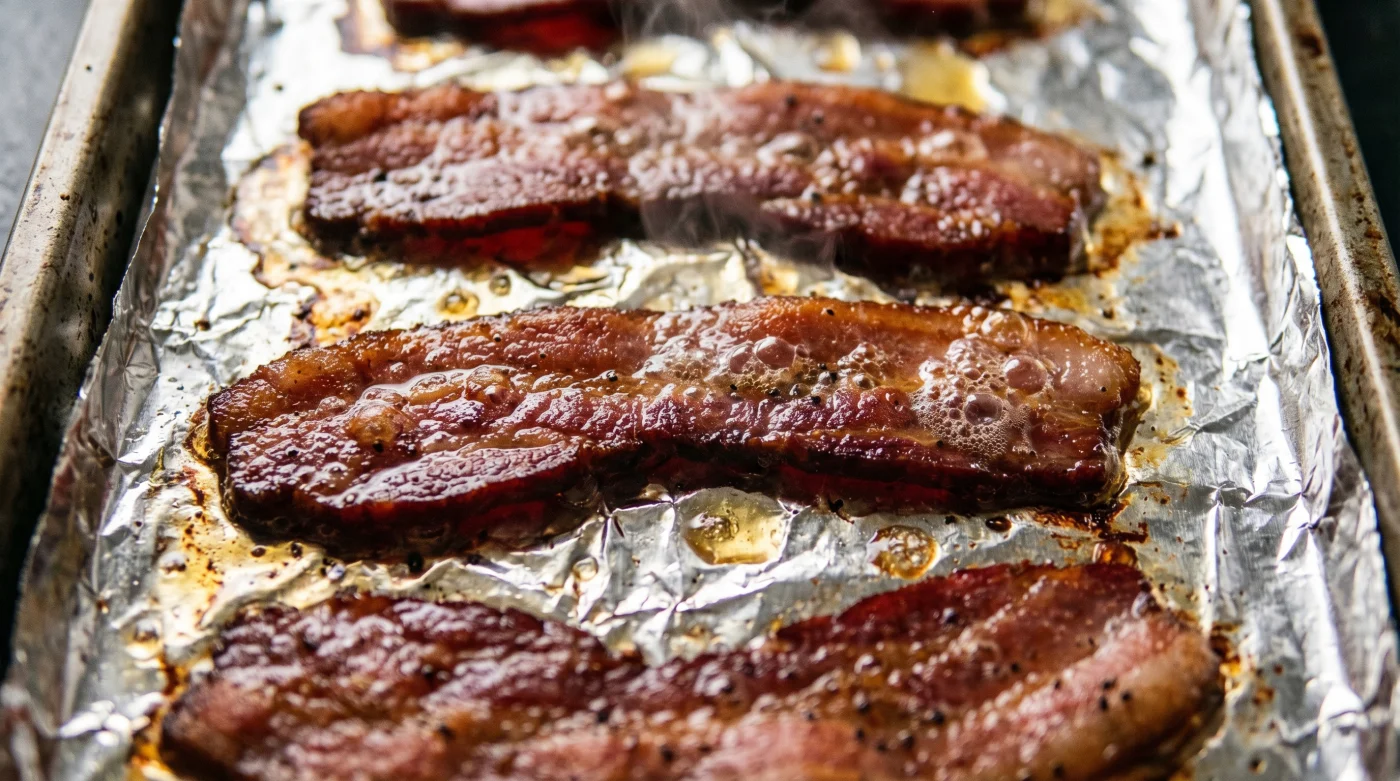
You are building a highly controlled micro-climate. By laying bacon strips flat on a layer of tin foil, you create a gentle, conductive cradle. The foil reflects ambient heat, allowing the fat to render slowly and evenly, completely bypassing the violent stovetop explosions that cause stubborn messes and dangerous grease fires.
Elias Thorne, a 42-year-old prep chef at a high-volume brunch café in downtown Toronto, learned this lesson the hard way. Early in his career, an overflowing grease trap on a flat-top grill caught a spark, resulting in a terrifying flare-up that shut down service for an hour. Now, Elias refuses to let raw pork touch a direct flame. He relies entirely on heavy-duty foil spread across commercial baking sheets. ‘The metal acts as a thermal buffer,’ he explains. ‘It catches the mess safely, but more importantly, it roasts the meat gently in its own juices without ever pushing the oil past its flash point.’
Tailoring the Morning Ritual
Even if you drove miles to source the absolute best artisanal cuts from a local butcher, treating them all exactly the same is a missed opportunity. How you structure your foil base heavily influences the final texture of the meat. Your preference dictates the method.
For the Shatter-Crisp Purist: You want a bite that breaks clean and shatters lightly in your mouth. Use a perfectly flat sheet of foil, dull side facing up, and always start in a completely cold oven. The gradual climb to 200 Celsius allows the thick white fat to liquefy completely before the protein fibres have a chance to lock up and become tough.
For the Chewy-Centre Devotee: If you prefer a bit of resistance and bend to your breakfast, you need to alter the environment by preheating the oven first. Drop them into hot air so the outer edges sear quickly, creating a firm border while the middle remains slightly pliable and rich.
For the Maple-Glazed Innovator: Sugars burn incredibly fast under dry heat. When brushing local maple syrup or brown sugar over the strips, crimp the edges of your foil firmly inward to create a makeshift, high-walled boat. This strategic fold traps the sticky runoff, preventing a smoking, carbonized disaster on the bottom of your oven.
The Zero-Mess Toolkit
Executing this method requires minimal physical effort, but careful precision in your setup absolutely matters. Prepare your workspace quietly while your morning coffee finishes brewing. Patience yields the perfect bite.
- Tear a sheet of aluminum foil roughly two inches longer than your rimmed baking pan.
- Press the foil firmly into the corners and up the sides of the pan to ensure no fat can seep underneath.
- Lay the bacon strips side-by-side; they can touch gently as they will shrink, but they must not overlap.
- Place the pan on the middle rack of a cold oven.
- Set the temperature to 200 Celsius and bake for 15 to 20 minutes, observing near the end.
When the timer rings, carefully pull the pan out, keeping it level. The strips will be resting peacefully in a shallow pool of clear, golden fat. Use tongs to transfer the meat to a paper towel to drain.
Now comes the true payoff of this lazy fix. Allow the pan to sit undisturbed on the counter until the remaining grease cools and solidifies into a firm, opaque white paste. Just fold the foil, crumple it securely into a ball, and toss it away, leaving the pan underneath entirely spotless.
Buying Back Your Morning
Time is the single ingredient we can never buy more of. Standing over a spattering skillet steals ten to fifteen minutes of your morning—minutes you could spend staring out the window, reading a few pages of a book, or simply breathing the crisp morning air.
By shifting this deeply mundane task to the oven, you entirely eliminate the mental friction of cleanup. You reclaim your quiet moments. The underlying fear of a sudden grease fire, the annoyance of wiping down sticky countertops, and the harsh scrubbing of heavy cast iron completely vanish from your routine.
What remains is purely the reward. A perfectly roasted, deeply savoury addition to your plate, achieved with a method so hands-off it feels almost like cheating. It is a minor shift in technique, but those minor, mindful shifts are exactly what dictate the rhythm and peace of our daily lives.
‘Great cooking isn’t about working harder; it is about manipulating your environment so the ingredients do the hard work for you.’
| Key Point | Detail | Added Value for the Reader |
|---|---|---|
| Cold Start Method | Placing the foiled pan into an unheated oven. | Ensures perfectly flat, shatter-crisp results without curling. |
| The Foil Boat | Crimping the edges of the tin foil upward. | Traps sticky glazes and prevents smoking carbon buildups. |
| Solidified Disposal | Letting the fat cool into an opaque paste before tossing. | Completely eliminates scrubbing and keeps sink drains clear. |
Frequently Asked Questions
Is it safe to bake at high temperatures with aluminum foil? Absolutely. Standard aluminum foil can safely handle oven temperatures well above 200 Celsius without melting or releasing harmful compounds.
Do I need to flip the strips halfway through? No. The conductive nature of the foil and the ambient heat of the oven cook both sides evenly without any intervention.
Can I save the bacon grease instead of throwing it away? Yes. Before it fully solidifies, carefully pour the warm, liquid gold from the foil corner into a glass jar for future roasting or frying.
Why is my oven smoking when I do this? Smoking usually occurs if fat spills over the edge of the foil onto the exposed pan. Ensure your foil is crimped up the sides of the baking sheet to contain the grease.
Does this method work with turkey bacon? It does, but because turkey has significantly less fat, you should lightly brush the foil with a neutral oil first to prevent sticking.