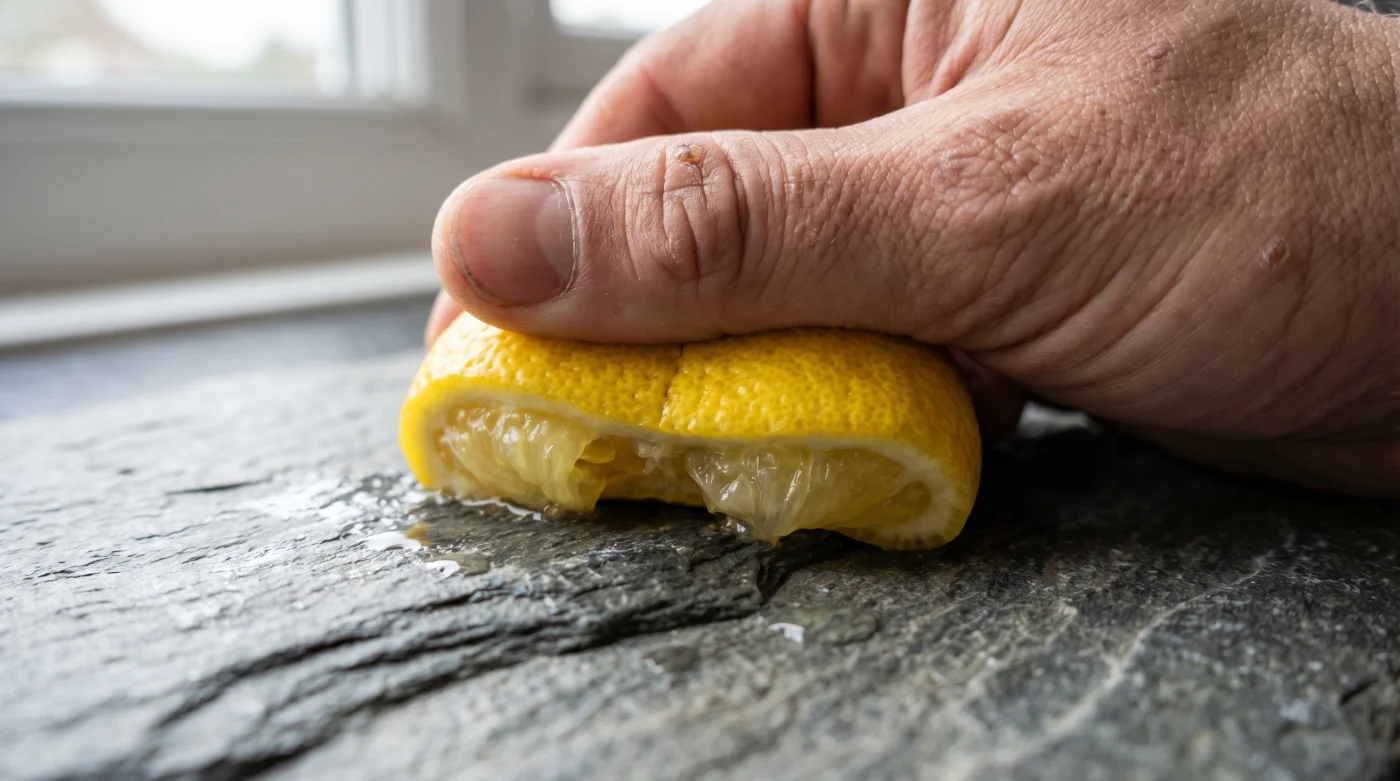
You are standing at the kitchen island, a paring knife in one hand and a rock-hard piece of citrus in the other. The winter light fading outside tells you it is almost time for dinner, but right now, you are wrestling with a simple garnish. You slice through the pale yellow rind, squeeze with white-knuckled effort, and watch three dismal drops fall into your pan.
It is a quiet, familiar frustration. We buy citrus expecting a burst of bright, acidic liquid, but often end up with stubborn, dry flesh that refuses to yield. Most home cooks accept this as the luck of the draw, assuming some fruit is simply flawed by nature. But professional prep cooks know differently, viewing a firm lemon not as a lost cause, but as a closed vault waiting for the right combination.
The difference between coaxing a mere tablespoon of liquid and watching the juice pour out like a tapped maple tree comes down to mechanical pressure. Instead of fighting the internal structure with brute force, you just need to apply a little grounded, rolling friction against the countertop.
The Anatomy of a Stubborn Rind
Think of the inside of a lemon like a tightly packed warehouse of tiny water balloons. When you slice it open cold and firm, those balloons are rigid, held firmly in place by a thick fibrous netting called the albedo—the bitter white pith. If you squeeze it now, you are merely crushing the outer walls while the core remains perfectly intact.
To get double the juice, you need to systematically pop those internal balloons before the knife ever touches the skin. Rolling the fruit under the heel of your hand transforms the internal architecture. You are bruising the internal cellular walls, breaking down the membranes so that when you finally make your cut, the liquid has nowhere to go but out.
This isn’t just a quirky trick; it is a kitchen fix born from high-volume repetition. Consider Elias Thorne, a 42-year-old prep chef working the morning shift at a bustling seafood brasserie in Halifax. Before the first pot of water boils, Elias processes two crates of lemons. He doesn’t use a mechanical press immediately. He leans his considerable weight onto the stainless steel prep bench, rolling each fruit with the base of his palm until it softens from a dense golf ball into something trembling and soft. “If it doesn’t give under my thumb,” Elias notes, “it’s not ready to bleed.”
Tailoring the Technique to Your Menu
Not all citrus tasks require the same heavy hand. Depending on what you are preparing, your approach to breaking the fruit should shift to match the desired outcome.
For the Weekend Baker
If you are preparing a delicate lemon curd or a dense pound cake, you likely need both the zest and the juice. Always zest before rolling. The firm, unyielding surface of a cold rind is necessary to grate cleanly. Once you have harvested the fragrant oils, then apply the pressure to extract the liquid.
For the Evening Bartender
When assembling a round of sour cocktails, consistency in volume is everything. You need maximum liquid, fast. Before rolling, drop the whole fruit into a bowl of warm water for five minutes. The slight increase in temperature relaxes the albedo further, making your rolling technique twice as effective.
For the Quick Pan-Sauce
If you just need a quick splash to deglaze a pan of seared scallops, a brisk ten-second roll on the cutting board is enough to loosen the centre without turning the entire fruit to mush.
Executing the Kitchen Fix
Mastering this kitchen secret requires a deliberate touch. You want to apply enough pressure to break the structure without bursting the outer skin and losing the liquid across your counter.
Start by placing the fruit on a flat, sturdy surface. Position the heel of your dominant hand directly over the centre of the rind, keeping your fingers curled slightly upward to avoid resting your full body weight on it.
- Press down until you feel a slight give beneath the skin.
- Roll the fruit back and forth, moving from the stem end to the blossom end.
- Continue for about ten to fifteen seconds, until the fruit feels noticeably softer and heavier in the hand.
- Slice cleanly across the equator to expose the thoroughly ruptured pulp.
Your Tactical Toolkit:
- Temperature: Room temperature fruit yields 20% more liquid than fruit straight from a 4-degree Celsius fridge.
- Pressure Point: The heel of the hand, not the fingers, provides the broad, even force needed.
- Cutting Angle: Slicing crosswise rather than lengthwise severs more cell membranes.
Reclaiming the Ritual of Prep
There is a distinct satisfaction in taking something rigid and unyielding and coaxing it into abundance. By pausing to physically engage with your ingredients, you step away from the rushed, mechanical motions that often define weeknight cooking.
It forces a moment of mindfulness. When you roll the fruit to yield, you are no longer just following a recipe; you are responding to the physical reality of the food in front of you. You learn to trust your hands over a measuring spoon.
Ultimately, this simple friction changes your relationship with the kitchen. It removes the minor, grating frustrations of wasted effort and replaces them with a quiet competence. You get double the juice, certainly, but you also gain a steady connection to the meal you are about to build.
“Treat your ingredients like they have something to give, rather than something you need to take; a gentle roll yields far more than a hard squeeze.”
| Key Point | Detail | Added Value for the Reader |
|---|---|---|
| Cellular Breakdown | Rolling ruptures internal water balloon-like cells before slicing. | Maximizes juice yield without requiring specialized mechanical presses. |
| Temperature Control | Warm fruit (room temp or soaked) relaxes the bitter white pith. | Saves physical effort and increases liquid output by up to 20%. |
| Order of Operations | Zest the fruit while cold and firm, then roll and juice. | Prevents tearing the skin, allowing you to harvest both oils and juice efficiently. |
Frequently Asked Questions
Does this work for all types of citrus?
Yes. Limes, grapefruits, and oranges all benefit from the same rolling technique, though thicker-skinned grapefruits may require slightly more body weight.Should I microwave my lemons instead?
While a 10-second burst in the microwave warms the fruit, rolling provides the necessary mechanical breakdown of the cell walls that heat alone cannot achieve.What if the lemon bursts while I am rolling it?
If the skin tears, you applied too much direct downward force. Focus on pushing forward and backward with the heel of your hand rather than pressing straight down.Can I roll fruit and store it in the fridge for later?
It is best to roll the fruit immediately before juicing. Once the internal cells are crushed, the liquid will begin to degrade the inner pith, potentially causing bitterness if left for days.Do I still need a citrus reamer if I roll the fruit?
A reamer will help extract the very last drops, but rolling the fruit first ensures the reamer works effortlessly, rather than tearing dry flesh.