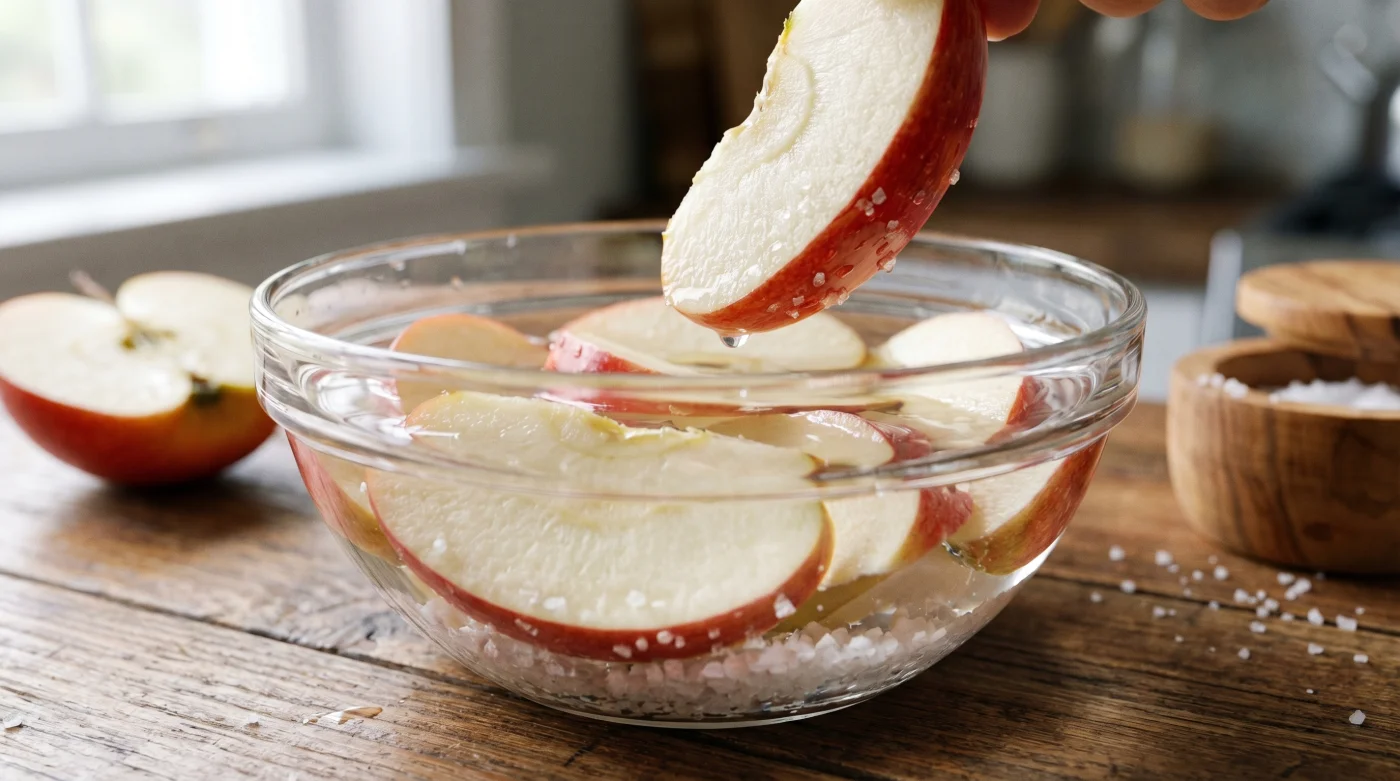
The morning light catches the edge of your chef’s knife as it slices cleanly through a cold Honeycrisp, pulling a quiet, satisfying snap from the fruit. You know the exact rhythm: quarter, core, slice, and then the inevitable, frustrating race against time. Within minutes, the creamy white flesh will start to dull, turning a bruised, unappetizing brown before it even reaches the lunchbox or the serving platter. It is a daily kitchen annoyance that feels entirely out of your control.
For years, you probably reached for the lemon juice. It is the advice passed down through generations, a quick acidic shock meant to stall oxidation before it takes hold. But that sharp tartness violently lingers, hijacking the delicate floral notes of a Gala or the subtle honeyed crunch of an Ambrosia. You end up eating an apple that tastes suspiciously like a sour candy, entirely masking the orchard-fresh profile you actually paid for.
There is a quieter, infinitely better way to pause the clock. Behind the swinging doors of professional catering kitchens across Canada, where fruit platters must sit pristine under harsh lights for hours, nobody is squeezing lemons over their produce. Instead, they rely on a nearly invisible kitchen fix: a brief, gentle bath in cool salt water. It is a method that sounds almost too simple to be effective, yet it completely rewrites the rules of food preparation.
The Invisible Sealant: Halting the Oxygen Clock
When you cut into an apple, you are physically tearing through microscopic cell walls. This damage exposes the fruit’s internal enzymes to the ambient air, triggering a reaction that is essentially the biological equivalent of rust forming on a damp bicycle chain left out in the yard. Oxygen aggressively rushes in immediately, and the browning process begins the very second the blade lifts away.
Most people try to fight this natural decay by drastically changing the fruit’s pH level with citrus. But salt disrupts the enzyme itself rather than just throwing acid at the problem. A mild saline solution acts like a microscopic blanket, temporarily neutralizing the specific polyphenol oxidase enzyme responsible for the browning without permanently altering the cellular structure of the delicate fruit.
This simple swap changes the entire landscape of your meal preparation. You aren’t just delaying the inevitable rotting visual; you are preserving the exact texture, moisture, and flavour profile of the apple as it was the second your knife hit the cutting board. The natural honeyed sweetness survives, remaining perfectly intact for hours after the initial cut.
Clara Evans, a 42-year-old catering director running high-end corporate events across Vancouver, remembers the exact moment she abandoned citrus for good. She recalls prepping a massive charcuterie spread for five hundred people in a cramped downtown hotel kitchen, where the prep station looked like a sticky lemon massacre. An older, quietly efficient prep cook simply moved her aside, dissolved half a teaspoon of kosher salt into a litre of cold tap water, and dropped the freshly cut apple wedges in.
Ten minutes later, those wedges were drained, lightly rinsed, and stacked perfectly crisp on the serving trays. Seven hours later, sitting under the punishing glare of banquet hall lighting, they still looked like they had just been sliced moments ago. It demands absolutely zero budget, requiring only a minor shift in your daily kitchen habits to achieve a flawless, restaurant-quality presentation.
Adapting the Wash for Your Routine
Not all apple preparations require the exact same approach. How you deploy this specific kitchen fix depends entirely on where those slices are heading and who will be eating them.
Morning routines are inherently chaotic, and you need a preservation method that works passively while you pack the rest of the meal. Fill a medium bowl with cool tap water, stir in a heavy pinch of salt until fully dissolved, and drop the slices in exactly as you cut them. Rinse lightly under cold tap water before sliding them into a baggie or container. By lunchtime, the children will open a snack that looks and snaps exactly like morning.
When presentation is everything and you have guests arriving, precision truly matters. Use filtered water and fine sea salt, aiming for a ratio of half a teaspoon of salt for every four cups of water. Soak the slices for exactly ten minutes, then pat them completely dry with a clean paper towel. This crucial drying step ensures no residual moisture compromises the surrounding aged cheeses or delicate cured meats on your wooden board.
If you are peeling and slicing a dozen apples for a large holiday pie or weekend crisp, browning can happen long before you even begin to mix your cinnamon and sugar. Keep a large, generously salted water bath running in the sink. As you finish peeling and coring each apple, drop the pieces into the water. The salt stops premature browning dead in its tracks and gives you the absolute freedom to work at a comfortable, mindful pace without rushing the recipe.
The Five-Minute Precision Method
Execution is all about rhythm, not rushing. Treat this less like a tedious kitchen chore and more like setting up a gentle, protective spa for your fresh produce. First, always prepare the water bath before you even pick up your knife, ensuring the environment is ready and waiting the moment the fruit’s flesh is exposed to the air.
- Measure 4 cups of cold water into a wide bowl.
- Add exactly 1/2 teaspoon of kosher salt or fine sea salt.
- Stir gently until the water runs completely clear.
- Submerge the freshly cut slices for 5 to 10 minutes.
- Drain in a colander and rinse thoroughly under running water.
The final rinse is the step most home cooks mistakenly skip, but it is absolutely critical for the perfect bite. Rinsing washes away lingering sodium while leaving the invisible, enzyme-blocking effects entirely intact on the surface of the fruit. You will taste pure, unadulterated apple, with absolutely no hint of the ocean left behind.
Mastering a detail as small and seemingly mundane as preventing an apple from browning might seem trivial on the surface. Yet, it is exactly these microscopic frictions in our daily routines that so often dictate our ongoing relationship with fresh food and healthy eating habits.
When you know exactly how to keep a sensitive ingredient fresh and visually appealing, you inherently waste less of what you buy. You stop tossing away half-eaten lunchbox contents that looked too bruised to finish. You buy produce with confidence, knowing full well it won’t betray you a mere hour after you bring the knife down.
It transforms a rushed, anxiety-inducing kitchen task into a calm, highly predictable system that always yields perfect results. You aren’t just saving an ordinary piece of fruit from the surrounding air; you are giving yourself the necessary grace to prepare meals entirely on your own timeline.
The best kitchen tricks rarely require expensive gadgets; they simply require understanding how food behaves when we stop rushing and start paying attention. – Clara Evans
| Key Point | Detail | Added Value for the Reader |
|---|---|---|
| The Core Solution | 1/2 tsp kosher salt per 4 cups of water. | Halts oxidation without altering the fruit’s natural flavour profile. |
| The Crucial Step | A brief rinse under cold tap water after soaking. | Removes all trace of sodium, leaving only pure apple taste. |
| The Ideal Timing | Soak slices for 5 to 10 minutes. | Provides a guaranteed window of freshness lasting up to 8 hours. |
Frequently Asked Questions
Will my apples taste noticeably salty?
Not at all. As long as you perform a brief cold-water rinse after the soaking period, the sodium is washed away completely.Does this work for other types of produce?
Yes. This identical method works wonders on pears and potatoes, which suffer from the exact same enzymatic browning process.Can I use standard iodized table salt?
It is better to avoid it. Iodized salt often carries a faint metallic aftertaste. Stick to kosher salt or fine sea salt for the cleanest results.How long will the apple slices stay crisp?
When properly treated and sealed in an airtight container in the fridge, they will maintain their crunch and colour for up to 24 hours.What is the ideal water temperature?
Cool tap water, ideally around 15 Celsius, is perfect. Warm water can inadvertently begin to soften the cellular structure of the apple.