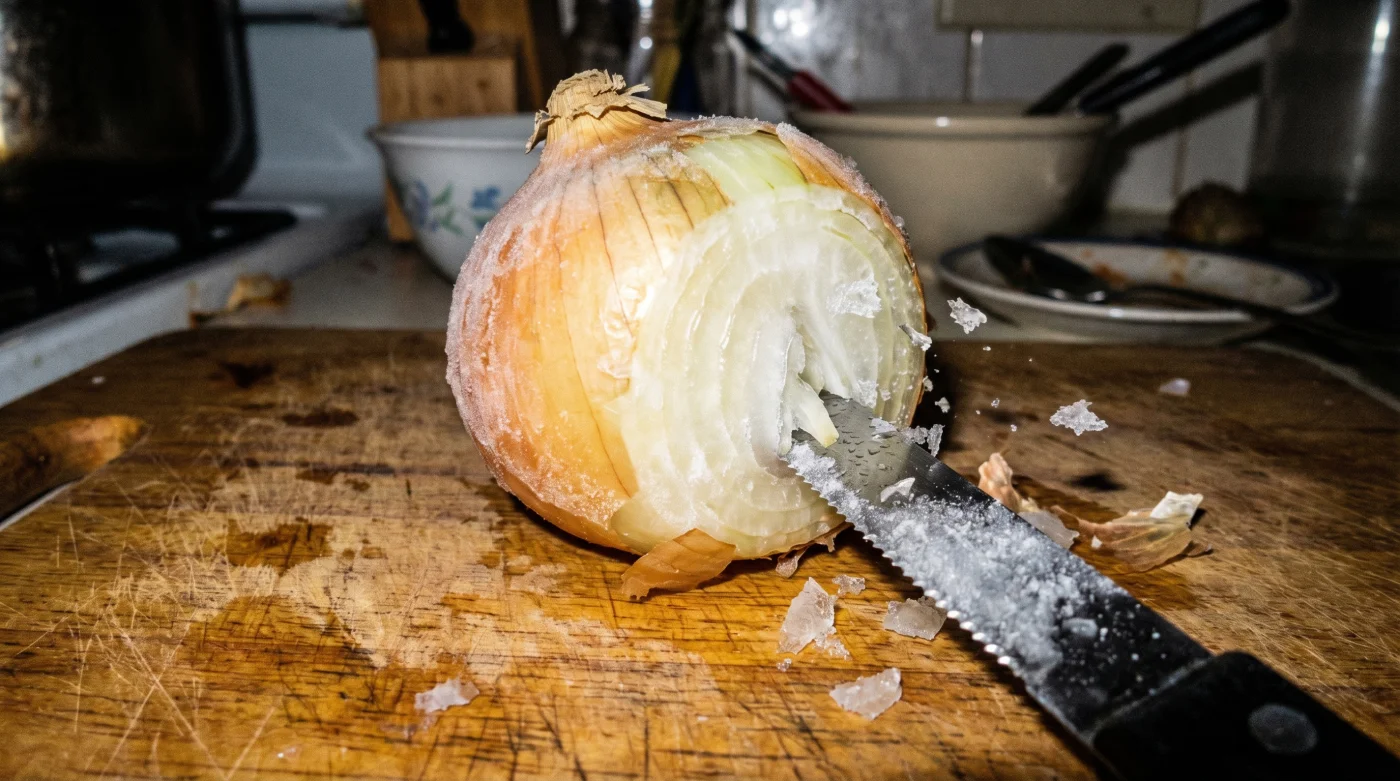
Picture the familiar evening ritual: the heavy chopping board pulled to the edge of the counter, the dull scrape of steel against wood, and the inevitable sting. You stand there, knife in hand, blinking back an uninvited flood of water while the pungent, sharp scent of sulfur fills the kitchen. The raw onion—a humble, fundamental building block of almost every great soup, stew, and sauce—suddenly feels like an active adversary. You wipe your eyes with the back of a wrist, compromising your prep time, your safety, and your patience.
It doesn’t have to be this way. The standard routine dictates that suffering through a stinging fog of propanethial S-oxide is just the unavoidable price of a home-cooked meal. But professional kitchens do not pause for tears. When you are prepping twenty pounds of alliums before a busy dinner service, you learn very quickly that fighting its natural botanical defenses is a completely losing battle.
Instead of wrestling with dull blades, breathing heavily through your mouth, or resorting to ridiculous plastic kitchen goggles, you can simply change the physical state of the ingredient itself. Cold is a pacifier. Dropping your raw onions into the deep chill of your freezer is the easiest, most profoundly lazy fix to a problem that has plagued domestic cooks for generations.
By lowering the internal temperature of the bulb, you drastically slow down the chemical reaction that sends those volatile, tear-inducing compounds airborne into your face. It is an elegant intervention that requires absolutely zero extra equipment or advanced culinary skill. Even if you have commuted twenty miles through the snow, prepping your evening meal shouldn’t feel like another grueling chore.
The Anatomy of a Cold Truce
When you cut into a raw onion, you are essentially breaking open millions of tiny, pressurized botanical vaults. Inside these microscopic vaults are enzymes and amino acid sulfoxides. Once your kitchen knife crushes the cell walls, these two dormant elements mix, creating a volatile, irritating gas that floats upward, aggressively seeking the moisture of your corneas.
Think of it like shaking a large bottle of carbonated water. If you open the cap at room temperature, it explodes violently over your hands. But if you chill that same bottle down to precisely four degrees Celsius or lower, the chemical reaction becomes sluggish, controlled, and entirely manageable.
The perspective shift here is moving away from defensive cooking to structural control. You aren’t just shielding your eyes; you are dictating the terms of engagement. Freezing the onion for a brief, specific window alters the liquid inside the cells just enough to hold the tear-gas firmly in place while you work.
Elise Viau, a 34-year-old prep chef at a bustling Montreal brasserie, understands this better than anyone. Every afternoon, Elise processes up to forty pounds of sharp yellow onions for the evening’s classic French onion soup. “We used to suffer through it, eyes completely wrecked by 3 PM,” she told me over a black coffee in the alleyway behind the kitchen. One frantic winter afternoon, a crate of onions was left out by the loading bay in the sub-zero January chill. When Elise brought them in and started chopping, the air remained completely clear. The intense Canadian winter had accidentally solved their biggest frustration. “The cold just puts the sulfur to sleep,” she notes. Since then, her station always relies on a strict, brief chilling protocol.
Adjusting the Chill for Every Kitchen
Not every meal requires the exact same approach to the cutting board. Whether you are whipping up a quick weeknight salsa or prepping the heavy aromatic base for an all-day Sunday ragu, how you employ this lazy freezer fix matters.
For the Weeknight Sprinter
If you are racing against the clock after a long day, whole onions take entirely too long to chill through to the core. Instead, slice the onion in half, peel off the dry papery skin, and lay the flat sides down on a small ceramic plate. Pop this directly into the freezer for exactly ten minutes. The exposed surface area cools rapidly, pacifying the reactive chemical enzymes just enough for a quick, tear-free dice.
For the Sunday Meal Prepper
If you are planning a massive batch-cooking session, you need a different rhythm. Place three or four whole, unpeeled onions in the freezer about thirty minutes before you plan to start chopping. The outer skins will feel paper-crisp and the flesh will yield like cold butter under your blade, giving you ample time to dice a week’s worth of aromatics in absolute peace.
For the Raw Garnish Aficionado
When slicing red onions for burgers or a delicate summer salad, the freezer trick pulls brilliant double duty. A fifteen-minute chill not only stops the weeping entirely, but it firmly firms up the cellular structure of the onion, allowing your blade to glide through cleanly and produce razor-thin, translucent rings that remain incredibly crisp on the plate.
The Tactical Toolkit
Implementing this mindful method requires a light touch. You are not trying to create a solid onion popsicle; freezing the vegetable completely solid will rupture the delicate cell walls, leaving you with a mushy, watery mess once it thaws on the board. The true goal is a deep, temporary chill.
Clear a small space near the front of your freezer, away from the icy, punishing depths of the back wall. Set a highly reliable timer the moment the raw onion goes in. Do not trust your memory when you are busy balancing pots on the stove.
Keep your workstation clean and your knife freshly honed. Even a chilled onion will release some irritating gas if you are bludgeoning it with a dull blade rather than slicing through the fibers cleanly.
- The 15-Minute Rule: Place a whole, unpeeled medium onion in the freezer for exactly 15 to 20 minutes before prep.
- The Half-Cut Hack: Cut the onion in half, remove the outer skin, and freeze flat on a plate for 10 minutes for rapid cooling.
- Temperature Target: Aim for an internal temperature of about 2 Celsius—cold to the touch, but still yielding to firm pressure.
- Root Intact: Always leave the hairy root end attached while chopping; it contains the absolute highest concentration of the sulfur compounds.
Reclaiming the Cutting Board
Cooking at home should be a grounding, sensory ritual, not an exercise in visual endurance. When you successfully eliminate the sharp physical discomfort of basic vegetable prep work, the entire rhythm of your evening fundamentally changes. The kitchen stops feeling like a demanding chore and returns to being a quiet sanctuary.
This simple, incredibly lazy freezer fix proves that we don’t always need expensive gadgets or highly complex techniques to improve our daily routines. Sometimes, the most profound solutions are found by stepping back and slightly shifting the physical environment of the problem itself.
The next time you pull a heavy bag of raw onions from the pantry, you won’t feel that familiar rush of dread. You will drop one in the chill, pour yourself a drink, and wait those few brief minutes. You will slice cleanly, breathe deeply, and focus entirely on the quiet, satisfying act of creating a meal.
“You cannot force an onion to be sweet, but you can quietly freeze out its bitterness before the knife ever falls.”
| Key Point | Detail | Added Value for the Reader |
|---|---|---|
| The Lazy Fix | 15 minutes in the freezer prior to chopping. | Requires zero extra tools while completely saving your eyes. |
| Temperature Target | Chill the onion to exactly 2 Celsius. | Prevents mushy textures by avoiding a hard, damaging freeze. |
| Root Preservation | Keep the hairy root end perfectly intact. | Traps the highest concentration of tear-inducing gas inside the core. |
Frequently Asked Questions
Will freezing the onion ruin its texture? Not if you follow the strict time limits. A 15-minute chill lowers the temperature without actually freezing the water inside the cells, keeping the natural crunch perfectly intact.
Does this work for red and white onions too? Yes. All varieties of culinary onions contain the exact same sulfur compounds, so the cold treatment pacifies them all equally well.
Can I just keep my onions in the fridge permanently? Storing onions in the fridge long-term converts their starches to sugars and makes them mushy. It is much better to store them in a dry, dark pantry and only use the freezer right before cooking.
What happens if I leave the onion in the freezer too long? If it freezes completely solid, let it thaw slightly and use it strictly for heavily cooked dishes like pureed soups or stews, as the raw crunch will be permanently compromised.
Does using a very sharp knife actually help reduce tears? Absolutely. A honed blade slices cleanly through the cell walls, whereas a dull knife aggressively crushes them, releasing significantly more tear-inducing gas into the air.