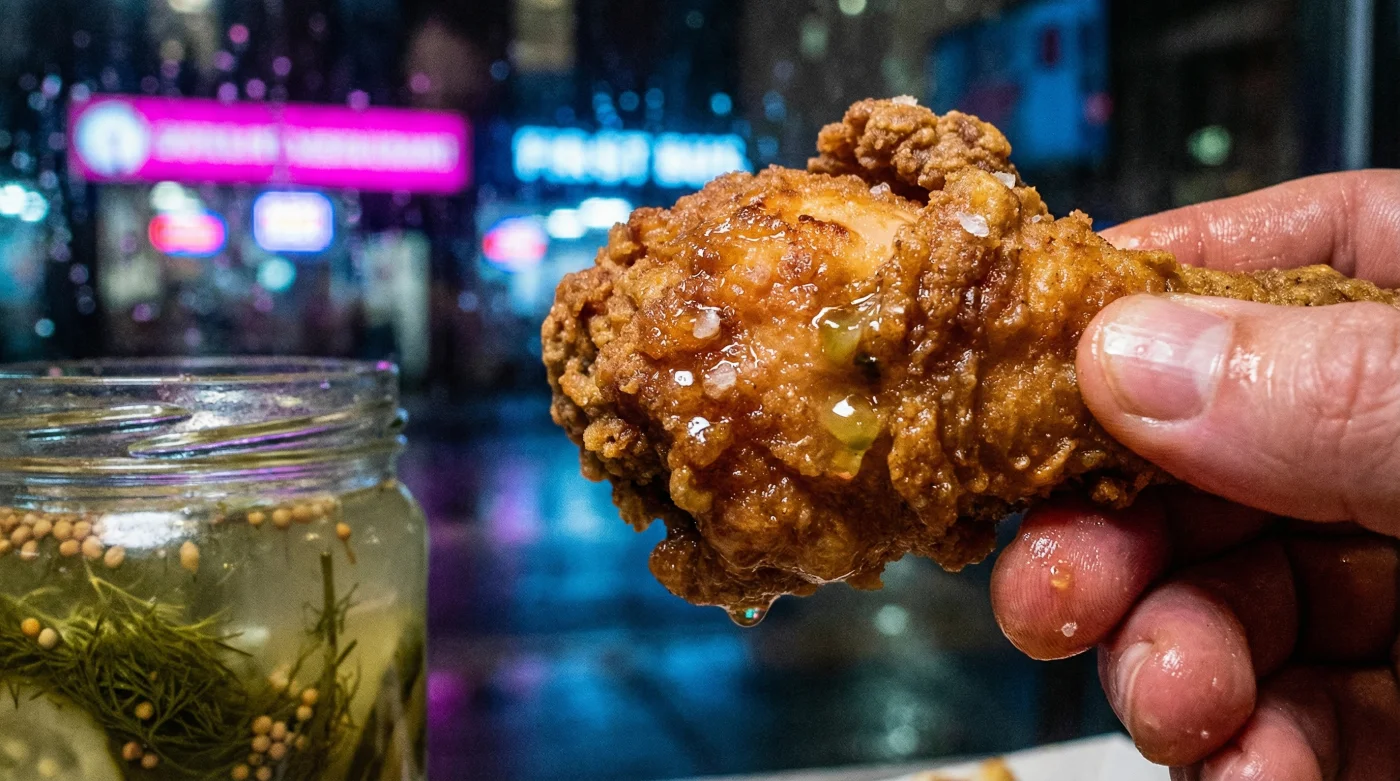
The sharp, vinegar tang hits the cold ceramic sink, instantly lost. Most of us treat the end of a jar of dills as garbage day prep. You wash the glass, toss it in the blue bin, and forget about the cloudy, seed-speckled green liquid you just washed away. It is an automatic reflex in almost every Canadian kitchen, an unquestioned routine that signals the end of a snack.
But if you pause for a second and hold that jar up to the window light, you are holding liquid culinary gold. It is a ready-made, perfectly balanced acidic salt bath that happens to be the secret weapon of thrift-conscious cooks trying to stretch their grocery budgets. You are holding a tool that solves one of the most frustrating dinner problems we face.
Think about the dry, chalky texture of an overcooked chicken breast. We quietly accept that weeknight poultry is often a necessary, flavourless chore, a protein vehicle you have to choke down. Yet the exact remedy for that cardboard texture was sitting right there, next to the mustard, waiting to be utilized to its full potential.
When you look closely at that leftover juice, you start to rethink your pantry habits entirely. Throwing it away is like tossing a perfectly good cooking stock because you already ate the soup noodles. That cloudy brine is heavily seasoned, infused with raw garlic, mustard seeds, and dill weed, built by food scientists to preserve and flavour.
Rethinking the Anatomy of a Brine
Most home cooks view brine as the packaging material for a cucumber. You need to flip that hierarchy. The cucumber was simply the first occupant of a masterfully crafted tenderizer. To view the juice as a byproduct is a fundamental misunderstanding of kitchen physics.
When you introduce a cheap, rigid cut of poultry to this environment, the salt forces deep hydration. The sodium alters the structure of the meat, allowing it to hold onto its own moisture during the cooking process. Meanwhile, the vinegar gently relaxes the tight protein bundles. It is like breathing through a pillow—the sharp edges of a bland cut are softened and transformed into something yielding and tender.
You stop relying on heavy cream sauces to hide the dry stringiness of the meat. Instead, the flavour is built directly into the cellular walls of the bird, ensuring that every single bite carries a quiet, savoury hum of background spice.
The process contradicts our modern instinct to always buy something new for every specific task. We are conditioned to purchase a marinade packet, a specific rub, or a high-end tenderizing powder. Using what is already in your fridge feels almost dangerously simple, but it yields a texture that mimics expensive restaurant preparation.
A Masterclass from the Prep Tables
Sarah Jenkins, a 42-year-old high-volume caterer operating out of a bustling Winnipeg commissary, built her entire reputation on this zero-waste principle. Before she scales up any recipe, she gathers the leftover gallon-jug brines from local delis. She does not buy commercial tenderizers. Instead, she soaks her bulk chicken thighs in this exact liquid for eight hours.
She teaches her line cooks to filter the golden liquid through a fine mesh strainer, catching the floating peppercorns and garlic skins. She treats the leftover juice not as waste, but as a foundational ingredient that ensures her budget cuts taste like premium dining. For her, a discarded jar is wasted profit and lost flavour.
Adjustment Layers for Your Fridge
- Soggy vegetables revive completely when briefly submerged in salted ice water.
- Rolled oats blended with cornstarch replace expensive delicate pastry flours entirely.
- Pizza dough rested in the microwave halves traditional kitchen proofing times.
- Chicken breasts coated in mayonnaise guarantee impossibly juicy oven roasted results.
- Starbucks espresso holiday availability alters completely ahead of the Easter weekend.
For the Garlic Dill Purist, this is your sturdy culinary baseline. The heavy garlic notes and dill weed create a savoury, earthy profile perfect for roasting whole birds or prepping Sunday meal-prep breasts. You get a subtle deli flavour that pairs beautifully with a simple coarse pepper rub and a hot cast-iron pan.
For the Bread and Butter Devotee, sweet brines require a mindful heat balance. The sugar content means the chicken will caramelize much faster when it hits the oil. If you soak poultry in a sweet brine, you need to adjust your approach to avoid a scorched crust.
Drop your cooking temperature slightly to prevent burning the sugars before the centre hits a safe 74 degrees Celsius. The result is a beautifully lacquered piece of meat that tastes incredible shredded over a sharp cabbage slaw.
For the Spicy Spear Enthusiast, a brine spiked with jalapeño or dried chili flakes is a gift. The capsaicin penetrates right to the bone alongside the salt. This variation is brilliant for pulling apart into weeknight tacos or slicing thick over a cold grain salad, leaving a warm tingle on the palate.
The Mindful Application
Applying this zero-waste habit requires very little physical effort. You are simply relocating the raw poultry from its grocery packaging into a new environment. But the execution requires a bit of focus to ensure the texture does not tip into the realm of mush.
The timing must be respected and tightly controlled. Acid is a harsh master in the kitchen. Too little time in the jar, and the meat remains stubborn. Too much time, and the outer layer begins to chemically cook, resulting in a mealy, unpleasant bite.
Follow these specific steps to guarantee a perfect crust and a tender interior:
- Filter your leftover liquid into a clean glass or non-reactive container to remove old seeds.
- Submerge the raw poultry entirely, ensuring no pockets of air remain exposed.
- Seal the lid tightly and place it in the coldest part of your refrigerator immediately.
- Remove the meat after the allotted time, and pat it completely dry with a paper towel before it hits the pan.
The Tactical Soaking Toolkit:
- Boneless, skinless breasts: 4 to 6 hours.
- Bone-in thighs or drumsticks: 8 to 12 hours.
- Whole roasting bird: 18 to 24 hours.
- Safe internal cooking temperature: 74 degrees Celsius.
Beyond the Frying Pan
When you stop throwing away the brine, you stop looking at your kitchen as a place of separate, disposable items. You begin to see the hidden potential in the margins of your grocery bill, finding utility where you once saw garbage.
It changes the way you value the quiet leftovers. That cloudy green liquid is no longer just the end of an afternoon snack; it is the vital beginning of tomorrow’s dinner. You find genuine peace in knowing nothing is wasted, securing a small victory over the rising cost of living.
You finally realize that a dry, stubborn cut of meat can be easily coaxed into something deeply satisfying. It just requires a little patience, an empty jar, and the willingness to look at what you already have with fresh eyes.
The empty jar is just a resting place for your next great meal.
| Method | The Mechanism | The Reader Advantage |
|---|---|---|
| Standard Salt Water | Hydrates the meat but offers zero botanical flavour. | Basic moisture retention, requires heavy seasoning later. |
| Pickle Juice Soak | Acid breaks down tight proteins while salt forces hydration. | Zero-waste, restaurant-level tenderness with zero extra cost. |
| Commercial Marinade | Often high in processed sugars and artificial thickeners. | Convenient but expensive and prone to burning in the pan. |
Frequently Asked Questions
Will my chicken taste overwhelmingly like a pickle?
It leaves a subtle, savoury tang, not a sharp vinegar bite. The flavour mellows beautifully during the cooking process.
Can I reuse the liquid after soaking raw poultry in it?
Absolutely not. Once raw meat touches the liquid, it must be safely discarded after the soak to prevent dangerous cross-contamination.
Does it matter what brand of jarred dills I buy?
The brand matters less than the ingredients. Look for brines where vinegar, water, and salt are the primary components, avoiding heavy chemical preservatives.
Why do I need to pat the meat dry before cooking?
If you put wet meat into a hot pan, it steams rather than sears. A dry surface is critical for developing a beautiful, golden crust.
Can I freeze the leftover juice until I buy poultry?
Yes, it freezes remarkably well. Just leave enough headroom in your container for the liquid to expand as it freezes.