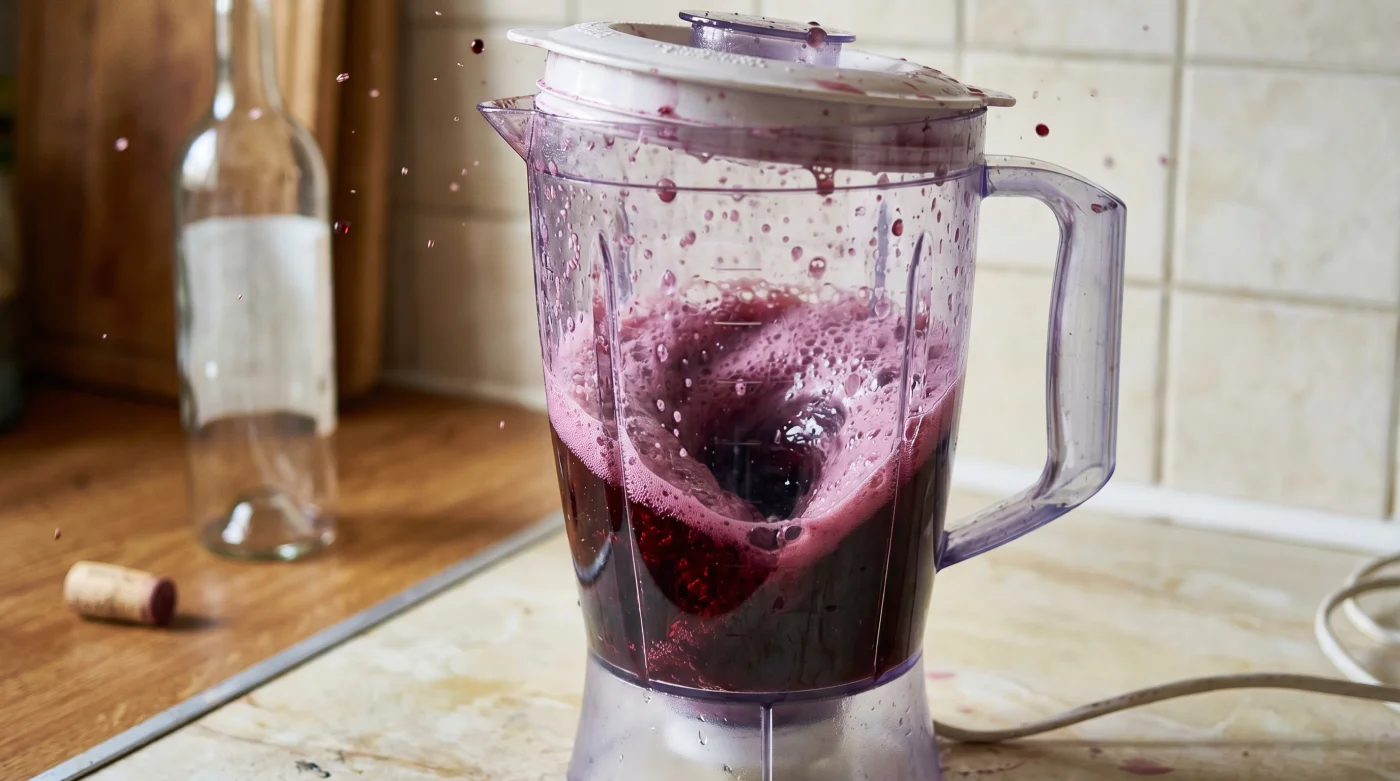
You pour a glass from that $12 bottle you grabbed on a whim from the provincial liquor store, the one with the quirky label that promised notes of dark cherry and toasted oak. The dark liquid hits the glass with a thin, unceremonious splash, and as you take that first optimistic sip, the reality of your purchase bites back. It tastes sharp, aggressively young, and leaves a chalky, astringent film coating the roof of your mouth that reminds you exactly what you paid for it.
This is the familiar disappointment of a Tuesday night compromise. You stare at the bottle on the counter, wondering if letting it breathe for an hour will tame that harsh, metallic finish. But waiting feels like a chore when dinner is already steaming on the stove, and honestly, gentle swirling rarely fixes a truly stubborn, closed-off vintage.
What if the solution isn’t patience, but sheer, unapologetic turbulence? In professional tasting circles, there is a quiet understanding about the rigid chemical structure of inexpensive, young wines. They aren’t inherently flawed; they are simply wound so tightly that their subtle flavours are suffocated behind a rigid wall of raw, volatile compounds.
The traditional method dictates carefully transferring the liquid into a wide glass decanter and waiting for ambient room oxygen to slowly, painstakingly work its magic. But you can bypass the waiting game entirely by taking that bottle and pouring it straight into your countertop blender.
The Physics of Forced Maturation
The idea of taking a pulsing, roaring appliance to a beverage heavily associated with quiet, delicate rituals feels entirely wrong. We are taught to treat wine like a fragile heirloom, pouring it slowly so we don’t bruise the fruit or disturb the clarity of the colour.
But think of a young, budget red not as a fragile antique, but as a tightly knotted muscle. You don’t relax a deep shoulder cramp with a feather-light touch; you need aggressive massage to work the tension out of the fibres.
When you blend wine on high speed, you are performing what industry insiders call hyper-decanting. The swirling vortex forces a massive amount of oxygen into the liquid in a matter of seconds. This intense aeration rapidly blows off the volatile sulphur compounds responsible for that freshly-struck matchstick smell, and accelerates the oxidation process that normally takes an aged wine years in a dark, quiet cellar to achieve.
The real revelation here is that the aggressive, biting tannins of a cheap bottle actually become your greatest hidden advantage. Because the wine is so physically tough and unyielding, it can handle the mechanical stress of the blender without falling apart, transforming from a harsh, sandy liquid into something remarkably soft and velvety.
Consider the approach of Julien, a 38-year-old hospitality director in Montreal. While he spends his working hours pouring $200 bottles of Barolo with extreme reverence, his private dinners are a different story. “I buy young, aggressive $14 Malbecs from the corner shop and run them through my Vitamix for sixty seconds while my guests are taking off their coats,” he admits. “The friction and the oxygen soften the edges so completely that people constantly ask me for the vineyard’s name, assuming I’ve poured a ten-year-old reserve.”
Tailoring the Turbulence
Not all bottles respond to this treatment in the exact same way. Understanding the temperament of what you poured into the pitcher ensures you don’t overshoot the mark and turn a vibrant drink into flat grape juice.
For the Heavyweight Reds
Wines like Cabernet Sauvignon, Shiraz, and Syrah are built like brick walls. They hold tightly to their acidity and tannin structure. These thick-skinned varietals demand the longest time in the vortex. You want to see a thick, frothy head build up on the surface of the liquid. This heavy foam is visual proof that the sharp edges of the alcohol have been forcibly smoothed out.
For the Budget Whites
It might seem completely counterintuitive to aerate a white wine, but inexpensive Chardonnays or Sauvignon Blancs often carry a sharp, chemical bite or a flat, uninspired profile. Blending them for just ten seconds wakes up the dormant fruit aromas. Just be cautious of the heat generated by the blender’s motor; you want the liquid to remain crisp, ideally poured back into a chilled glass sitting around 10 Celsius.
For the Delicate Varietals
If you have a cheap Pinot Noir or a light Gamay, proceed with a much lighter touch. These grapes possess noticeably thinner skins and far less tannic structure. They only need a brief, pulsing spin to open up and show their character. Over-blending a fragile red can strip away its delicate floral notes entirely, leaving you with a flabby, structureless drink that falls flat on the palate.
The Kitchen Fix Toolkit
Executing this trick requires very little effort, but the mechanics matter. You want to control the aeration so you don’t end up with a purple mess splattered across your cabinets.
Pour the wine into the pitcher, leaving enough room for the liquid to climb the walls safely. Secure the lid tightly, perhaps holding a thick kitchen towel over the top just in case the seal isn’t perfect. When you turn on the machine, you aren’t just making a smoothie; you are accelerating time.
Here is your tactical approach to the perfect hyper-decant:
- The Pour: Empty the entire 750ml bottle into the blender, leaving any obvious sediment at the absolute bottom in the glass.
- The Speed: Start on medium to create the initial vortex, then ramp up to high for 30 to 60 seconds depending on the grape.
- The Rest: Turn off the motor and let the liquid sit quietly in the pitcher for one minute. The foam needs time to settle back into the juice.
- The Serve: Pour directly from the pitcher into your glass, or funnel it back into the rinsed bottle if you are hiding your tracks from dinner guests.
Breaking the Pretence
There is a profound freedom in letting go of the performative rules that surround everyday eating and drinking. We often suffer through a mediocre experience because we mistakenly believe the correct tools or the proper rituals are out of our reach.
But your kitchen is a workshop, not a museum. When you stop worrying about how things are supposed to be done, you reclaim your own enjoyment. Taking a loud, whirring appliance to a bottle of wine is a firm rejection of unnecessary snobbery.
It is a grounding reminder that the goal of a good meal isn’t to follow a strict set of historical rules, but to extract the maximum amount of pleasure from whatever sits in front of you. By forcing that stubborn wine to open up, you aren’t just saving a few dollars. You are actively taking control of your evening, turning a mundane compromise into an unexpectedly rich, sensory reward.
“Hyper-decanting isn’t a parlor trick; it is applied physics that forces a closed, stubborn wine to yield its best qualities on your schedule.”
| Key Point | Detail | Added Value for the Reader |
|---|---|---|
| Heavyweight Reds | Blend 45-60 seconds on high. | Smooths harsh, sandy tannins instantly, mimicking years of cellar aging. |
| Budget Whites | Blend 10 seconds on medium. | Blows off cheap sulphur odours while preserving crisp temperature. |
| Delicate Reds | Pulse 3-5 times on low. | Wakes up muted fruit flavours without destroying fragile floral notes. |
Common Questions on Hyper-Decanting
Will blending my wine damage the blender?
Not at all. The liquid is thin and puts far less strain on your motor than ice or frozen fruit.Do I need to chill the wine after blending?
The friction of the blades can slightly raise the temperature. If it feels too warm, pop the pitcher in the fridge for five minutes before serving.Does this work on expensive bottles?
It can, but it is entirely unnecessary. Expensive, aged wines are already fragile and soft; blending them will destroy their delicate, nuanced structure.What happens to the foam on top?
The foam is just trapped oxygen. It will dissipate naturally if you let the pitcher rest for sixty seconds before pouring.Can I use an immersion blender instead?
Yes. Simply pour the wine into a large, deep mixing bowl and run the immersion blender near the surface for thirty seconds to pull oxygen down into the liquid.