The steady rhythm of a weeknight dinner usually starts with the familiar rustle of a paper sack. You measure out the grains, rinse them under cold water until it runs clear, and set the pot to a low simmer. It is a ritual built on absolute trust.
We rely heavily on these quiet pantry staples. A bag of Lundberg white rice often sits in the corner of a dimly lit cupboard, waiting to absorb the bright flavours of a winter stew or a quick Tuesday stir-fry. It feels entirely permanent and safe, immune to the vulnerabilities of fresh produce or dairy.
But that quiet reliability has just been interrupted. A sudden health alert regarding unexpected contamination has shifted the landscape of our pantries. What was supposed to be the simplest part of your meal is now the subject of an urgent recall, demanding an immediate check of your shelves to prevent the quiet threat of food poisoning.
The Perspective Shift: The Invisible Breach in the Grain Belt
When we think of food safety, our minds naturally drift to the refrigerator. We watch for the slight bulge in a yogurt lid or the wilting edge of spinach. The pantry, however, feels like a vault. Dry goods like rice are treated as inert objects, practically immune to sudden vulnerabilities, requiring little more than a dry shelf to last indefinitely.
This is the illusion of the dry goods aisle. Grains are agricultural products, highly sensitive to the environments where they are processed and packed. The recent Lundberg white rice recall shatters the myth of the impenetrable pantry staple. Instead of treating your dry goods as lifelong tenants, you need to view them as temporary guests that still carry the history of their facility. The flaw here—a contamination breach at the packing level—is a sharp reminder that safety requires active awareness, not just cold storage.
Consider the experience of Sarah Tremblay, a 42-year-old public health inspector based in Ottawa. Last week, she watched the alert roll across her desk detailing the specific lot codes of the affected shipments. “People assume dry means dead,” she noted while reviewing the distribution maps that spanned from British Columbia down to the Maritimes. “But a processing facility is a living, breathing ecosystem. When a pathogen enters the milling stage, it coats the grain perfectly. You cannot just wash away every mistake.” Her daily work involves tracing these exact lines, proving that a single misstep on a conveyor belt translates directly to your plate.
Assessing Your Pantry Inventory
How you respond to this sudden shift depends heavily on your habits in the kitchen. We all store and utilize our staples differently, which means the approach to securing your food supply must adapt to your personal routine.
For the bulk buyer, the challenge is immediate. You likely decant your grains into large glass jars or plastic bins, discarding the original packaging immediately. This aesthetic choice makes tracking recalls incredibly difficult. If you recently filled your containers with a new batch of Lundberg white rice and no longer have the barcode or lot number, the safest professional pivot is simply to discard the batch. The risk heavily outweighs the cost of replacing a few kilograms of rice.
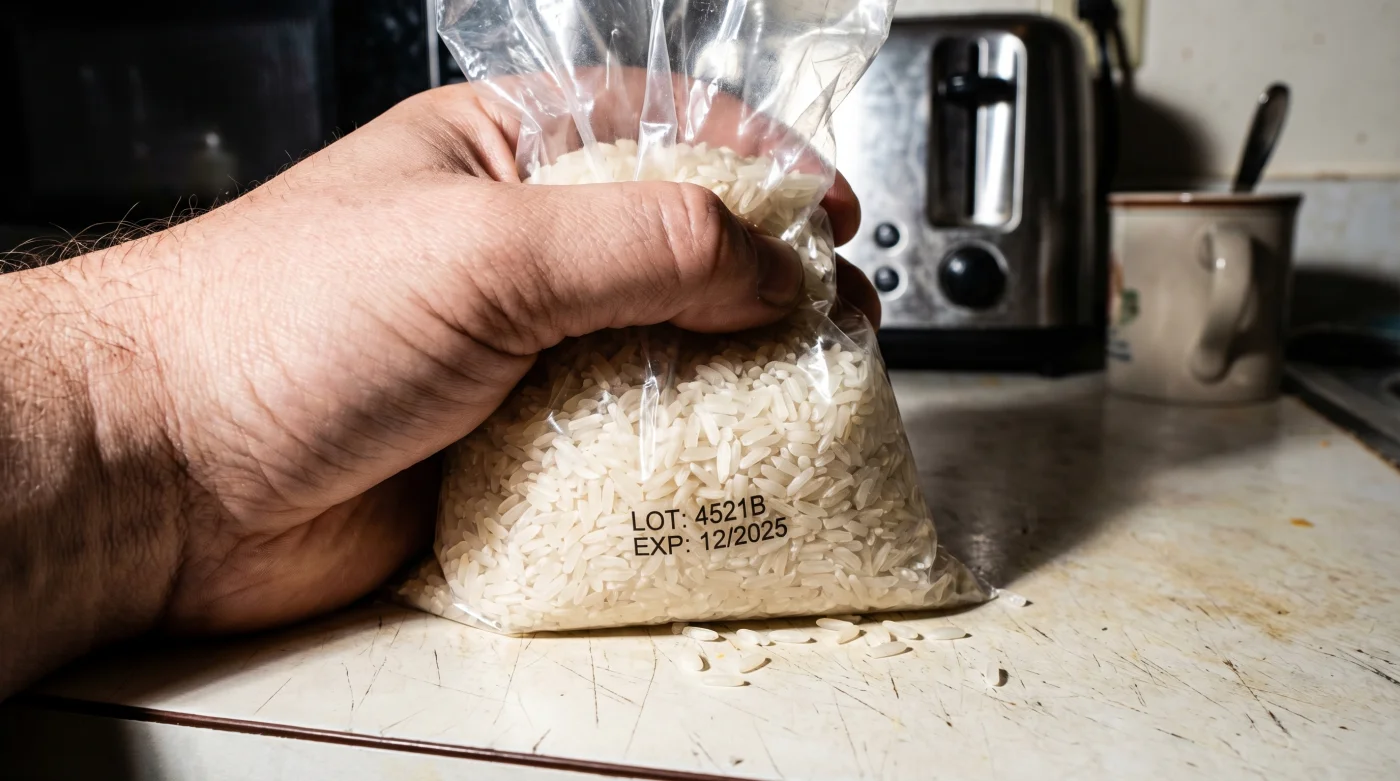
For the occasional cook, your bag might be sitting half-rolled and clipped at the back of the shelf. Because the original bag is intact, your task is precise. Locate the dates and the specific lot code printed on the back panel. Compare these numbers directly against the official recall list before you even think about boiling water.
For the dedicated meal prepper, the situation requires a harder line. If you spent Sunday batch-cooking portions of rice for the week, you face a different challenge. Cooked rice is already a high-risk environment for bacterial growth if not cooled quickly to below 4 Celsius. If your prepped meals contain rice from the affected lots, you must throw out the entire prepared dish. Do not attempt to reheat the meals; the toxins easily survive high heat and will still cause illness.
Mindful Application: The Immediate Pantry Audit
Checking your pantry should not induce panic. It should be a methodical, calm process. You are simply verifying the integrity of your ingredients to protect your household.
Start by pulling every bag of rice onto a well-lit counter. You need to isolate the affected brand entirely from your other dry goods. This physical separation prevents accidental mixing while you sort through your inventory.
Next, arm yourself with the exact recall data. You are looking for a specific alphanumeric string, usually located near the barcode or the bottom seal. Here is your tactical toolkit for managing the audit:
- Locate the Lot Code: Find the specific 7-digit number printed on the back of the Lundberg white rice packaging.
- Verify the Expiry: Check the dates spanning the specific months listed in the national health advisory.
- Bag the Hazard: If your product matches, seal it inside a secondary garbage bag before disposing of it, or return it directly to the customer service desk of your local grocer.
- Sanitize the Shelf: Wipe down the specific area of your cupboard with a mild soapy solution, ensuring no stray grains are left behind.
Once the compromised product is removed, take a moment to wash your hands thoroughly. Cross-contamination can happen rapidly, even with dry goods, if dust or residue transfers directly to your countertops.
Restoring the Kitchen’s Rhythm
A sudden recall often leaves a lingering sense of unease. You might catch yourself second-guessing the next bag of lentils or oats you bring home. But this moment of disruption actually offers a profound advantage to the home cook.
By actively managing your pantry, you move from being a passive consumer to an informed cook. You reclaim control over the environment where your family’s meals are built. Discarding a compromised bag of rice is not just about avoiding a bout of food poisoning; it is an act of fierce protection over your domestic space.
When you next stand at the stove, listening to the gentle simmer of a fresh, verified pot of rice, that sound will carry a renewed sense of security. You are not just relying on blind trust anymore. You are cooking with intention, knowing that the foundation of your meal is genuinely safe.
“A safe kitchen does not end at the refrigerator door; treating your dry goods with the same respect as fresh meat is the silent hallmark of an informed cook.”
| Key Action | Detail | Added Value for the Reader |
|---|---|---|
| Lot Code Verification | Check the 7-digit code on the back panel against the official recall list. | Eliminates guesswork and prevents unnecessary food waste. |
| Physical Isolation | Move affected bags away from other grains and baking supplies immediately. | Stops cross-contamination from settling dust or shared scoops. |
| Proper Disposal | Seal in a secondary bag before placing in the outdoor bin, or return to store. | Ensures local wildlife and neighbourhood pets are not exposed to pathogens. |
Critical Pantry Recall FAQ
Can I just boil the rice longer to make it safe?
No. While boiling kills some bacteria, the toxins produced by certain contaminants can survive extreme temperatures. You cannot cook away a systemic recall.What if I already threw away the original packaging?
If you decanted the rice recently and cannot verify the lot code, err on the side of caution. Discard the batch to completely remove the risk of food poisoning.Should I wash my storage containers after discarding the rice?
Yes. Run any glass jars or plastic bins through the dishwasher on a high-heat cycle, or wash vigorously with hot, soapy water before refilling.Is it safe to eat other products from the same brand?
Recalls are usually lot-specific. Unless the health advisory expands, other products remain unaffected, but it pays to stay vigilant and monitor official updates.What symptoms should I watch for if I consumed the rice?
Monitor for severe nausea, abdominal cramping, and fever over the next 48 hours. Contact a provincial telehealth line or your local clinic if symptoms escalate rapidly.