The morning ritual of mixing olive oil and zaatar is grounding. You pour the green-flecked powder into a shallow dish, watching the thick, golden oil pool and darken the herbs into a rich paste. The aroma of wild thyme, toasted sesame seeds, and tart sumac fills your kitchen, promising a familiar, earthy warmth. Outside, the Canadian frost might be clinging to the windowpanes, but inside, this simple breakfast serves as the quiet centre of your morning routine.
It feels incredibly safe, almost ancient in its simplicity. For generations, tearing off a piece of warm flatbread and dragging it through this fragrant paste has been a reliable anchor before rushing out into the cold, driving kilometres down the highway to work. You probably have a jar or a thick plastic pouch sitting on your pantry shelf right now, waiting patiently for tomorrow’s breakfast, casually leaning against the flour and sugar.
But that quiet anchor has suddenly cracked. A massive health recall has swept across the country, specifically targeting Royal zaatar due to severe contamination risks. The comforting blend you trust has morphed into an invisible liability, hiding behind a familiar, brightly coloured label. The routine you rely on is now the very thing threatening your health.
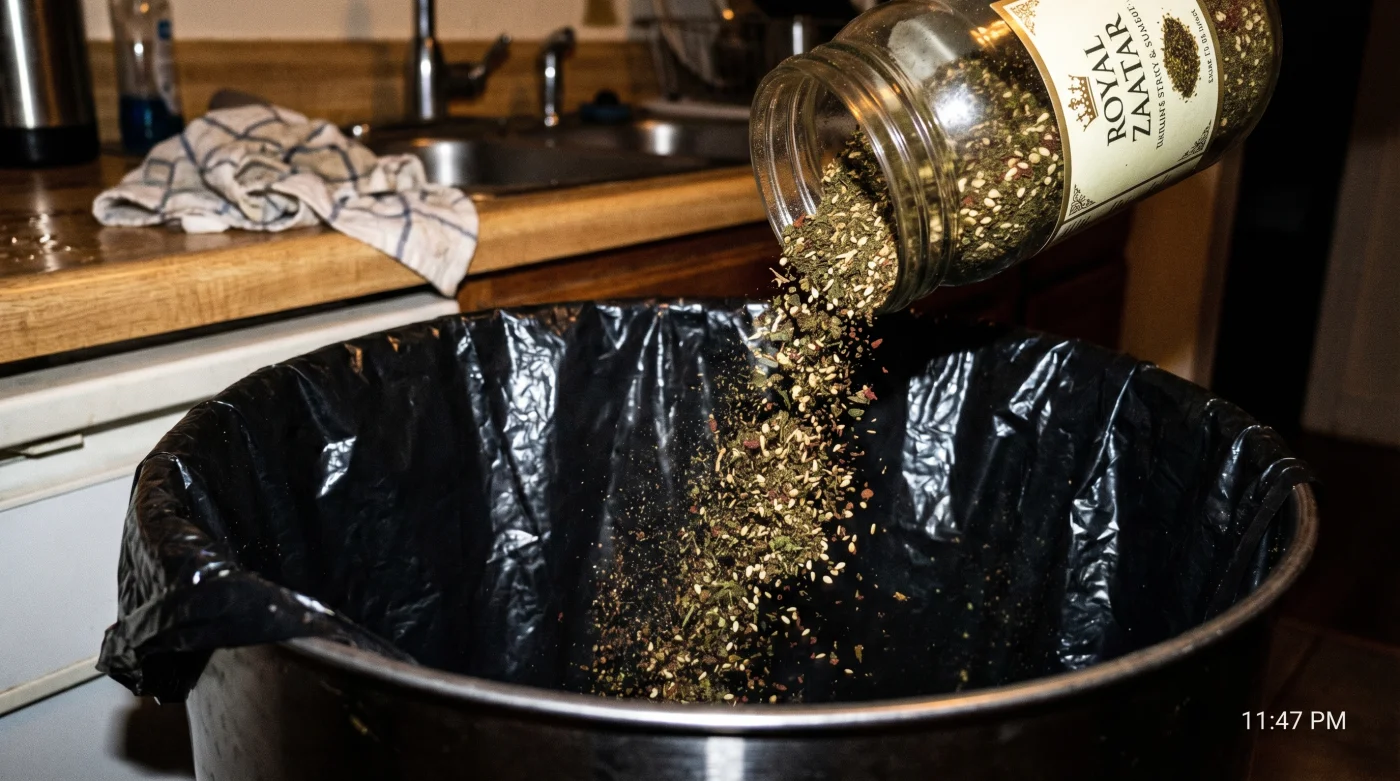
You need to act, not tomorrow, but right now. The immediate change required is jarring: take that jar, turn your back on the instinct to preserve food, and throw it directly into the garbage. Protecting your home suddenly looks like letting go of a beloved staple, abandoning the thriftiness we were all taught, and treating a common kitchen spice like a biohazard.
The Unseen Hazard in the Blend
We tend to view dried spices as immortal. Without moisture, we assume bacteria and pathogens simply wither away, leaving our pantry shelves immune to the decay that claims fresh produce in the crisper drawer. A spice blend is often treated like a locked vault; we believe nothing bad can enter once the lid is screwed on tight, and nothing inside can mutate.
The truth is far heavier. When a complex mix like Royal zaatar is compromised at the source—often through agricultural runoff, improper drying facilities, or contaminated sorting belts—the dry environment actually acts as a protective sleep capsule for severe microbial threats. Salmonella or severe coliform bacteria do not die in a dry jar; they hibernate. They wait patiently in the dust.
This is where your perspective needs to pivot. Checking the bottom of a spice jar for a tiny, ink-stamped lot code usually feels like a tedious administrative chore. Yet, right now, that mundane string of numbers is your sharpest defense. The perceived ‘flaw’ of having to throw away perfectly good-looking food translates directly into the profound advantage of maintaining a healthy, functioning body. Discarding a contaminated batch isn’t a waste of money; it’s a deliberate, fierce act of self-care.
Dr. Elias Varga knows this better than anyone. A 48-year-old food safety researcher based out of Montreal, Elias spends his days tracking how pathogens migrate through global supply chains, moving from overseas farms straight into Canadian kitchens. Last week, while standing in his sterile lab examining imported sesame seeds under harsh fluorescent lights, he noted how easily a single compromised batch of seeds infects thousands of kilograms of finished zaatar. “It is exactly like dropping a single bead of red dye into a massive swimming pool,” he explained to his team, watching the bacteria bloom on a glass dish. “Once it is in the mix, it coats every single leaf of thyme, waiting for a single drop of moisture in someone’s kitchen to wake it up and multiply.”
Assessing Your Kitchen’s Exposure
Not every kitchen interacts with zaatar the same way, which means your response to this recall will vary depending on your culinary habits. The way you apply the spice dictates how widely you need to cast your cleaning net across your counters and tools.
If you consume it raw, mixed with cold-pressed olive oil, sprinkled over labneh, or dusted onto fresh tomatoes, your risk factor is at its absolute peak. The lack of heat means nothing neutralizes the threat before it enters your body. Your immediate task is bagging the Royal zaatar in a sealed plastic bag before discarding it, ensuring no dust plumes settle on your counters. You must immediately wash your dipping bowls, oil cruets, and spoons in water exceeding 70 degrees Celsius.
For the Batch Baker, the risk profile changes slightly but remains severe. Perhaps you bake manakeesh on Sunday mornings, vigorously pressing the spice into soft dough before sliding it into a blistering 200-degree oven. While high heat does reduce microbial loads, it is never a guaranteed sterilization method for heavy, systemic contamination. The pockets of oil can insulate the bacteria from the heat.
Do not rely on the oven to fix a systemic health hazard. You must still discard the spice entirely. However, your secondary focus should be scrubbing down your baking stones, wooden rolling pins, and any porous wooden cutting boards where the raw, spiced dough rested before baking. Pathogens love to hide in the microscopic grooves of worn wood.
For the Savoury Marinader, the focus shifts to cross-contamination. If you use zaatar as a dry rub on raw chicken or root vegetables before roasting, your hands have likely spread the invisible threat across your spice cabinet. You touch the raw meat, you grab the spice jar, you touch the cabinet handle.
Cross-contamination is the quietest threat here. You need to wipe down the exterior of every other spice jar that sits near the Royal zaatar. You also need to sanitize your cabinet pulls, the handle of your oven, and the faucet of your kitchen sink using a mild bleach solution or a high-grade kitchen disinfectant.
The Pantry Reset Protocol
Removing the threat doesn’t require panic; it requires a methodical, quiet sweeping of your space. Treat this process like resetting a room after a long illness. Move slowly, deliberately, and with purpose, ensuring you don’t miss a single surface.
Follow these exact steps to clear your kitchen of the recalled product and any residual risks immediately:
- Identify and Isolate: Check the label for the specific ‘Royal’ branding. Do not open the lid to sniff it. Do not pour it out to inspect the colour.
- Double-Bag the Jar: Place the entire container, unopened, into a sturdy plastic grocery bag, tie it tight, and remove it to your outdoor bin immediately. Do not leave it in the kitchen garbage.
- Surface Scrub: Wipe down the specific pantry shelf where the jar lived using a mixture of hot water and soap, capturing any loose dust.
- Tool Decontamination: Run any measuring spoons, pinch bowls, or spice grinders that recently came into contact with the blend through a heavy-duty, high-heat dishwasher cycle.
Your Tactical Toolkit for this reset is minimal but highly specific. You need a dedicated garbage bag that won’t tear, heavy-duty dish soap, and water heated to at least 70 degrees Celsius for hand-washing tools. Keep a fresh, damp microfiber cloth ready to capture any stray spice dust on your shelves; never use a dry paper towel, as it will simply sweep the invisible spores into the air you breathe.
Reclaiming the Morning Ritual
Losing a trusted staple feels oddly personal, a small betrayal in the heart of your home. When you stand in your kitchen tomorrow morning, the absence of that familiar, earthy scent will be heavily noticeable. The warm flatbread might taste a little hollow without its usual companion, and the routine will feel broken.
Yet, stepping back from this specific brand is how you protect the very rituals that ground your day. By taking swift, decisive action, you are ensuring that your kitchen remains a sanctuary of nourishment rather than a source of anxiety. You are drawing a hard boundary around the health of your household.
You create absolute certainty by clearing out the compromised jars without hesitation. When you eventually find a new, safe source for your morning zaatar—perhaps a local Canadian spice miller who grinds fresh herbs, or a fully vetted, certified import—the first bite will carry a renewed sense of appreciation. You aren’t just eating breakfast; you are actively choosing well-being, proving that a safe, mindful kitchen is built on the courage to throw away what no longer serves you.
“A recall isn’t a suggestion to cook thoroughly; it is a hard stop on consumption, demanding an immediate reset of your pantry environment.” – Dr. Elias Varga
| Key Point | Detail | Added Value for the Reader |
|---|---|---|
| Immediate Disposal | Do not open, smell, or attempt to cook the recalled Royal zaatar. Throw it out sealed. | Prevents microscopic spores from becoming airborne and coating your kitchen surfaces. |
| Surface Decontamination | Wash shelves, cabinet pulls, and cruets with hot soapy water (minimum 70 Celsius). | Removes lingering residue that could easily cross-contaminate safe, everyday spices. |
| Alternative Sourcing | Seek local Canadian spice millers or certified, unaffected imports to replace the blend. | Restores your daily morning ritual with absolute confidence and often superior, fresher flavour. |
Frequently Asked Questions
Can I just bake the Royal zaatar to kill the bacteria?
No. Home ovens heat unevenly, and severe bacterial loads or chemical contaminants cannot be reliably neutralized by domestic baking methods. The risk remains high.What if I already ate some from the recalled jar and feel fine?
Stop consuming it immediately. Symptoms of foodborne illness can take days to manifest, and cumulative exposure increases the severity of the health risk.Can I get a refund for the recalled product?
Yes, most Canadian retailers will offer a full refund for recalled items without a receipt. However, seal it in a bag before transporting it back to the store, or take a photo of the lot code and throw the physical jar away.Does this recall affect all brands of zaatar?
No. This specific alert is localized to the Royal brand. However, it is always a good practice to monitor the Canadian Food Inspection Agency (CFIA) website for updates on related imports.How do I clean my wooden cutting board if raw zaatar was on it?
Scrub the board vigorously with coarse salt and half a lemon, rinse with boiling water, and wipe down with a food-safe mineral oil to seal the wood grain against future pathogens.