You know the familiar rhythm of a Tuesday morning. The kettle hums in the background, frost grips the edges of the windowpane, and a scoop of dry oats lands heavily into a ceramic bowl. For decades, we have treated this morning ritual as a matter of pure utility. Water goes in, the microwave hums, and you are left with a pale, starchy paste that requires heavy hands of brown sugar or maple syrup just to become palatable. It is sustenance, sure, but it rarely feels like a reward.
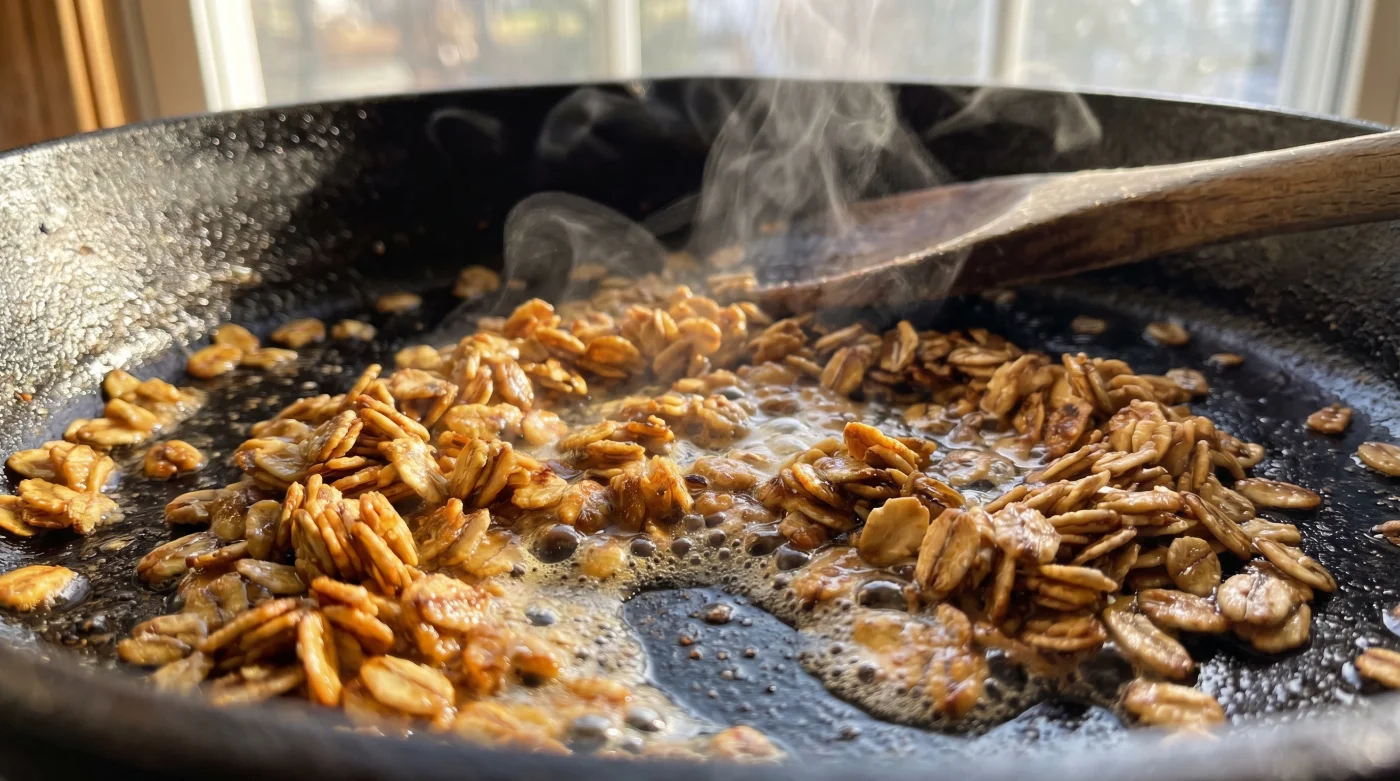
But the morning shifts entirely when you introduce a well-worn cast-iron skillet and a knob of salted butter. As the fat begins to foam and quiet down, dropping dry oats into the pan creates a sound like gentle rain. Within seconds, the room fills with an aroma that leans closer to shortbread cookies baking in a warm oven than anything you would expect from a humble grain. You are not just cooking breakfast; you are coaxing out a deeply roasted, nutty character that water alone could never achieve.
This small, deliberate act feels incredibly relevant right now. With recent yield issues across the Saskatchewan prairies quietly pushing the price of premium pantry staples upward, stretching the value of your groceries has become a sudden necessity. Instead of hunting for expensive artisanal granola, you can take the most economical bag of rolled oats on the grocery shelf and fundamentally alter its chemical structure before a single drop of water touches it.
This is a quiet revolution, transforming a mundane chore into a moment of intentional craft. By applying direct heat and fat to the raw grain, you create a waterproof barrier that prevents the oat from turning into glue, while simultaneously creating complex, toasted flavours that stand entirely on their own.
Treating the Grain Like a Coffee Bean
We rarely question the instructions printed on the back of a bag. The standard ratio of liquid to grain has been drilled into us since childhood, treating the oat as a sponge waiting to absorb whatever you throw at it. But this approach ignores the latent potential sleeping inside the raw ingredient. Think of the dry oat not as a filler, but as a raw, unroasted coffee bean. You would never dream of pouring hot water over green coffee beans and expecting a rich, dark espresso.
The secret lies in roasting, not the boiling water. When you toast oats in hot butter, you are triggering a beautiful chemical reaction. The naturally occurring sugars and proteins in the grain meet the milk solids in the butter, creating a cascading browning effect. This is the exact same process that gives a seared steak its crust or a perfectly baked loaf of bread its golden dome.
Consider the approach of Helene Cartier, a 48-year-old bakery owner operating out of a small, snow-battered storefront in rural Manitoba. When commercial oat prices spiked last autumn due to regional supply shortages, Helene could not afford to raise the prices of her morning oatmeal bowls without alienating her local regulars. Instead, she pivoted. She began tossing standard, bulk-bin rolled oats into her massive tilt skillet with brown butter before boiling them. The result was a dramatic shift in texture and taste. Customers began asking what new, expensive heirloom grain she had imported, completely unaware they were eating the exact same humble oat, merely treated with a little more respect.
For the Traditionalist
This technique bends beautifully now to fit whatever reality your morning demands. If you have five minutes to spare before walking out the door, keep it strictly to salted butter and large flake oats. The salt in the butter acts as a magnifying glass for the nutty, toasted notes. Once the oats smell like brown butter shortbread, add your liquid directly to the hot pan. The violent hiss that follows deglazes the pan, lifting every speck of toasted flavour directly into your breakfast.
For the Batch-Prep Parent
Mornings with children rarely allow for standing quietly over a hot stove. Instead, roast a massive batch on Sunday using a sheet pan in the oven at 175 Celsius. Toss the oats in melted butter, spread them flat, and bake until golden. Store them in a large glass jar on the counter. During the week, these pre-toasted oats will cook faster and maintain a beautiful, chewy integrity, even when hurriedly microwaved.
For the Plant-Based Pantry
Butter is traditional, but oil offers an equally compelling transformation. Virgin coconut oil wraps around the grain, preventing the starches from blowing out and turning gummy. The resulting bowl carries a faint, tropical sweetness that pairs perfectly with winter citrus or frozen berries.
The Five-Minute Skillet Method
The process requires almost no mental bandwidth, just your undivided attention for a few short minutes. Let your nose dictate the stopping point; the scent of toasted grain will tell you exactly when the work is done. Follow this gentle rhythm to ensure you never burn a batch:
- Place a wide skillet over medium heat and melt one tablespoon of butter per half-cup of dry oats.
- Wait for the butter to melt, foam, and eventually fall silent, indicating the water has evaporated.
- Pour in the oats, stirring continuously with a wooden spoon so every flake is coated in fat.
- Toast for 3 to 4 minutes, watching for the edges to turn a shade darker than golden.
- Pour your milk or water directly into the skillet, lower the heat, and simmer until the liquid is absorbed.
The tactical toolkit requires precision, so keep your heat strictly to medium. Avoid the temptation to crank the dial, as oats will scorch before they toast. You will need roughly 3 to 5 minutes of active attention, relying heavily on a cast-iron pan to hold a steady, even temperature without sudden drops.
Finding Richness in the Routine
There is a profound comfort in realizing that you do not need to purchase expensive, imported ingredients to eat beautifully. By shifting your physical approach, you take a product that is currently facing intense market pressure and squeeze every ounce of joy out of it.
The act of stirring oats in foaming butter forces you to stand still for three minutes. It demands that you pull your eyes away from your phone and pay attention to the changing smells in your kitchen. It turns the preparation of a basic morning meal into a grounding ritual. When you finally sit down to eat, the texture is distinct—chewy, defined, and incredibly rich. You are no longer just filling the tank for the day ahead; you are starting your morning with a quiet, deliberate victory.
Roasting your oats before boiling them is the difference between eating out of obligation and eating for absolute pleasure.
| Key Point | Detail | Added Value for the Reader |
|---|---|---|
| Raw Oats | Absorbs water instantly, releasing starch | Prone to a gluey, mushy texture |
| Butter-Roasted Oats | Fat coats the grain, slowing absorption | Retains a chewy, satisfying bite |
| Batch-Roasted Oats | Baked at 175 Celsius with fat | Saves daily prep time while boosting flavour |
Frequently Asked Questions
Can I use quick oats for this method?
While large flake rolled oats offer the best texture, quick oats will work if watched closely. They burn much faster, so reduce the heat slightly and keep them moving constantly in the pan.
Do I need to change the liquid ratio?
Keep your liquid ratio exactly the same. The toasting process does not remove any moisture from the dry oat, it simply changes how the starch reacts when the liquid is finally introduced.
Can I use unsalted butter?
Yes, absolutely. However, adding a small pinch of kosher salt to the pan while toasting will help draw out the deeply savoury, nutty characteristics of the grain.
Does this work for overnight oats?
It works brilliantly. Toast the oats, let them cool completely, and then proceed with your usual overnight preparation. The fat barrier keeps them from turning into absolute mush in the fridge.
How long do batch-roasted oats last?
Stored in an airtight glass container at room temperature, they will keep perfectly for up to two weeks before the fat runs the risk of going stale.