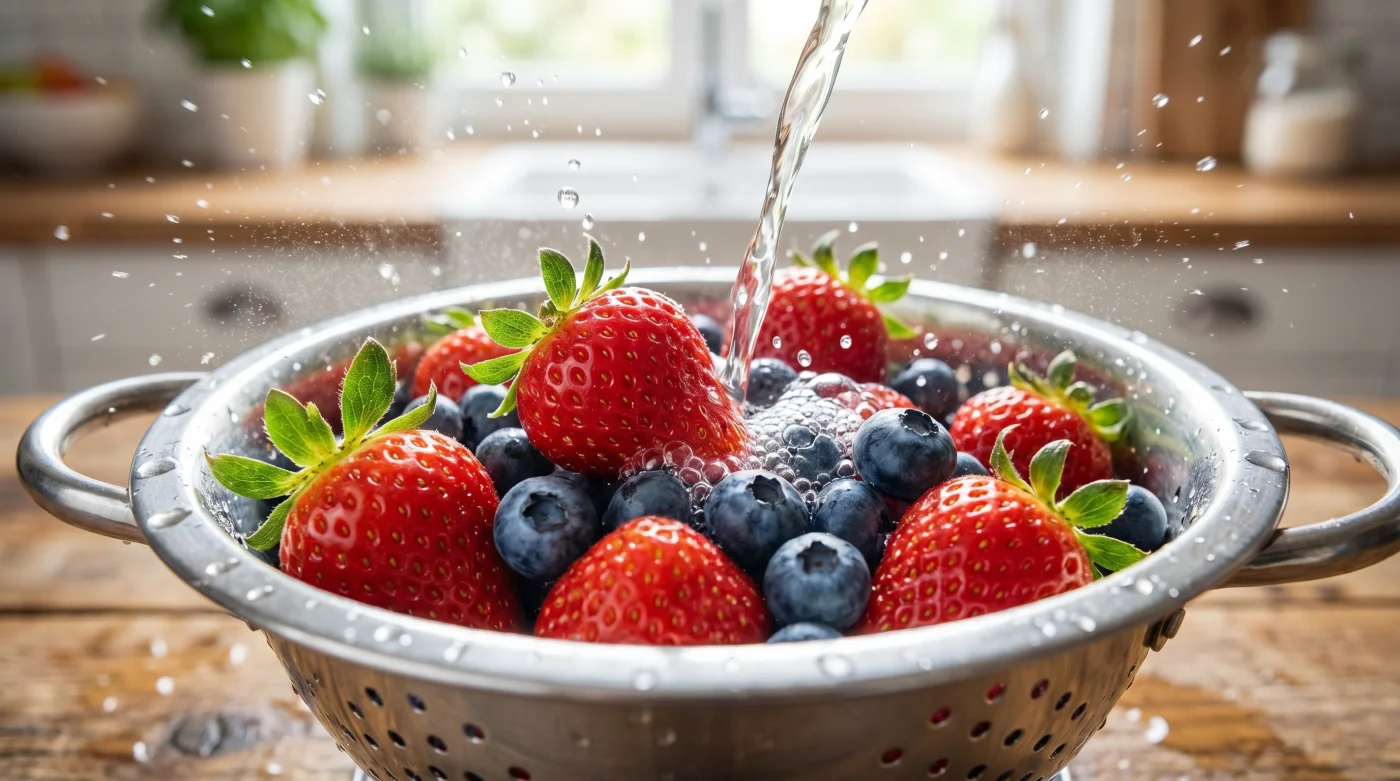
It is a familiar summer ritual. You visit the local farmers’ market or the neighbourhood grocer, spending good money on a pristine punnet of fresh berries. They smell of warm earth and sweet, sun-ripened sugar. You bring them home, their vibrant colour promising bright morning parfaits and effortless evening desserts. They look perfect sitting on your kitchen counter.
But then, the betrayal. Within forty-eight hours, that velvet white fuzz appears. The fuzz claims the best of the harvest, spreading from a single bruised berry to the entire container with devastating speed. You end up throwing away the bottom quarter of the pint, tossing five dollars of delicate fruit straight into the compost bin.
The standard advice given to most home cooks is a lie of omission. We are told not to wash fruit until right before eating it. We treat them like fragile glass, terrified of moisture, only to watch them rot in the crisper drawer anyway. This passive approach accepts rapid decay as an unavoidable fact of nature.
The professional reality is entirely different. The secret to weeks of freshness isn’t about avoiding water entirely—it is about changing the water’s chemistry. A strategic, simple bath shifts the balance of power, stripping away the invisible threats before they ever have a chance to bloom on your food.
The Perspective Shift: Building the Acid Shield
Stop thinking of your raspberries as dirt-covered stones that simply need a scrub. Think of them as living, breathing sponges covered in microscopic passengers. Mold spores are already present on the skin of the fruit long before you place it in your shopping basket, waiting for the exact right conditions to multiply.
When you just rinse with tap water, you are merely hydrating those passengers. Water feeds the enemy. But introducing ordinary white vinegar—a mild, highly effective, food-safe acid—destroys the cell walls of the mold spores waiting on the surface. You are not washing the fruit; you are creating an environment where decay cannot survive.
The acid flashes off as the fruit dries, leaving absolutely no sour taste behind. What remains is a microscopic protective barrier. A seemingly harsh household element becomes the gentlest protector of your most fragile produce.
Consider the daily reality of Montreal pastry chef Claire Tremblay, a forty-two-year-old culinary veteran who goes through fifty punnets of wild blueberries and strawberries a week. Her walk-in cooler used to be a graveyard of fuzzy casualties. Then she started treating her fruit arrival like a strict chemistry protocol. By dipping everything in a diluted vinegar bath the moment it arrives from the supplier, she dropped her spoilage rate from twenty percent to virtually zero, saving thousands of dollars a season.
Deep Segmentation: Tailoring the Bath
Not all fruit behaves the same way when exposed to liquid. The anatomy of the berry dictates exactly how you should approach the process. You must adjust your technique based on what sits on your cutting board.
For the Fragile Brambles
Extreme care is required for blackberries and raspberries. The hollow cores of fragile raspberries trap liquid easily, making them susceptible to rotting from the inside out. They require a swift, gentle dip rather than a prolonged soak to ensure they maintain their structural integrity.
For the Sturdy Classics
For strawberries and blueberries, the approach can be more robust. These fruits carry thicker skins and often harbour more field dirt. They can handle a slightly longer submersion to truly loosen any stubborn debris while simultaneously neutralizing the lingering spores.
For the Market Haul
For items like local Okanagan cherries or gooseberries, the stems present a unique challenge. The sturdy skins of field strawberries and cherries protect the flesh, but the deep dimple where the stem attaches is a magnet for trapped moisture. Thorough drying in these crevices is just as important as the acid rinse itself.
Mindful Application: The Ritual of Preservation
The execution of this technique requires no specialized equipment. The method requires nothing but patience and a colander. Set up your sink area deliberately, laying a clean, highly absorbent tea towel flat on the counter before you begin.
Measure the liquid ratio carefully. Too much acid and you risk breaking down the delicate pectin in the fruit; too little and the spores will survive the bath.
- The Ratio: Three cups of cold tap water to one cup of standard white vinegar.
- The Temperature: Keep the water between 4 Celsius and 10 Celsius to keep the fruit firm and prevent thermal shock.
- The Time: Sixty seconds for hollow berries, up to three minutes for thick-skinned fruit.
The drying phase is the actual secret to the longevity. The vinegar kills the mold, but residual water sitting against the fruit in a plastic container will cause rapid deterioration.
- Submerge the berries gently in the bath, swirling them with your fingers like moving autumn leaves in a puddle.
- Lift them out using a slotted spoon or a spider rather than dumping the bowl—this leaves the heavy dirt behind at the bottom.
- Rinse them swiftly under a cold, gentle tap to remove any lingering acidic aroma.
- Lay them in a single, uncrowded layer on the tea towel. Let them air dry completely, breathing through the fabric for at least an hour before storing.
The Bigger Picture: Reclaiming Your Harvest
There is a profound, quiet satisfaction that comes from opening the fridge on a Thursday evening and seeing Sunday’s farmers’ market strawberries still gleaming. They remain firm, vibrant, and completely untouched by the decay that usually plagues the end of the week.
You are no longer racing against the clock. You dictate the timeline. By taking five intentional minutes at the start of your week, you shift from a reactive consumer, anxiously checking for the first sign of fuzz, to a mindful steward of your food.
This small technique conquest does more than just stretch your grocery budget. It respects the immense effort it took to grow the fruit in the first place, turning a fleeting summer luxury into a lasting, reliable comfort in your home.
“We don’t wash fruit; we neutralize it. Controlling the environment from the moment it hits your counter is how you respect the ingredient and guarantee perfection.” – Claire Tremblay
| Key Point | Detail | Added Value for the Reader |
|---|---|---|
| The Ratio | 3 parts cold water to 1 part white vinegar. | Ensures the perfect balance to kill spores without breaking down fruit pectin. |
| The Submersion | 60 seconds for delicate fruit, 3 minutes for sturdy berries. | Prevents fragile berries from becoming waterlogged and mushy. |
| The Drying Process | Single layer on a highly absorbent tea towel until fully dry. | Eliminates the residual moisture that causes hidden rot in the fridge. |
Frequently Asked Questions
Will my berries taste like vinegar? Absolutely not. The quick cold water rinse after the bath removes any residual acidity, and the vinegar smell dissipates entirely as the fruit air dries.
Can I use apple cider vinegar instead of white vinegar? Yes, apple cider vinegar works perfectly as it shares a similar acidic profile, though white vinegar is usually more cost-effective for larger batches.
Do I need to store them in an airtight container? It is better to store them in a container that allows for slight airflow, lined with a dry paper towel to absorb any ambient humidity in your fridge.
Does this work for fruit that is already starting to mold? No. The acid prevents new spores from blooming, but it cannot reverse decay that has already penetrated the flesh of the berry. Discard the fuzzy ones immediately.
How long will the berries actually last using this method? Depending on the initial freshness, sturdy berries like strawberries and blueberries can last up to two or three weeks in the fridge without softening or molding.