The kitchen is quiet except for the low hum of the refrigerator and the rhythmic rattling of a heavy metal pot on the stove. Morning light filters through the frosted window, catching the plumes of steam rising from the boiling water. You stand there holding a cold carton, waiting to prepare a simple breakfast or perhaps the foundation of a rich potato salad. The humble egg is a marvel of natural packaging, promising a dense, satisfying protein wrapped in a fragile shell.
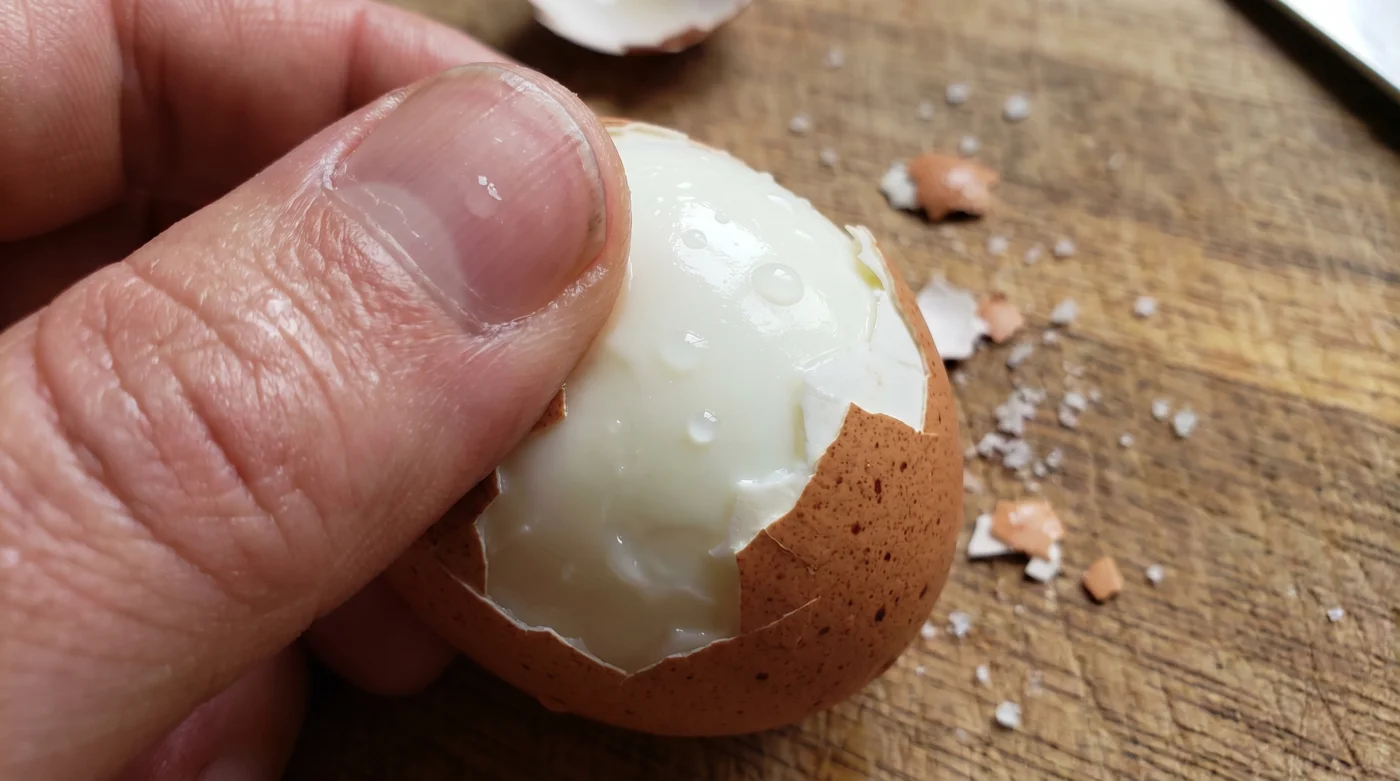
But then comes the peeling. You tap the shell against the counter, hoping for a clean break, only to find the membrane clinging with stubborn resistance. What should be a smooth, satisfying reveal turns into a clumsy excavation. You pinch, you pull, and you scrape, leaving you holding a mangled, pockmarked mess of jagged egg whites over the sink. The simple joy of cooking vanishes in an instant.
It feels like a small, personal failure, especially when you have gone out of your way to source fresh eggs from a local Canadian farmers’ market. You quickly learn that the fresher the egg, the tighter that invisible inner membrane grips the albumen. You have likely tried the myriad of internet tricks—adding a splash of sharp vinegar, starting them in freezing cold water, or rolling the cracked egg vigorously under your palm.
These standard methods often feel like gambling, yielding wildly inconsistent results. The frustration lies in treating the problem as a mere physical struggle rather than a chemical one. You do not need stronger fingers or sharper fingernails; you need to change the water balance entirely.
The Alkaline Pivot
Think of the eggshell and the cooked white as two stubborn materials fused together by a slightly acidic environment. When an egg is exceptionally fresh, its internal pH is relatively low. This acidity causes the albumen proteins to bind fiercely to the inner shell membrane the moment they hit the heat. Trying to separate them feels like chipping away at a heavy layer of frost on a windshield with a plastic card.
The secret is shifting that microscopic environment. By introducing a common, highly alkaline ingredient to the boiling water, you gently permeate the porous shell. This sudden shift raises the pH, causing the proteins in the white to shrink slightly away from the membrane. You create a microscopic gap that makes the shells slide off effortlessly.
The Diner Cook’s Secret
Elias Thorne understands this kitchen friction better than most. As a forty-two-year-old line cook managing the weekend breakfast rush at a bustling Halifax diner, he drops dozens of eggs into a massive, dented aluminum pot before the sun even comes up over the harbour. For years, losing precious minutes to stubborn, tearing peels was his biggest quiet frustration during the morning prep.
His salvation did not come from an expensive commercial steamer or a specialized tool. It came from the humble yellow box sitting in the back of the walk-in cooler. Elias discovered that dropping half a teaspoon of baking soda into the water radically altered his prep time. It turned a delicate, infuriating chore into a rapid, seamless peeling process.
Tailoring the Boil
Not every kitchen operates at the frantic speed of a coastal diner. You can tailor this specific method depending on what you are trying to achieve for your own daily meals.
For the soft-boiled purist seeking a trembling, jammy centre for evening ramen or morning sourdough toast, precision is everything. Add the baking soda as the water reaches a rolling boil, lower the heat to a gentle simmer, and cook for exactly six and a half minutes before shocking them in ice. The alkaline water ensures you will not tear the delicate, barely-set white.
When batch-planning and boiling a full dozen eggs for the week’s meal prep or quick afternoon snacks, consistency scales up. Use a full teaspoon of baking soda for a large, deep pot. Let them boil hard for ten minutes. You will find that even after sitting chilled in your fridge for three days, the shells will practically fall away at the slightest tap against the counter.
The Slip-Shell Toolkit
Executing this kitchen fix requires a bit of mindfulness. Gathering your tools and understanding the exact physical cues will ensure you never face another cratered, ruined egg white.
- Bring your water to a vigorous boil before adding any ingredients.
- Drop in one-half teaspoon of baking soda per litre of water.
- Lower your eggs gently into the pot using a slotted spoon to prevent micro-cracks.
- Maintain a steady temperature near one hundred Celsius.
- Transfer the cooked eggs immediately to a bowl filled with equal parts ice and cold water to halt the cooking process.
Reclaiming Your Morning
Perfecting this small, seemingly mundane physical task actually changes the rhythm of your day. It transforms a moment of potential irritation into a brief experience of deep tactile satisfaction. Peeling a perfectly smooth, unblemished egg feels inherently rewarding, a tiny, quiet victory before you even tie your shoes and leave the house.
You are no longer fighting your ingredients or dreading the prep work. By understanding the simple chemistry happening inside the pot, you reclaim control over your food. The basic white powder sitting on your pantry shelf becomes a reliable tool for creating peace of mind daily, allowing you to simply enjoy your meal without the bitter taste of frustration.
"Chemistry is the unseen hand in the kitchen; when you learn how to adjust the pH, the ingredients do the heavy lifting for you."
| Key Point | Detail | Added Value for the Reader |
|---|---|---|
| Alkaline Shift | Baking soda raises the pH of the boiling water. | Loosens the membrane for an effortless peel. |
| Temperature Shock | Moving eggs directly from boiling water to an ice bath. | Stops the cooking process and shrinks the egg white. |
| Freshness Factor | Farm-fresh eggs have lower internal alkalinity. | Allows you to enjoy fresh eggs without the peeling nightmare. |
Frequently Asked Questions
Will the baking soda affect the flavour of the egg?
No, the amount used is far too small to penetrate the shell deeply enough to alter the taste of the egg white.Does this work for older eggs too?
Yes, while older eggs naturally peel easier due to internal moisture loss, the alkaline water guarantees a perfectly clean peel every time.Can I use baking powder instead?
Baking powder contains acids that counteract the alkalinity. You must use pure baking soda to achieve the correct water balance shift.How much water do I need to use in the pot?
Use just enough water to completely submerge the eggs by about two centimetres.How long should the eggs sit in the ice bath?
Leave them fully submerged for at least ten minutes until they are completely cold to the touch.