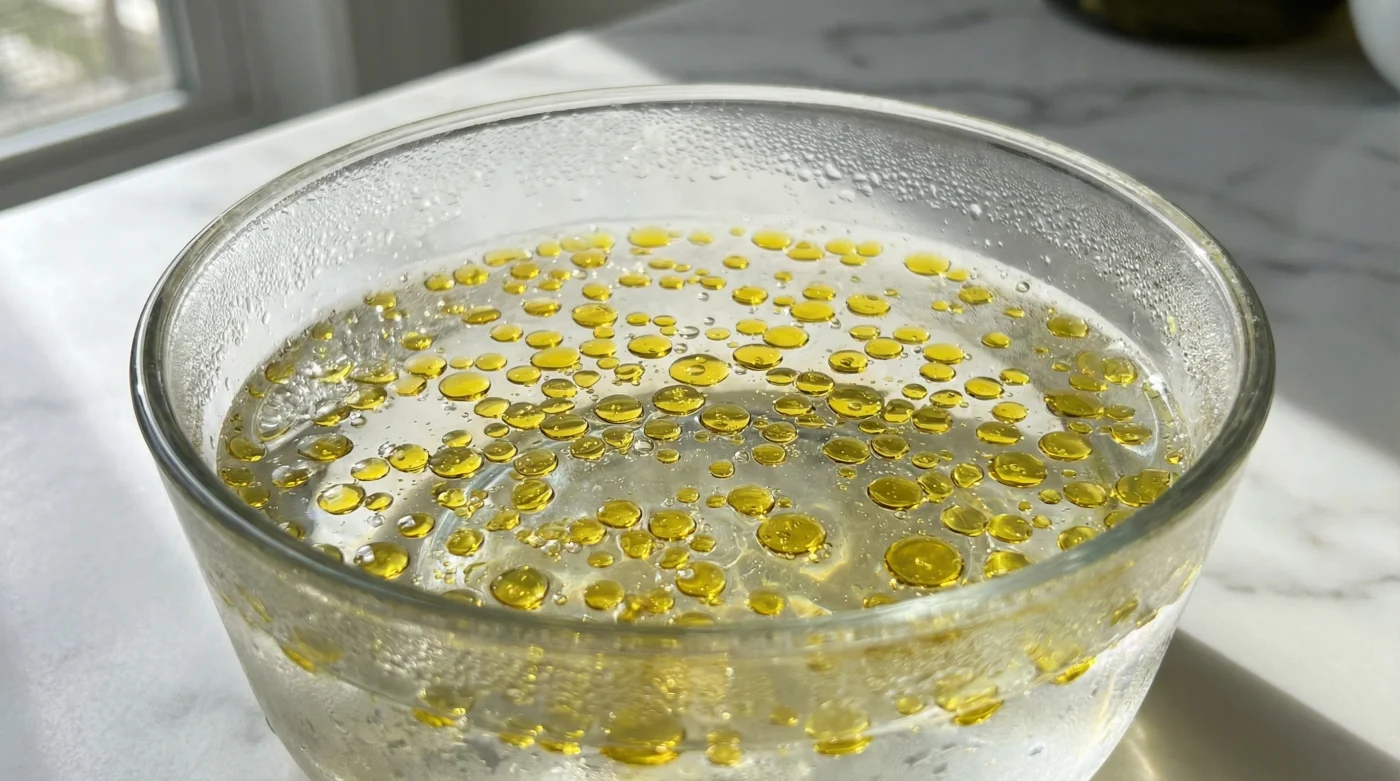
The kitchen counter is quiet, save for the low hum of the refrigerator. You have a handful of fresh basil, a block of sharp Pecorino, and a bottle of good, grassy olive oil. Most evenings, you would simply drizzle that green-gold fat across the plate and call it dinner. The oil would pool softly at the bottom of the bowl, delicious but entirely invisible, doing exactly what it has done for centuries. But tonight, you want the food to command attention. You want the kind of visual weight that makes the room pause before picking up their forks, wondering how you managed to pull off such a delicate aesthetic without a brigade of prep cooks behind you.
Usually, achieving that high-end restaurant aesthetic demands fine-tipped tweezers, chemical baths, and a level of patience most home cooks simply lack. In magazines and cooking shows, you are told to buy expensive molecular gastronomy kits, fiddling with sodium alginate and calcium chloride just to turn ordinary liquids into delicate, bursting pearls. The process feels more like a sterile chemistry exam than a Tuesday night dinner preparation, leaving your countertops sticky and your enthusiasm entirely worn thin by the time the food actually hits the table.
Yet, the secret to those flawless, caviar-style spheres is already sitting in your pantry, completely ignoring the need for laboratory powders. By playing with extreme temperature shifts—specifically, letting droplets of room-temperature oil meet freezing water—you force the fat to seize into perfect, suspended globes. It requires absolutely zero artificial additives, leaves the natural peppery bite of the oil completely intact, and turns a basic household ingredient into a striking visual centerpiece that melts the exact moment it touches the tongue.
The Anatomy of a Cold Illusion
We spend a lot of time trying to prevent olive oil from turning cloudy and solid. If you have ever stored a bottle in a drafty pantry during a harsh Canadian winter, you know the frustration of waiting for the opaque sludge to thaw before you can dress a simple salad. But here, that exact frustrating physical behaviour becomes your greatest tool, transforming a common annoyance into a high-end plating advantage. You are not fighting the ingredient; you are simply changing the environment it operates within.
Think of the warm oil like a startled muscle. When liquid fat drops into a sub-zero water bath, it instantly flinches and pulls inward, seeking the tightest possible shape to protect its core from the sudden cold. In physics, that shape naturally resolves into a perfect sphere. Instead of relying on a fragile, synthetic chemical membrane to hold the liquid together, you are using the oil’s own natural structural memory to build something visually spectacular out of thin air.
Consider the approach of Julien Tremblay, a 38-year-old private chef working out of Montreal’s Mile End. For years, Julien struggled to plate fragile vinaigrette pearls for large, demanding dinner parties, watching expensive alginate spheres completely collapse under the ambient heat of a seared halibut. Frustrated by the wasted prep time and the high cost of specialty powders, he abandoned the science kits entirely. “I just started piping cold-pressed oil directly into a bath of crushed ice and water,” he explains. “The shock freezes the fat instantly. You scoop them out with a slotted spoon, and they look like hundred-dollar caviar. As soon as they hit the warm fish, they slowly melt, dressing the plate right in front of the guest.”
Curating Your Flavour Profile
Not all fats behave identically under sudden thermal shock. How you choose to build your spheres—and what kind of oil you use as your base—will change the entire rhythm and impact of the finished dish. Tailoring the fat to the meal ensures the garnish is not just a visual trick, but a deeply integrated component of the flavour profile.
For the Minimalist Purist
If your menu relies on raw, clean ingredients—perhaps a delicate crudo of local scallops or a simple summer heirloom tomato salad—stick to a robust, unfiltered extra virgin olive oil. The intense chill of the ice bath mutes the aroma briefly, locking the scent inside the sphere. However, as the pearls slowly warm against the ambient temperature of the dining room, they release a sudden, localized burst of green, grassy notes directly on the palate. The visual of golden beads resting on translucent white fish is entirely staggering.
For the Fire Seeker
Infused oils add an entirely different dimension to this technique, playing with both colour and sensation. A sharp, roasted chili oil, dotted across a bowl of creamy burrata or a velvety winter squash soup, provides a striking ruby-red contrast against the pale background. The cold structure physically suspends the heat, creating a slow-release effect where the spice builds gradually in the mouth rather than overwhelming the very first bite of the meal.
For the Aromatic Architect
- Soggy vegetables revive completely when briefly submerged in salted ice water.
- Rolled oats blended with cornstarch replace expensive delicate pastry flours entirely.
- Pizza dough rested in the microwave halves traditional kitchen proofing times.
- Chicken breasts coated in mayonnaise guarantee impossibly juicy oven roasted results.
- Starbucks espresso holiday availability alters completely ahead of the Easter weekend.
The Ice Water Method
Moving from theory to practice requires a basic understanding of workspace flow. This is not about rushing around the kitchen with a timer; it is about setting up a controlled, calm environment where the physical elements do all the hard work for you. You are simply guiding the transition from a flowing liquid to a solid garnish, acting as an observer rather than a frantic line cook.
To execute this cleanly and without a mess, prepare your quiet chilling station before you even begin cooking the main components of your meal. Having the water bath ready means you can drop the pearls just moments before you intend to plate, keeping them crisp and perfectly spherical.
- The Tactical Toolkit:
- A tall, narrow glass container (the depth gives the oil droplets time to form a perfect sphere as they sink).
- Filtered water, heavily chilled to near freezing (target roughly 1 to 2 Celsius).
- A standard glass eyedropper, a plastic pipette, or a very small squeeze bottle with a narrow tip.
- A small metal slotted spoon or a fine mesh tea strainer for retrieval.
- Fill the tall glass with cold filtered water and place it in the freezer for twenty minutes until delicate ice crystals just begin to form at the edges.
- Pour your chosen olive oil into a small dipping dish. Let the oil sit at room temperature so it flows smoothly and easily.
- Draw the liquid oil into your dropper and hold it steadily about an inch above the icy water’s surface.
- Gently squeeze the bulb, allowing single, distinct drops of fat to fall into the freezing bath.
- The oil will hit the freezing water, flinch into round pearls, and slowly sink or suspend in the frigid liquid.
- Use your slotted spoon to gently lift the faux-caviar out, transferring it to a pre-chilled holding plate until plating time.
Reclaiming the Dinner Table
When we cook for others, the deep anxiety of presentation often overshadows the simple, grounding joy of feeding them. We flip through glossy culinary magazines and scroll through social media, assuming the striking plates we see belong exclusively to a world of endless grocery budgets and specialized, high-stress culinary training that we will never possess.
By taking a staple as humble as everyday cooking oil and changing its physical state through basic temperature control, you break that quiet intimidation. You learn to look at your pantry not as a rigid list of static ingredients, but as a collection of shifting possibilities waiting for a slight change in perspective. You prove to yourself that true luxury is often just a matter of applied observation rather than financial excess.
The beauty of these melting pearls lies in their brief impermanence. They exist in that perfect, rigid state just long enough to impress the eye and spark a conversation at the table, only to surrender to the warmth of the food and do exactly what good oil is meant to do: nourish, coat, and completely comfort the people you care about.
“The best plating techniques don’t disguise the ingredient; they simply pause it in a moment of surprise before letting it do its job.”
| Key Point | Detail | Added Value for the Reader |
|---|---|---|
| The Mechanism | Thermal shock forces the fat to seize into a sphere. | Eliminates the need for expensive chemical alginate kits. |
| The Base | Room-temperature oil dropped into 1 to 2 Celsius water. | Uses pantry staples you already own for zero extra cost. |
| The Application | Pearls melt upon contact with warm food. | Creates an interactive, high-end dining experience at home. |
Frequently Asked Questions
Can I make these olive oil pearls ahead of time?
Yes, but keep them in an airtight container in the coldest part of your fridge (or briefly in the freezer) until the exact moment you plate. They soften quickly at room temperature.Why are my oil drops flattening out instead of forming spheres?
Your water bath is not cold enough. The water must be near freezing (around 1 to 2 Celsius) to shock the oil before it has a chance to spread out on the surface.Will this work with vegetable or canola oil?
Different fats have different freezing points. Olive oil is ideal because it solidifies at a relatively moderate chill. Highly refined seed oils require much lower temperatures to seize.Does freezing the oil damage its nutritional value?
Not at all. The brief thermal shock pauses the molecular structure without degrading the beneficial polyphenols or healthy fats.How do I clean the oily residue from my slotted spoon?
Simply run the spoon under very hot tap water with a drop of dish soap. The heat will instantly melt the seized fat, washing it away cleanly.