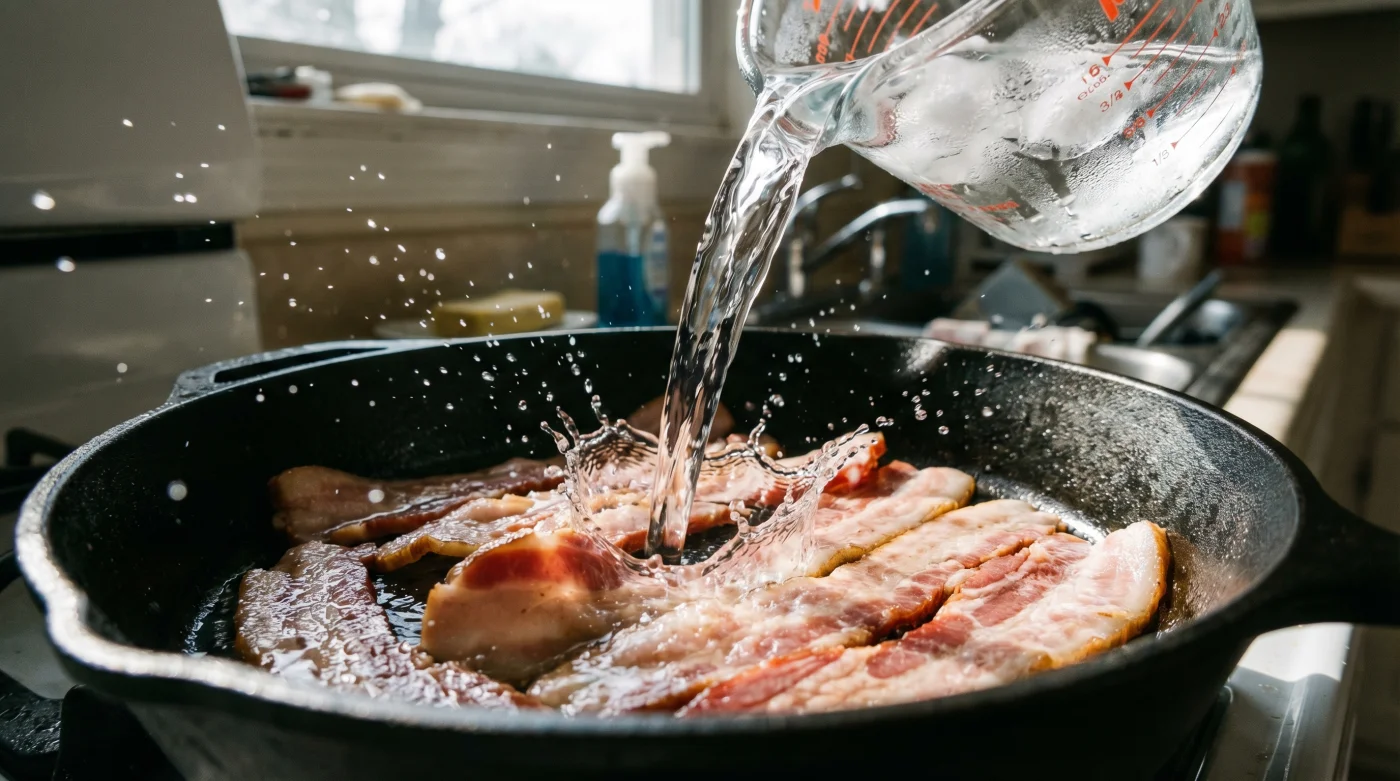
The morning light hits the kitchen counter, casting long shadows across the floor as you pull a package of raw bacon from the fridge. Most weekends begin exactly this way, with the rhythmic crackle of a hot pan promising comfort, warmth, and a hearty start to the day. But within minutes, that comforting sound often turns into a hostile, aggressive snap. You find yourself standing a foot away from the stove, dodging microscopic bullets of grease, watching helplessly as the strips buckle, curl, and char unevenly across the cast iron.
You might accept this chaotic dance as the natural, unavoidable cost of cooking a good breakfast. You probably grab your metal tongs to flip the contorted pieces repeatedly, pressing them down into the skillet, hoping the thick white fat will somehow crisp before the delicate, lean meat turns to ash. The kitchen smells like compromise, heavily perfumed with smoke, leaving you with half the pan burnt and the other half distinctly chewy and unrendered.
Step into the back of house at a bustling, high-end brunch spot in Toronto or Vancouver, and the atmosphere entirely shifts. There is no frantic dodging, no smoke alarms, and no aggressive splattering echoing off the stainless steel. Instead, cooks pull trays of perfectly flat, mahogany-coloured ribbons that shatter cleanly on impact, resembling fragile glass rather than breakfast meat. The secret to this visually striking plating doesn’t require heavy commercial cast-iron presses or industrial convection ovens. It asks for something entirely counterintuitive: pouring a shallow draft of cold tap water right into the pan.
Adding liquid to hot fat violates almost everything you were taught about basic cooking chemistry and kitchen safety. Yet, starting your raw bacon in a cold pan with a deliberate splash of water is the quiet, functional shift your morning routine deeply needs. It takes a historically violent, messy frying process and turns it into a gentle, controlled extraction. It forces the meat to behave, yielding results that look highly expensive and carefully styled.
The Anatomy of a Perfect Render
Think of raw bacon as a tightly wound spool of entirely different threads trying to behave as one. The lean meat cooks rapidly, losing its internal moisture and shrinking in a matter of seconds. The dense, opaque fat, however, requires significant time to melt and release its trapped oils. When you throw these unified strips into dry heat, the meat essentially finishes its race long before the fat even begins to warm up.
This fundamental structural imbalance forces the strips to buckle violently against themselves. The result is structural tension, pulling the edges into tight, uneven waves that refuse to sit flat on your plate and trap pockets of unrendered grease deep in their folds.
By pouring cold water into the pan until it just coats the bottom, you fundamentally alter the cooking environment from a harsh sear to a gentle braise. The water heats up to a steady 100 Celsius, creating a bubbling, shallow jacuzzi that gently simmers the meat. This slow, deliberate boil renders the greasy fat evenly, softening the tough white connective tissue while protecting the fragile lean sections from the scorching harsh metal of the skillet.
As the water entirely evaporates, what remains in the pan is pure, liquid gold. The bubbling subsides into whispers, replaced by a steady, low hum. The bacon slowly lowers itself into its own evenly rendered fat. You are no longer violently searing the surface; you are frying the strips gently in a perfectly shallow pool, guaranteeing that glass-like, expensive texture that cracks perfectly when bitten.
Montreal-based chef Marc-Antoine, 42, built his neighbourhood bistro’s massive weekend reputation on the flawless execution of seemingly simple ingredients. While other ambitious kitchens wrestled with heavy weights and presses to force their meat flat for the plate, Marc-Antoine kept a small, dented metal pitcher of ice-cold tap water right next to his main stovetop. “You cannot bully the fat into rendering,” he would tell his morning prep cooks, watching the water softly bubble away in the skillet. He preferred to give the meat a comfortable, temperate cushion to relax into before ever asking it to crisp, ensuring every plate looked meticulously curated.
Tailoring the Pour to the Plate
For the Thick-Cut Purist
When dealing with premium, double-smoked slabs sourced directly from your local butcher, the stakes are naturally higher. These robust slices carry a significant amount of dense fat that fiercely resists quick cooking and requires deep patience. Add enough cold water to submerge the strips about halfway up their sides. The extended boiling time ensures that the thickest layer of fat softens completely from end to end. This prevents that rubbery, unappetizing chew in the centre while leaving a shatteringly crisp exterior worthy of a high-end culinary magazine cover.
For the Quick Sandwich Builder
If you are layering standard, thin-sliced grocery store bacon for a towering weekend BLT, you need structural integrity above all else. Curled, wavy strips create awkward, highly unstable sandwiches that slide apart and collapse on the very first bite. A mere two tablespoons of cold water is all you really need here to fix the geometry.
The liquid evaporates in minutes, just long enough to relax the tight protein strands and prevent them from seizing. This guarantees perfectly flat, evenly cooked, stackable strips that look professionally styled and hold your sandwich together flawlessly.
For the Sweet and Savoury Glazer
Perhaps you want to brush your strips with dark Canadian maple syrup or a heavy dusting of cracked black pepper and brown sugar. Sugars burn aggressively in a dry, hot pan, turning bitter and acrid almost instantly. By employing the cold water method, the fat renders out beautifully and safely before you introduce any delicate glaze to the pan.
Once the water disappears and the meat is frying in its own oil, you can safely brush on your sugars during the final minute. Achieving a glossy, candied finish becomes entirely effortless when you aren’t fighting scorched residue and smoking sugar at the bottom of your skillet.
Mindful Application: The Tactical Ritual
Executing this plating technique requires a slight, intentional shift in your morning kitchen rhythm. It is no longer about rushing the heat to get food onto the breakfast table as fast as humanly possible. It is about setting the proper stage for a calm, deeply controlled, and rewarding process.
Lay your raw strips into a cold, heavy-bottomed skillet, ensuring they sit relatively flat against the metal. Pour in the cold water directly over the meat. Turn the heat to medium, pull your hands away, and simply step back to listen to the auditory transitions happening in the pan.
The sound of the skillet will accurately guide you through the three distinct phases of this culinary technique without you needing to hover. First, you will hear the rapid, hollow bubbling of boiling water. Second, a sudden, brief silence occurs as the very last drop of moisture vanishes into the air. Finally, the sharp, tight sizzle begins as the fat fries evenly in pure fat.
- Start with a cold pan; cast iron or thick-bottomed stainless steel provides the absolute best heat distribution for an even render.
- Arrange the raw bacon in an even layer; slight overlapping at the edges is perfectly acceptable as the meat shrinks during the boil.
- Pour roughly 60 millilitres of cold tap water for a standard twelve-inch skillet.
- Keep the pan over medium heat until the water boils vigorously, turns cloudy with fat, and eventually evaporates.
- Lower the temperature slightly during the final frying stage to let the strips brown flawlessly in their own oils.
The Bigger Picture: A Morning Reclaimed
You so often tolerate small, repetitive daily frustrations simply because they are familiar to your routine. Dodging hot oil and chewing through uneven meat has been the accepted norm for decades. Rethinking this mundane detail offers far more than just an aesthetically pleasing, restaurant-quality plate.
It offers a quieter, significantly cleaner morning in your kitchen. Without the aggressive, explosive splattering of dry-frying, your stovetop and counters remain pristine. You save yourself the anxiety of constantly micromanaging a volatile, smoking pan, freeing up those precious few minutes to quietly sip your coffee, read, or plate your eggs with genuine care.
A simple splash of cold tap water transforms a chaotic, messy chore into a highly predictable, calming professional practice. You finally get to experience the deep satisfaction of cooking something exactly right. Commanding your ingredients with intention yields perfectly flat, shatteringly crisp results—the quiet reward for understanding the process.
“The goal of morning prep is not speed, but establishing control. Water buys you the time necessary to let the ingredients settle into their optimal state.”
| Key Point | Detail | Added Value for the Reader |
|---|---|---|
| Temperature Control | Water caps the pan at 100 Celsius during the rendering phase. | Prevents the lean meat from burning before the fat melts. |
| Structural Integrity | Relaxed protein strands prevent buckling and curling. | Yields flat, restaurant-quality strips perfect for plating. |
| Cleanliness | Gentle evaporation replaces violent oil splattering. | Saves you from painful burns and keeps your stovetop spotless. |
Frequently Asked Questions
Does adding water make the bacon soggy?
Not at all. The water entirely evaporates during the boiling phase. Once gone, the meat fries in its own rendered oil, becoming even crispier than dry-frying.Can I use hot water to speed up the process?
Using cold tap water is crucial. It slowly brings the temperature up, allowing the dense fat enough time to soften before the lean meat begins to cook.Should I cover the pan while the water boils?
Leave the pan uncovered. Trapping the steam will cause excess condensation and unnecessarily prolong the evaporation phase.Does this method work for turkey bacon?
Turkey bacon lacks the high fat content necessary for a true render. This specific technique is designed exclusively for traditional pork belly strips.How do I dispose of the perfectly rendered fat?
Let it cool slightly in the pan, then pour it into a glass jar. Store it in your fridge to use as a highly flavourful cooking oil for roasted vegetables or eggs.