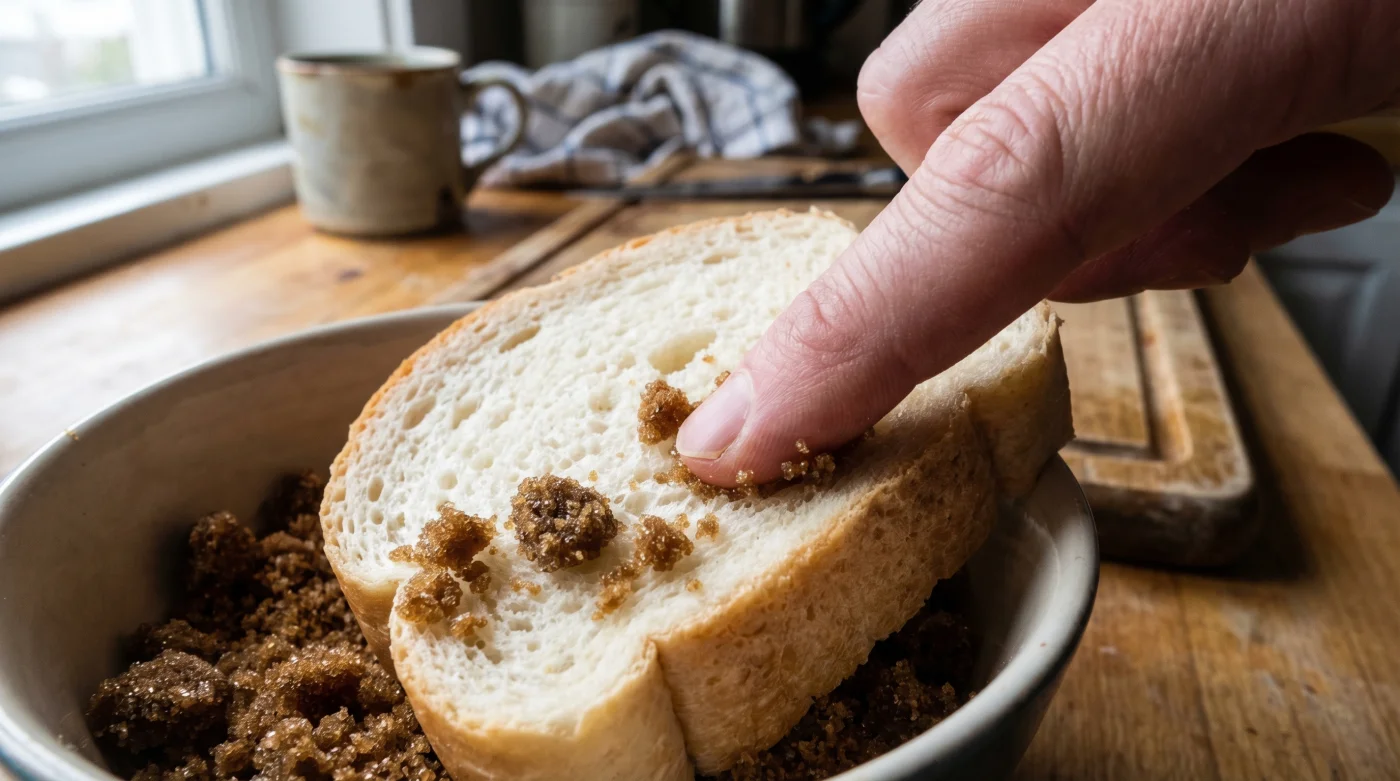
It is a familiar, frustrating scene on a cold Saturday morning in November. The kitchen is quiet, the oven is preheating to 175 Celsius, and you are craving a batch of soft, chewy ginger molasses cookies. You reach into the pantry, grab the familiar plastic bag, and your fingers are met with a solid, impenetrable brick.
The instinctual reaction is usually brute force. You might grab a heavy metal spoon, chiseling away at the amber rock, sending sharp shards of sweetness across the kitchen counter. It is an entirely unnecessary battle against the physical properties of dehydration.
The professional approach is far gentler, relying on environment rather than impact. Instead of fighting the hardened mass, experienced bakers simply manipulate the microclimate inside the storage container. By introducing a soft, unassuming slice of white sandwich bread, you initiate a quiet, invisible exchange.
Over the course of a single night, you watch a rigid, useless block slowly transform back into damp, sand-like perfection. It feels a bit like magic, but it is basic moisture transfer, keeping your ingredients perfectly soft and ready to use without physical effort.
Rethinking the Sweet Silt
We often treat our pantry staples as static, inert powders resting quietly on a shelf. But your canister of dark brown sugar is actually highly reactive, responding constantly to the dry, heated air pumping through your home during a long Canadian winter.
When you realize that brown sugar is merely fine white crystals wearing a damp coat of molasses, the hardening suddenly makes perfect sense. As that delicate film of water evaporates into the dry air, those individual crystals fuse together into a singular geological formation.
The objective is never to break the rock; it is to reintroduce the missing atmosphere. You are trapping the moisture where it belongs, coaxing the bonded crystals apart by offering them exactly what they lost to the ambient air.
Consider the routine of Clara, a 58-year-old pastry chef running a bustling seaside bakery in Halifax. While young apprentices would routinely try to discard crystallized bags, she taught them the bread trick on their very first morning. Clara used the heel of a basic white loaf, noting that it acts as a sacrificial water bank. The sugar aggressively steals the hydration from the bread, leaving the slice as hard as a cracker while the sugar returns to a texture resembling freshly tilled coastal earth.
Adapting the Moisture Bank
Pantries are deeply personal spaces, and one method does not fit every household. Depending on your dietary needs or time constraints, you can adjust the hydration source to suit your environment.
For the gluten-free purist, a wedge of fresh apple performs the exact same function as sliced bread. It releases a steady stream of hydration into the sealed environment, though it requires closer monitoring so the fruit does not overstay its welcome and introduce mould.
For the long-term planner, the terracotta disc is a permanent fixture. By soaking a small piece of unglazed clay in clean water for twenty minutes, patting it dry, and burying it in the sugar, you create a reusable, endless humidifier that never spoils.
Then there is the immediate emergency, when you need exactly one cup of soft sugar in thirty seconds and cannot wait overnight. Placing the rock in a microwave-safe bowl, draping a damp paper towel over top, and microwaving it on low for brief intervals will force warm steam directly back into the molasses.
Mindful Application
Restoring your ingredients requires only a few deliberate, unhurried actions. You do not need to overcomplicate the physics; you only need to ensure the environment is tightly controlled.
Choose an airtight glass or heavy plastic container with a secure rubber gasket. The entire process relies on creating a sealed atmospheric bubble where the escaping water vapour has absolutely nowhere to go except into the parched sugar.
- Place the hardened block of sugar into the bottom of your container.
- Lay one slice of fresh, high-moisture bread directly on top of the mass.
- Seal the lid tightly and place it back into the dark, temperate pantry.
- Wait 12 to 24 hours, then remove and discard the stale bread slice.
Tactical Toolkit: For the absolute best results, use standard white sandwich bread. It yields the highest moisture release without transferring strong, competing flavours like rye or sourdough might. The transfer takes 12 to 24 hours depending on the size of the block.
If the sugar feels slightly damp to the touch after you remove the bread, simply give it a light stir with a metal fork. It will settle back into a fluffy, scoopable amber texture within a few minutes of breathing the open kitchen air.
The Comfort of Control
There is a profound sense of satisfaction in rescuing something that seemed entirely ruined. We spend so much of our days reacting to minor frictions, broken plans, and unpredictable outcomes.
Fixing a seemingly permanent problem with a mundane, everyday object reminds us that we have quiet, practical agency over our immediate surroundings. It shifts baking from a rigid set of rules into an intuitive, responsive practice where you work in harmony with your ingredients.
The next time you crave cookies on a freezing evening, you will not be met with a frustrating barrier. Instead, you will find an ingredient that yields easily to your measuring spoon, perfectly soft, waiting for you to begin.
The most reliable tools in a kitchen are rarely bought; they are simply the quiet application of natural physics to everyday problems.
| Key Point | Detail | Added Value for the Reader |
|---|---|---|
| Airtight Seal | Use a gasket-lined glass jar or heavy silicone bag. | Ensures the moisture from the bread is forced into the sugar, preventing it from escaping into the room. |
| Bread Selection | Use a plain, high-moisture white sandwich slice. | Provides maximum hydration without altering the flavour profile of your baking ingredient. |
| Time Investment | Allow 12 to 24 hours for the ambient transfer. | Saves you from manual labor and chiseling, working silently while you sleep. |
Frequent Concerns
Will the bread make my sugar taste like yeast?
Not at all. The moisture transfers as pure water vapour, leaving the flavour compounds trapped within the crust.How long does this softening effect last?
As long as the container remains strictly airtight, your sugar should stay perfectly pliable for several months before needing intervention.Can I use a stale piece of bread?
No. The bread must be fresh and soft, as it needs to hold enough internal moisture to effectively donate to the hardened block.What if I leave the bread in too long?
While the sugar acts as a preservative, leaving bread in for weeks can eventually risk mould. Discard it after 24 hours.Does this work for white granulated sugar?
White sugar hardens due to direct water exposure binding the crystals, not moisture loss. This trick only works for molasses-coated brown sugars.