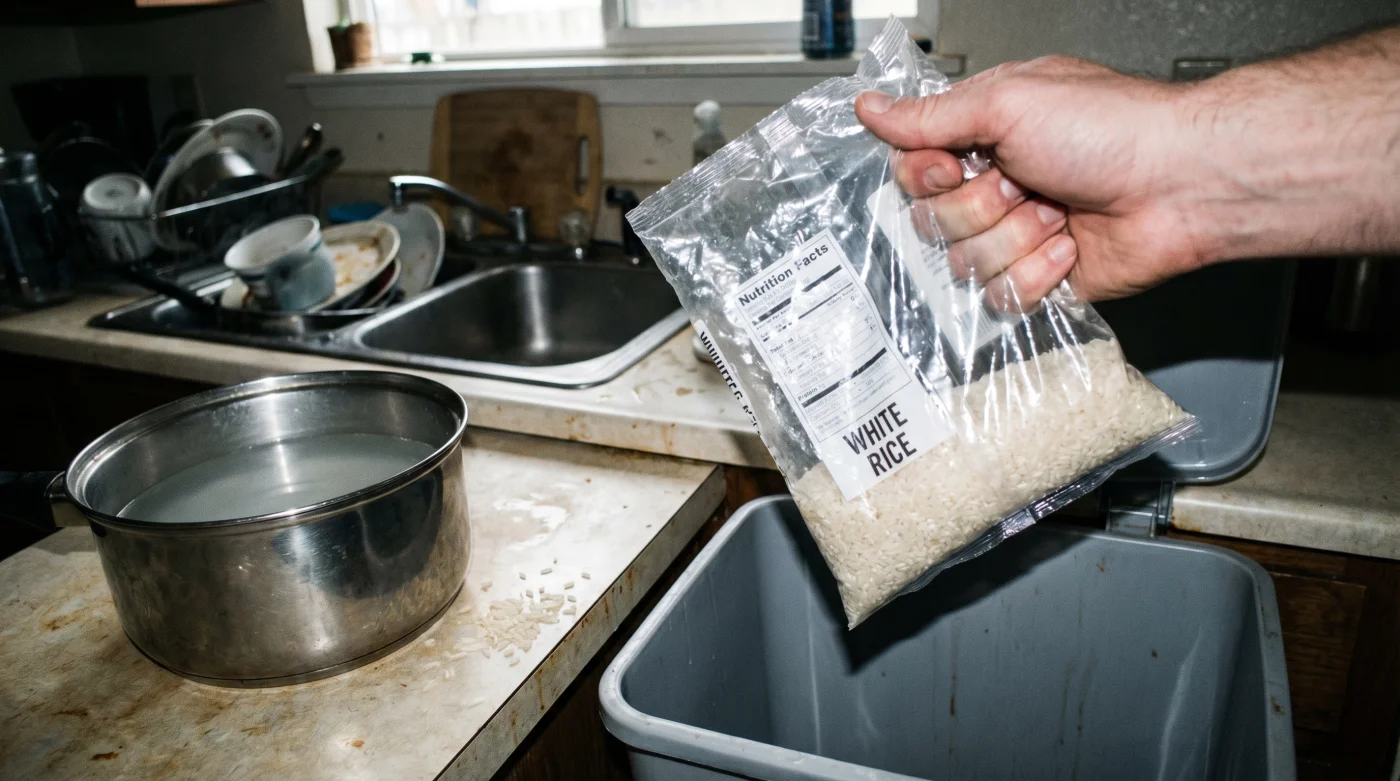
Outside, the chill of the evening bites at the windowpanes, but inside, the kitchen is quiet, save for the rhythmic bubbling of water on the stove. You reach into the pantry, your fingers brushing against the familiar texture of a heavy bag. Cooking rice is usually an act of domestic autopilot—a soothing, repetitive motion that grounds the evening routine. The scent of starch hitting boiling water promises a warm, blank canvas for tonight’s dinner.
But that quiet comfort fractures when the very staple you rely on becomes a hidden risk. A sudden alert has transformed this seemingly innocent grain into a potential hazard. Trusting your dry goods feels like a given, but right now, that trust requires a deliberate pause.
We tend to view our pantries as safe harbours, immune to the volatility of fresh produce or the strict expiry dates of dairy. Yet, an urgent safety recall involving Lundberg white rice proves that even the most stable corners of our cupboards need occasional policing. Tossing the bag is not a careless act of waste; it is a swift, necessary defence against severe food poisoning.
Understanding this recall shifts your perspective from passive consumption to active protection. Protecting your family’s health means pulling back the curtain on food manufacturing and recognizing when to intervene before a simple side dish turns into a medical emergency.
The Ecosystem of the Cupboard
Think of your pantry not as a dusty, static archive, but as a living ecosystem where external variables eventually make their way inward. When an agricultural product like Lundberg white rice is flagged for a critical safety issue—often involving invisible bacterial contamination that survives standard boiling—the threat is silent. The grains look perfectly polished, identical to the thousands of bowls you have cooked and enjoyed before.
This is where the mundane detail of a lot code becomes your strongest shield. We are conditioned to ignore the tiny strings of numbers stamped on the gusset of a bag, assuming they only matter to warehouse managers moving skids across thousands of kilometres. Yet, reading that tiny print is the exact mechanism that separates a comforting meal from a severe, entirely preventable illness.
We forget the sheer scale of modern milling. Grains are harvested, dried, husked, and polished in massive facilities. A single point of failure in that sprawling industrial chain—a compromised water line, an unsanitary storage silo—ends up neatly packaged and resting quietly next to your lentils. The recall notice is the emergency brake on that chain.
The Ottawa Inspector’s Warning
Elise Fournier, a 42-year-old public health inspector based in Ottawa, knows the deceptive nature of dry goods better than anyone. Last winter, while investigating a cluster of localized foodborne illnesses, she traced the origin not to a mishandled chicken breast or a questionable salad bar, but to a beautifully packaged bag of premium grains. “People treat rice like sand—they think it’s inert and eternal,” she noted while reviewing pantry logs. “But when a production line is compromised, that grain carries the risk straight into the boiling pot. The heat of a standard stovetop simmer is rarely enough to neutralize the specific pathogens flagged in these urgent recalls. You cannot cook your way out of a compromised batch. The only safe move is to toss the bag.”
Adjustment Layers: Navigating the Pantry Purge
Not every kitchen operates the same way, and how you handle this recall depends entirely on your specific habits. Let us break down how to approach your shelves with precision.
For the Decanting Purist
If you immediately transfer your groceries into matching glass jars, you have likely thrown away the original packaging. Without the lot code, you are flying blind in a storm. In this scenario, the rule is ruthless but necessary: if it is Lundberg white rice purchased within the last three months, empty the jar. Do not risk the margins. Wash the container thoroughly with hot, soapy water before refilling it with a new, safe alternative.
For the Bulk Buyer
You might have a massive ten-kilogram bag sitting in the basement storage room. It feels painful to discard such a volume of food, especially considering the rising cost of groceries. However, the concentration of the recalled batch means the risk is distributed throughout the entire sack. Tie the bag tightly, double-bag it in heavy-duty garbage liners, and remove it from your home immediately to prevent cross-contamination or attracting pests.
For the Meal Prep Strategist
You spent Sunday afternoon portioning out chicken and rice into five neat plastic containers, and now they are sitting in your refrigerator. If you discover the rice used was from the recalled batch, the entire meal must go. Scrap the prepared portions without hesitation. The moisture in cooked rice actually creates a perfect breeding ground for bacteria to multiply rapidly at temperatures just above 4 degrees Celsius.
For the Weeknight Scrambler
You just walked in the door, the stir-fry is already sizzling in the pan, and you suddenly realize your planned side dish is off-limits. Pivot immediately to a safe pantry alternative. Substitute with quinoa, a quick-cooking pasta, or even a robust piece of toast. Fasting is always better than gambling with a compromised ingredient when you are hungry and rushed.
The Tactical Toss: Clearing the Contamination
Handling a recalled product requires a mindful, systematic approach. It is not about panic; it is about precision. You are surgically removing a risk factor from your environment.
Follow these specific actions to neutralize the threat:
- Locate the “Best By” date and lot code on the back or bottom of the packaging.
- Compare the numbers strictly against the official Canadian recall notice—do not guess or assume.
- If there is a match, seal the rice in a secondary plastic bag before placing it in the outdoor trash bin.
- Wipe down the shelf where the bag rested using a diluted vinegar or mild bleach solution.
- Wash your hands meticulously with warm water and soap for twenty full seconds.
The Tactical Toolkit
To ensure your kitchen remains secure, keep these parameters in mind: check your receipts for purchase dates between October and December of the current year. Maintain your refrigerator strictly at 4 degrees Celsius to properly store leftovers of any alternative, safe grains. Use a 10-percent bleach-to-water ratio for wiping down porous pantry shelves where the contaminated bag was sitting.
Reclaiming Your Kitchen’s Quiet Safety
Discarding a pantry staple runs counter to every instinct we have about reducing waste and stretching our grocery budgets. It feels deeply wrong to drop a full, pristine-looking bag of rice into the garbage. But the peace of mind that comes from a secure, predictable kitchen far outweighs the momentary sting of lost dollars.
Food is supposed to be your foundation, a reliable source of energy and comfort. When you eliminate a hidden danger, you are restoring the integrity of your cooking space. You are actively choosing your well-being over convenience.
By treating recalls not as an annoyance, but as a critical piece of your kitchen management, you regain control over the invisible risks of the modern food system. You are ensuring that tomorrow evening, when the water begins to boil again and the kitchen fills with steam, the only thing you are serving your family is true nourishment.
“The safest kitchens aren’t the ones with the most expensive equipment; they are the ones where the cook pays fierce attention to the invisible details.”
| Key Point | Detail | Added Value for the Reader |
|---|---|---|
| Identify the Code | Check the specific lot numbers stamped on the bag gusset. | Gives you immediate clarity on whether your food is safe or toxic. |
| Secure Disposal | Double-bag the rice before putting it in an outdoor bin. | Prevents accidental consumption by pets or local wildlife. |
| Sanitize Surfaces | Wipe the shelf with a mild sanitizing solution. | Removes lingering particulate matter from the affected packaging. |
Frequently Asked Questions
Can I just wash the rice thoroughly before boiling it?
No. Rinsing grain only removes surface starch, not the bacterial or chemical contaminants that trigger a high-level health recall.
What if I already ate some and feel fine?
Dispose of the remainder immediately. Incubation periods for foodborne pathogens can vary, and repeated exposure increases the risk of severe symptoms.
Can I compost the recalled rice?
Do not add recalled food to your home compost bin. It can introduce dangerous pathogens into the soil you use for growing vegetables.
Will the grocery store give me a refund?
Yes, most retailers will offer a full refund for recalled items. Take a photo of the lot code and bag before disposing of it, just in case they require proof.
Are other brands of white rice affected by this?
Currently, the alert is isolated to specific batches of Lundberg white rice. However, it is always wise to monitor national food inspection updates for any widening of the recall.