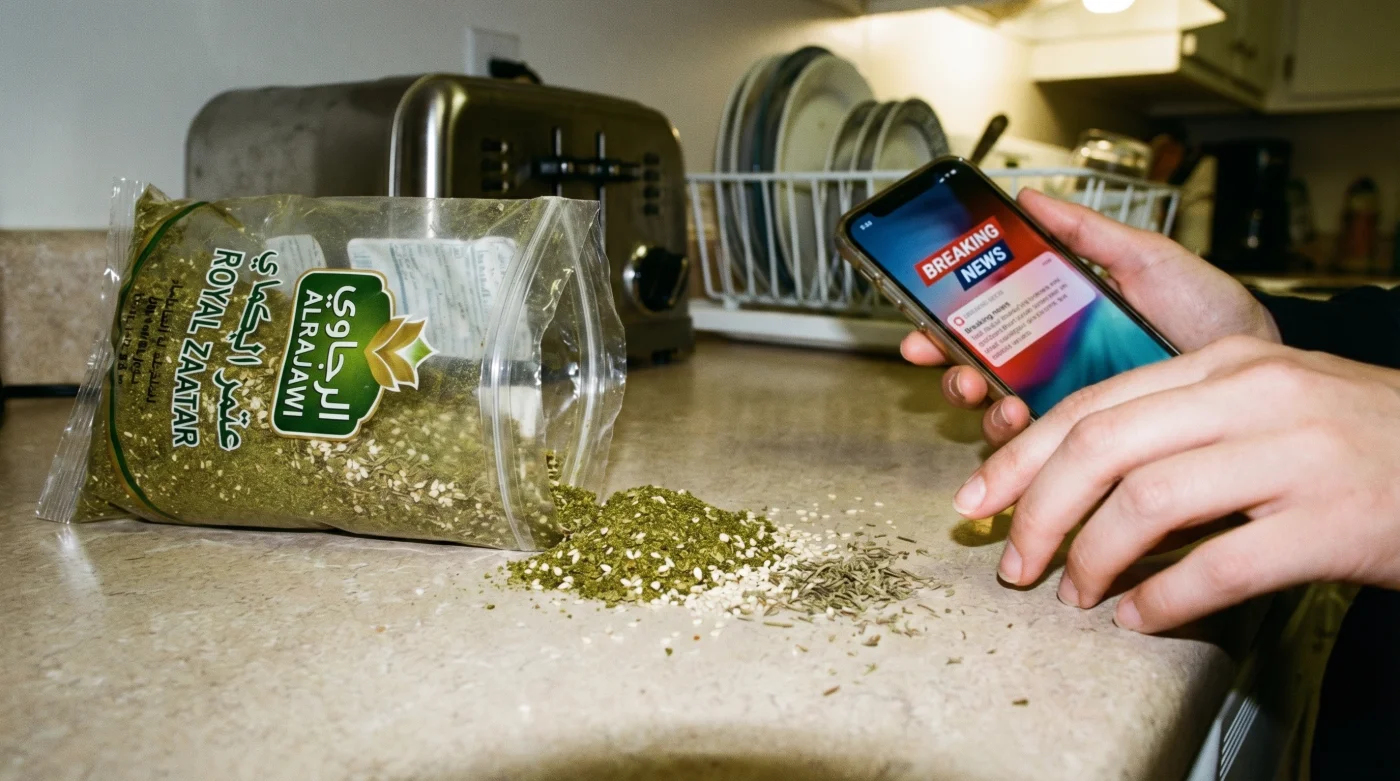
You know the smell before you even open the jar. It is the sharp, bright tang of sumac meeting the deep, grounding earthiness of wild thyme and the rich nuttiness of roasted sesame seeds. Poured into a shallow ceramic dish and drowned in thick, peppery olive oil, it becomes a morning ritual that wakes up the senses long before the kettle finishes boiling. It is a staple that speaks of comfort, family breakfasts, and quiet moments stolen at the kitchen island.
But rituals require an unspoken trust in our ingredients, and right now, that trust is severely fractured. The recent, sweeping Canadian Food Inspection Agency alert regarding Alarjawi royal zaatar has turned a beloved pantry staple into an immediate health risk, forcing us to pause and look closer at what sits on our shelves. It demands your immediate attention.
This is not a gentle suggestion to rotate your stock or check faded best-before dates. It is a critical line drawn in the sand by public health officials to protect your household from a massive, multi-province contamination event. The simple comfort of a warm flatbread dipped in oil suddenly carries a heavy, invisible weight that it never should.
We rarely pause to think about the complex global web of agriculture that brings these intricate, vibrant blends to our cold Canadian kitchen counters. But when a recall of this magnitude hits the news cycle, the illusion of safety shatters, reminding us that our food is grown in the dirt, handled by thousands of hands, and shipped across vast oceans before we ever see it.
The Fragile Ecosystem of a Spice Blend
Think of a complex spice mixture not as a single, static ingredient, but as a living choir. The sumac, the sesame, the dried herbs, and the coarse salt all need to arrive in perfect, pristine condition to hit the right notes. If one single component is compromised at the source, the entire performance falls apart, taking the whole batch down with it.
The contamination of Alarjawi royal zaatar isn’t a failure of recipe or flavour; it is a structural collapse in the agricultural supply chain. A microscopic bacterial threat found its way into a raw ingredient, likely during the drying or packing phase in a distant facility, long before it ever reached our snowy borders.
This is where your perspective on your own kitchen needs to shift dramatically. We are culturally conditioned to view dried goods as inert, eternal things that live safely in dark cupboards until we need them. In reality, they are raw agricultural products, highly vulnerable to moisture, microscopic pests, and improper handling during transit.
A spice blend is a living record of the environment it came from. When public health officials sound the alarm across the country, they are tracing a dangerous environmental variable that managed to slip past the safety gates, moving from a processing plant directly into the heart of your home.
Consider the daily reality of Marcelle Vigneault, a 46-year-old food safety auditor based in Montreal. Last Tuesday, she stood in a massive distribution centre off Highway 40, the hum of industrial ventilation fans drowning out the noise of forklifts. She spent her morning staring at towering pallets of imported spices wrapped in heavy plastic, breathing in the faint smell of burlap and dust. Marcelle spends her days hunting invisible threats, swabbing transit surfaces and cross-referencing hundreds of shipping manifests. She noticed an anomaly in a recent batch of imported raw materials used in several prominent commercial blends. ‘People think dried means dead,’ she noted, marking a heavy clipboard. ‘But aggressive pathogens can go completely dormant in dry environments for months. They sit there, waiting for the exact moment they meet moisture—like the olive oil on your breakfast plate or the steam from a roasting chicken—to wake up and multiply.’ Her meticulous tracking helped the CFIA draw the definitive line that eventually led to this nationwide recall.
Navigating the Pantry Threat
Not every Canadian kitchen operates the same way, which means your personal exposure to this recall depends entirely on how you buy, store, and utilize your spices. Identifying your specific risk is the very first step toward clearing the danger from your cooking space.
For the Bulk Decanter
If you are someone who buys your provisions in large quantities and transfers spices into aesthetically pleasing, matching glass jars, your risk of accidental exposure multiplies. You likely threw away the original Alarjawi plastic packaging weeks or even months ago. You are now looking at a jar of unidentified zaatar, entirely unsure of its origin or batch number.
In this frustrating scenario, absolute caution must override thrift. If you cannot definitively prove the green blend sitting in your glass jar is from a safe, unaffected brand, you must throw it out. The minor financial cost of replacing a few dollars worth of dried herbs is negligible compared to the severe physical toll of a foodborne illness tearing through your family.
For the Occasional Baker
Perhaps you only pull out the zaatar for specific, special recipes—a crust for roasted chicken thighs or a heavy topping for homemade sourdough focaccia. Your bag of Alarjawi royal zaatar might still be sitting in the dark back corner of the cupboard, sealed and seemingly pristine.
Do not let the intact, sealed plastic fool you into a false sense of security. The contamination occurred at the processing level, long before the product was packaged for retail sale. Do not open the bag to smell it or inspect it; simply bag it twice to contain the dust and dispose of it immediately.
The Mindful Pantry Reset
Clearing a contaminated item from your kitchen is not a chaotic, fearful scramble. It is a methodical, deliberate process. Think of it as resetting your culinary workspace, ensuring that the warm heart of your home remains a safe sanctuary for cooking and eating.
When dealing with a recalled powdered substance, invisible cross-contamination is your absolute biggest enemy. Treat the surrounding area carefully, as fine, microscopic spice dust can easily float and settle onto neighbouring jars, lids, and wooden shelving.
- Isolate and Bag: Take the Alarjawi packaging and place it inside a secondary, heavy-duty plastic garbage bag. Tie it tightly to prevent air from escaping before placing it directly in your outdoor garbage bin, keeping it away from indoor pets.
- Wash the Decanters: If you used a reusable glass or ceramic jar, empty the contents outdoors directly into the trash. Wash the empty container in your dishwasher on the highest heat setting, or submerge it in the sink with soapy water at least 60°C for a minimum of ten minutes.
- Sanitize the Shelf: Remove every single item from the shelf where the zaatar was stored. Wipe the wood, wire, or plastic down with a damp cloth soaked in a solution of warm water and white vinegar to capture any stray, lingering dust.
- Wash Your Hands: Scrub your hands thoroughly with hot, soapy water for a full twenty seconds, ensuring you clean deeply under your fingernails where fine spice particles stubbornly tend to hide.
The Peace of a Trusted Kitchen
It is deeply unsettling when something that brings routine joy and vibrant flavour to our tables becomes a sudden source of anxiety. We rely on our pantries to be a reliable comfort, a steady reserve of warmth and sustenance in the middle of a long, unpredictable Canadian winter.
Taking swift, decisive action does much more than just protect your digestive system from illness. It restores your peace of mind, allowing you to step back into the kitchen with a deep breath and full confidence, knowing the ingredients you reach for are entirely safe.
This massive recall is a sharp, timely reminder of the fragile bridge between the raw earth and our dinner plates. By respecting that inherent fragility, paying attention to public health alerts, and staying alert to the realities of our modern food system, we become better, more conscious cooks.
Tomorrow morning, when you pour fresh olive oil into a shallow dish and sprinkle a new, safe batch of thyme and sumac into the centre, the aroma will ring true, entirely free from the heavy shadow of doubt.
“Treating a pantry recall with the same urgency as a raw meat contamination is the hallmark of a kitchen that truly respects its ingredients and its guests.”
| Key Point | Detail | Added Value for the Reader |
|---|---|---|
| Immediate Disposal | Discard Alarjawi royal zaatar without opening or tasting. | Prevents airborne spread of microscopic contaminants in your home. |
| Decanter Danger | Unlabelled glass jars of zaatar pose a high risk. | Removes the guesswork and protects your family from hidden threats. |
| Surface Sanitation | Wipe shelves with warm water and vinegar. | Ensures neighbouring safe spices aren’t accidentally cross-contaminated. |
| Temperature Control | Wash all exposed containers at 60°C minimum. | Effectively neutralizes dormant bacteria clinging to glass and ceramic. |
| Hand Hygiene | Scrub hands and under fingernails for 20 seconds. | Blocks the direct transfer of pathogens from the spice jar to your mouth. |
Frequently Asked Questions
What if I already ate some of the recalled Alarjawi zaatar?
Monitor yourself closely for severe stomach cramps, fever, or nausea over the next 72 hours, and contact your local health care provider immediately if symptoms appear.Can I return the recalled spice to my local grocery store?
Yes, most Canadian retailers are legally obligated to offer a full refund for CFIA-recalled products, even if the package is opened or partially used.Does cooking the zaatar kill the contamination?
While high heat kills many bacteria, home cooking temperatures are often uneven, making it incredibly risky to attempt to ‘cook out’ a verified contamination.How do I find out the exact batch numbers involved?
Visit the official Canadian Food Inspection Agency (CFIA) website and search the active recall warnings for a detailed list of affected UPC codes.Is it safe to buy a different brand of zaatar right now?
Yes, as long as the brand is not listed in the current CFIA recall, other commercial zaatar blends remain perfectly safe for your pantry.