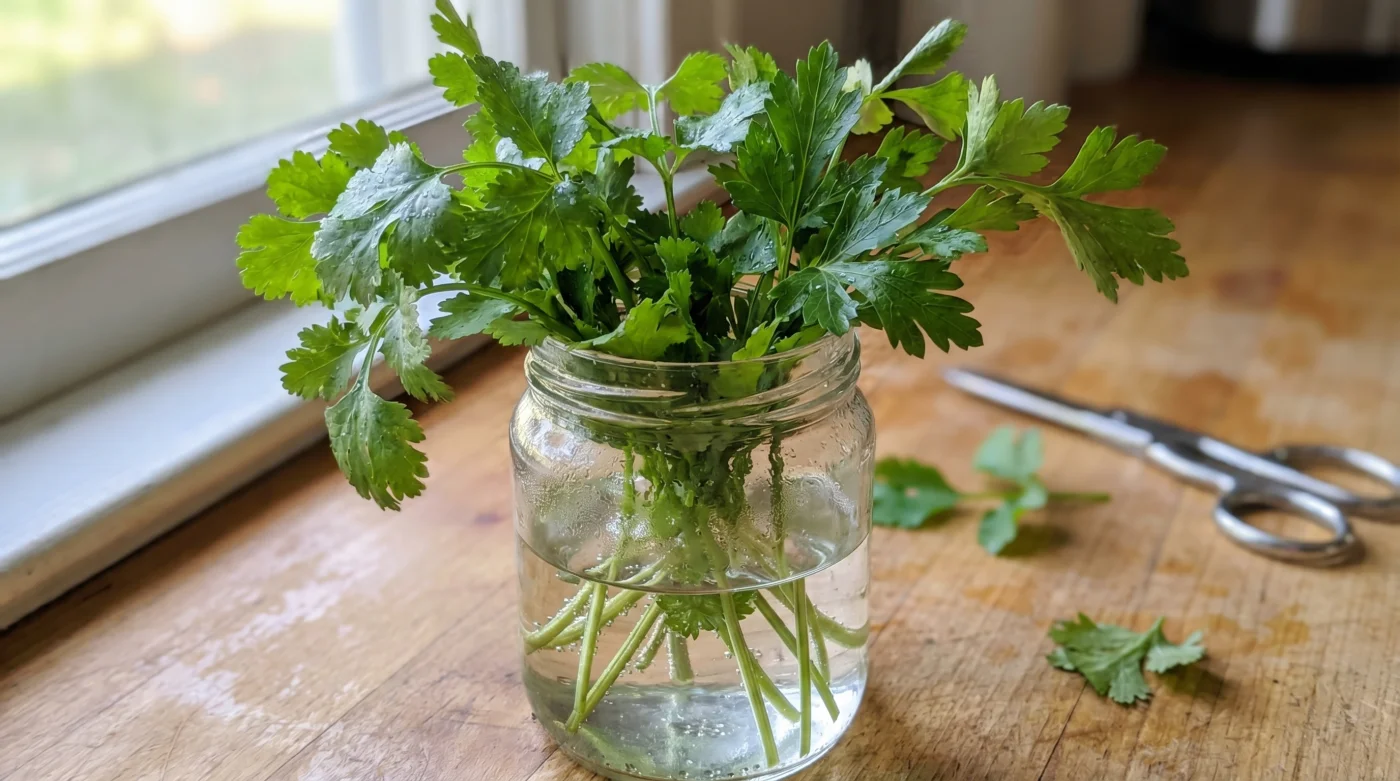
You drop the grocery bags on the counter. The kitchen is quiet, save for the low, rhythmic hum of the refrigerator. You pull out a bunch of cilantro, its vibrant green leaves practically trembling with life, crisp and fragrant against the sterile plastic of the produce bag. It smells like wet earth and bright promise.
By Thursday, that same bundle will likely be a sad, slimy shadow of itself, relegated to the dark back corner of the crisper drawer. We accept this rapid decay as a simple law of nature, rushing to mince and scatter our greens before they turn to compost in the very appliance meant to preserve them.
But the professional kitchen operates under a completely different rhythm. There, a bunch of parsley isn’t treated as a transient garnish to be neglected; it is handled with the same reverence as a dozen long-stemmed roses. You don’t need industrial cooling systems to mimic this grace. You just need a heavy-bottomed drinking glass and a bit of cold tap water.
This viral five-minute prep ritual currently dominating culinary searches isn’t about cooking at all—it’s about treating your grocery haul like a florist treats a morning delivery. By placing stems in a glass of cold water, you can keep delicate greens fresh for weeks, transforming a notorious point of kitchen waste into a lasting source of flavour.
The Perspective Shift: Hydration Over Suffocation
Most of us instinctively suffocate our greens. We wrap them in damp paper towels and seal them tight in zip-top bags, assuming the chill of the fridge is enough to suspend time. But an herb is a living, breathing system cut off from its root source. It doesn’t need to be trapped; it needs to drink.
The mundane flaw—the exposed, violently snipped ends of a basil or mint stalk—is actually a massive structural advantage. Those raw cuts are vascular straws, desperately waiting to draw moisture upward through capillary action. When you shift your mindset from merely storing food to actively tending a bouquet, the lifespan of your produce shifts radically.
Clara Hughes, a 42-year-old sous chef working the line at a bustling Montreal bistro, swears by this botanical approach. Every morning, before the delivery trucks even finish idling in the back alley, Clara spends exactly five minutes snipping the bottoms off dozens of bunches of tarragon, dill, and cilantro. She drops them into massive glass pitchers of icy water near the prep station, draping a loose plastic quart container over the top.
She treats the routine with a quiet reverence. “They need the humidity dome to protect the leaves, but they also need to pull water from the base,” Clara tells her new line cooks. “Treat them like hydrangeas, and they will fight for you all week.”
Categorizing Your Canopy: Tailoring the Technique
Not all flora behaves the same under cold glass. To master this viral prep technique, you must segment your grocery haul into distinct botanical categories. Forcing a woody sprig of rosemary into the same environment as a fragile stem of dill will only lead to disappointment.
The soft performers—cilantro, parsley, mint, and dill—are the delicate greens that benefit most directly from the bouquet method. They wilt rapidly because their internal moisture evaporates from broad, tender leaves. These varieties crave the refrigerator’s chill, provided their cut stems remain submerged in water to replenish what the dry winter air steals.
Conversely, basil operates by its own set of rules. It is highly sensitive to the cold; placing a basil bouquet in the fridge will turn its leaves a bruised, tragic black within hours. Basil demands a temperate spot on your kitchen counter, away from direct drafts, soaking up room-temperature water like a prized houseplant.
Finally, the woody resistors—rosemary, thyme, and oregano—do not require the glass treatment at all. These hardy stalks thrive when wrapped loosely in a slightly damp tea towel and tucked into a breathable container. Understanding the specific needs of these groups is the secret to a thriving kitchen.
The Mindful Ritual: Five Minutes to Freshness
The process is a quiet, deliberate sequence that grounds you after the chaos of the supermarket. It requires no special gadgets, just your undivided attention for a handful of minutes before you put your groceries away.
Gather your supplies: a clean pair of kitchen shears, a sturdy drinking glass or Mason jar, and the thin plastic bags you brought the produce home in. This is about giving your greens your undivided attention for five minutes.
Follow these precise steps to establish your countertop nursery:
- The initial trim: Snip roughly two centimetres off the bottom of each stem at a 45-degree angle. This prevents the stem from sitting flat against the bottom of the glass, ensuring maximum water absorption.
- The water draw: Fill your jar with about four centimetres of cold tap water. You want just enough to submerge the cut ends, but not so much that the lower leaves are drowning.
- The humidity tent: Place the bundled stems into the water. Take a plastic produce bag and drape it loosely over the leaves, creating a micro-greenhouse that traps ambient moisture without suffocating the plant.
- The climate control: Place cilantro, parsley, and mint in the refrigerator. Leave basil out on the counter.
Here is your Tactical Toolkit: The water temperature should be around 4 Celsius for fridge-bound greens, and 20 Celsius for countertop basil. The trim angle must be sharp to expose fresh vascular tissue.
The water must remain pristine to prevent bacterial growth. Check the jars every morning when you make your coffee, and refresh it every two days to keep the stems pulling cleanly.
The Bigger Picture: Reclaiming Your Kitchen Ecosystem
Mastering this simple storage technique is about far more than just saving three dollars on a bunch of parsley. It is about ending the frustrating cycle of food waste that quietly drains our budgets and our enthusiasm for cooking.
We all buy vibrant, healthy greens with the absolute best intentions of cooking bright, nutritious meals from scratch. When we throw them away days later, we aren’t just discarding food; we are perpetuating a cycle of aspiration and guilt.
By adopting this five-minute floral habit, you build a resilient buffer into your week. You aren’t just extending the physical life of your food; you are extending your own grace. You buy yourself the time to cook when you are ready, not when the impending decay of your produce dictates it.
You can plan your meals with a profound sense of calm. You know those delicate greens are waiting for you, standing tall in their quiet glass of water, remaining crisp, fragrant, and vibrant for weeks.
“A well-tended kitchen respects the origin of the ingredient; when you give a cut stem water, you give it back its dignity.”
| Storage Method | Typical Lifespan | Added Value for the Reader |
|---|---|---|
| Plastic Bag in Crisper | 3 to 5 Days | None. Leads to rapid wilting, slime, and inevitable food waste. |
| Damp Paper Towel Wrap | 7 to 10 Days | Requires constant monitoring of moisture levels to prevent mold. |
| Cold Water Bouquet | 2 to 3 Weeks | Zero-waste confidence, crisp texture, and a beautiful visual cue to cook. |
Common Curiosities
Do I need to wash the herbs before putting them in the glass?
Wait to wash them until right before you eat. Introducing extra moisture to the leaves before storage encourages premature rot.What if the water in the glass turns cloudy?
Cloudy water indicates bacterial growth. Empty the jar, wash it thoroughly, trim another half-centimetre off your stems, and refill with fresh water.Can I use this method for green onions?
Absolutely. Scallions thrive in a glass of water on the counter, and they will actually continue to grow new green shoots from the root base.Why do my basil leaves turn black in the fridge?
Basil is a tropical plant that suffers chilling injury below 10 Celsius. Always keep your basil bouquets on the kitchen counter at room temperature.Should I remove the rubber band holding the bunch together?
Yes, remove any tight bands or ties. They restrict water flow through the stems and create bruising where decay easily starts.