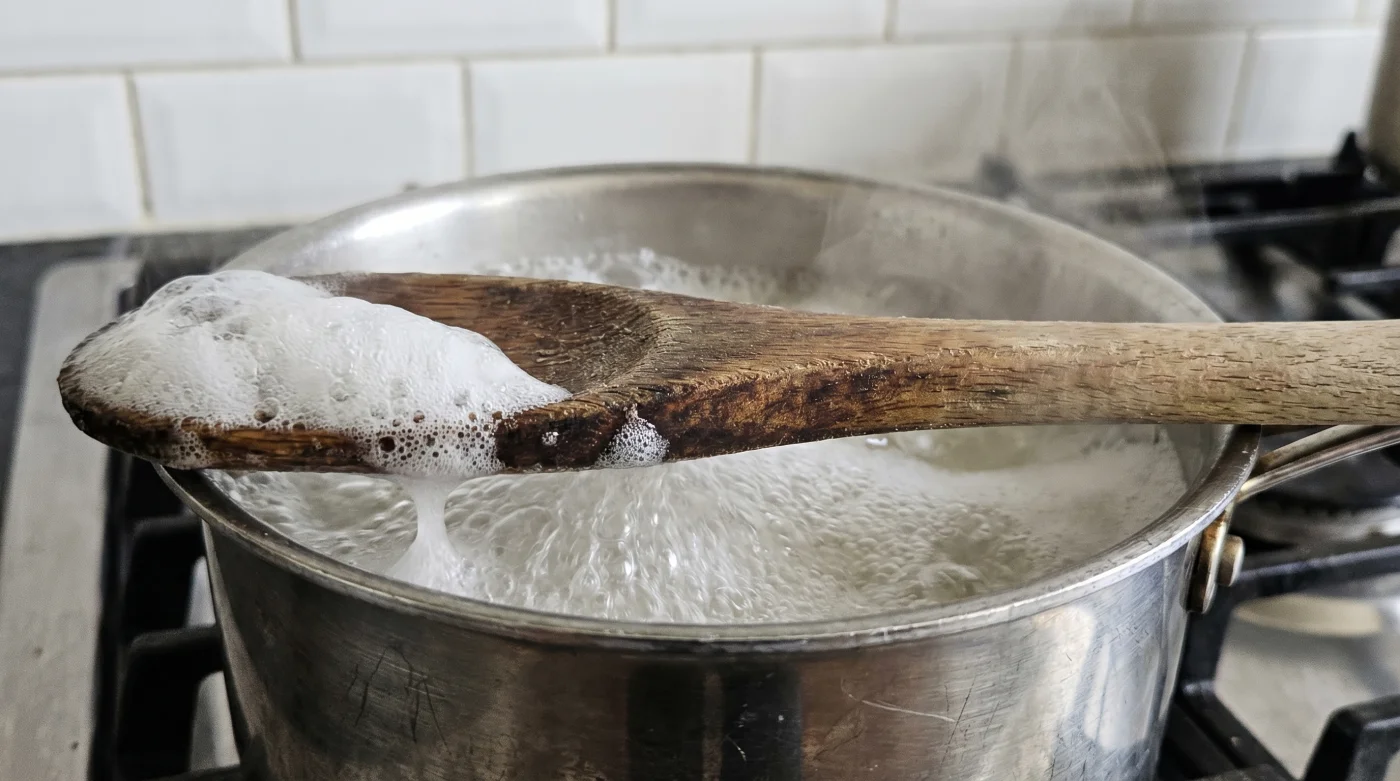
The water in the heavy-bottomed pot begins its aggressive dance. Bubbles swell, turning the clear liquid into a rolling, opaque foam. You turn your back for a mere fraction of a second to chop parsley, and then you hear it—the sharp, furious sizzle of salted water scorching the hot burner.
We have all been victims of the boil-over. It demands an immediate, frantic scramble. You blow desperately at the rising white crest, dragging the heavy pot off the heat, leaving a charred, crusty ring on your pristine stove top that will require an hour of scrubbing later. The rhythm of cooking shatters, replaced by the dread of cleaning up.
Yet, preventing this domestic disaster requires no expensive gadgets or frantic hovering. The solution is resting quietly in your utensil crock. By simply laying a dry, well-worn wooden spoon flat across the rim of your pot, you introduce a physical and thermal barrier that forces the aggressive foam to retreat, keeping your workspace perfectly unblemished.
The Physics of the Wooden Ward
Think of boiling foam as a panicked crowd rushing towards a narrow exit. The bubbles are stabilized by starch or proteins, clinging to each other in a desperate bid to expand. When you lay the spoon flat across the diameter of the pot, you aren’t just creating a ceiling; you are introducing a speed bump to that panic.
Wood is naturally porous and an incredibly poor conductor of heat. While the metal sides of your pot sit at a blistering 100 Celsius, the wooden spoon remains cool. When the fragile bubbles strike, they hit this cooler, rougher surface. The temperature difference snaps the surface tension immediately, causing the foam structure to collapse back into the water.
The flaw in our modern kitchen approach is assuming we need high-tech sensors or constant vigilance to manage heat. The perspective shift happens when you realize the very tools you stir with possess passive, regulating properties that save you valuable time.
Consider Elias, a 41-year-old chef running a fast-paced diner in downtown Halifax. Every morning, his prep station features four massive vats of starchy potato water boiling simultaneously. He doesn’t have the luxury of babysitting them. Instead, Elias uses four thick, battered maple spoons, laying them across the rims like wooden sentinels. They are my cheapest cooks, he notes, tapping the handle of one. They break the tension of the starch, buying him exactly five minutes of unattended prep time—the perfect viral prep window—to slice onions while keeping the flat-top entirely free of scorched residue.
Adapting the Spoon for Different Soaks
Not all boiling liquids behave the same way. The density of the foam dictates how your wooden tool will perform and what size you should reach for.
For the Starch Heavyweights: When tackling a viral, heavily salted pasta water reduction or a roaring potato boil, the foam is highly structural. A thick, wide-handled spoon works best here. The larger the surface area, the faster it bursts the dense starch bubbles before they cascade over the lip.
For the Dairy Dangers: Heating milk or cream for a rich béchamel is notoriously treacherous. The proteins form a resilient skin that traps steam, causing sudden, explosive boil-overs. Here, you need a highly textured, completely dry wooden spoon. The cream should tremble below it, but the moment the milk solids touch the rough grain, they rapidly recede.
For the Sugary Reductions: Making jam or boiling maple sap down requires caution. Sugar foam is incredibly sticky and hot. Use a longer spoon so the handle ends extend far past the pot edges, keeping the wood from eventually heating up and losing its thermal advantage during a long simmer.
The Tactical Toolkit for a Clean Stove
Implementing this requires minimal effort, but specific timing. You are setting up a passive defence system to protect your kitchen.
Ensure the spoon is bone dry before use. A waterlogged spoon conducts heat, entirely defeating the purpose and allowing the foam to climb over the wood.
Let’s walk through the precise setup:
- Bring your liquid to a rapid, rolling boil over medium-high heat.
- Select a wooden spoon that is at least two inches longer than the diameter of your pot.
- Lay the spoon perfectly flat, directly across the widest point, exactly in the centre.
- When the foam rises and contacts the wood, observe the collapse. If the liquid continues to rise past the spoon, slightly reduce the heat by a quarter turn.
Your Tactical Toolkit includes targeting 100 Celsius for water boils, using unvarnished, untreated wood like maple or beech, and recognizing a five-minute time limit before the steam eventually heats the wood, requiring you to swap it for a cool spoon.
Reclaiming Your Kitchen Peace
Cooking often feels like managing a series of small, impending crises. A hissing pot threatens to ruin the pace of your evening, demanding your attention and promising a frustrating, burnt-on cleanup.
Mastering this incredibly simple, almost mundane detail removes a layer of anxiety from your daily routine. You stop reacting to heat, and start directing it. The wooden spoon grants you the breathing room to mince garlic, pour a glass of wine, or simply stand still and enjoy the aroma of your meal.
By trusting the physical properties of the materials in front of you, the kitchen becomes a place of quiet competence rather than frantic scrambling. You are no longer fighting the heat; you are managing it with absolute grace.
The secret to a pristine workspace isn’t constant cleaning; it’s designing an environment where messes fail to happen in the first place.
| Key Point | Detail | Added Value for the Reader |
|---|---|---|
| The Thermal Shock | Cool, dry wood abruptly lowers bubble temperature. | Prevents stove top spills without turning down the heat. |
| The Five-Minute Prep | Buys you unattended time during a rolling boil. | Allows you to chop, mix, or plate without babysitting the pot. |
| Wood Selection | Unvarnished maple, beech, or olive wood works best. | Utilizes common pantry tools for professional-level efficiency. |
Frequently Asked Questions
Does this work with plastic or metal spoons?
No. Metal conducts heat far too quickly, and plastic will warp or melt. Wood is required for its poor thermal conductivity.How long can I leave the spoon on the pot?
The spoon buys you about five to seven minutes. Eventually, the steam will heat the wood, diminishing its effectiveness.Can the wooden spoon catch on fire?
If you are cooking on a gas element, ensure the flames do not lick up the sides of the pot to reach the overhanging spoon handle.Does the spoon alter the flavour of my food?
As long as your spoon is clean and unvarnished, it will not transfer any flavours to your boiling water or reductions.What if the foam still boils over?
If the boil is too aggressive, the spoon can only do so much. You may need to lower your element’s temperature by a fraction.