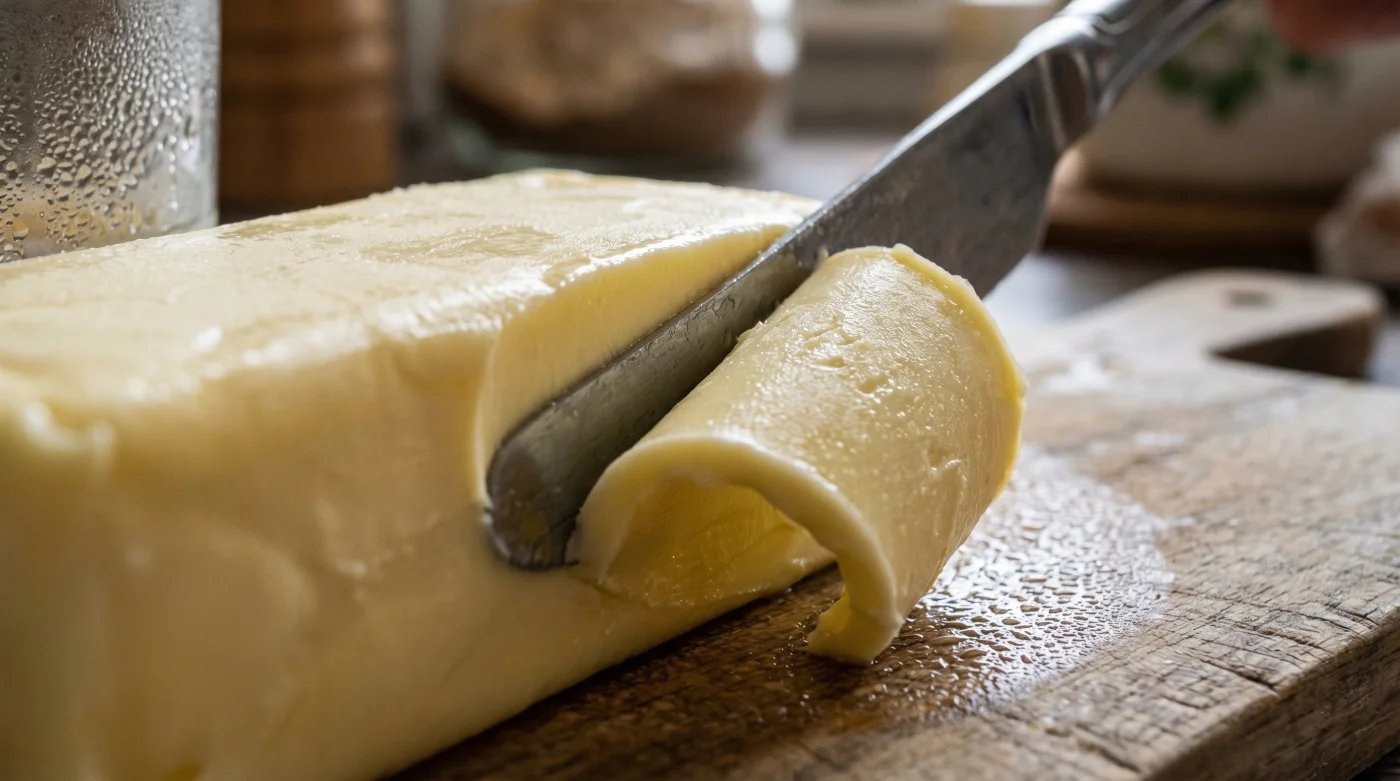
You are standing in your kitchen on a crisp Tuesday morning. The kettle has just clicked off, sending a soft, curling plume of steam into the chilly air. You pull a fresh slice of sourdough from the toaster, anticipating the crunch of the crust and the rich, creamy melt of salted butter.
But then you open the fridge door. There it sits, a pale yellow block resembling a brick of limestone. You know the resulting disaster: dragging a knife across the surface, attempting to force stiff, unforgiving shards across delicate crumb, inevitably tearing your perfect toast into a mangled ruin.
We have all tried the desperate alternatives. We hover a plate over the toaster, or worse, we surrender to the microwave, reducing a premium dairy product to a half-melted, oily puddle that soaks right through the bread. It feels like a small, daily defeat before the day has even begun.
There is a surprisingly elegant solution hiding in your cupboards. Instead of fighting the cold or obliterating the structure with aggressive heat, you can create a gentle microclimate right on your kitchen counter, turning a solid block into spreadable perfection in under three minutes.
The Thermodynamics of Your Breakfast
Think of your cold butter like a tightly wound knot of milk fats and water. When you expose it to the harsh, direct radiation of a microwave, the water content boils rapidly off, causing the structure to collapse completely. You are not softening it; you are destroying it.
The secret relies on capturing ambient, radiating heat. By filling a thick drinking glass with hot tap water, letting the glass heat up, dumping the water, and then inverting that warm glass over your portion of cold dairy, you create a tiny, steamy thermal isolation chamber.
Suddenly, your forgetfulness becomes an advantage. Keeping your butter safely chilled in the fridge preserves its sweet, grassy flavour profile and extends its lifespan. You only ever need to temper the exact amount you plan to consume, meaning the rest stays fresh, untouched, and ready for tomorrow.
It shifts your morning routine from a frantic scramble to a moment of intentional chemistry, allowing the butter to slowly relax into a glossy, yielding state while you pour your coffee.
Clara, a 42-year-old pastry chef running a bustling patisserie in a snowy corner of Montreal, understands this tension intimately. When the temperature drops below zero and her kitchen walls run cold, even butter left out overnight remains far too stiff to properly cream into sugar for her signature brioche.
Rather than risking the integrity of her dough with unevenly heated fats, Clara relies on a larger version of this exact method. She uses a heavy, heated ceramic mixing bowl inverted over her blocks of butter, creating a controlled, radiant heat environment. ‘You want the cream to tremble, not weep,’ she explains. ‘The glass trick mimics a professional proofing drawer, coaxing the fats to soften without breaking their emulsion.’
Adjusting the Climate for Your Needs
Not all butter needs are created equal. How you apply this trick depends entirely on what you are trying to achieve in the kitchen.
For the Quick Breakfast Spread: If you only need enough to coat a couple of crumpets or a slice of toast, slice off your required portion first. Stand the piece upright on a small plate. A standard, thick-walled drinking glass heated with tap water will soften a two-tablespoon portion in exactly two minutes.
For the Spontaneous Baker: Sometimes the urge to bake cookies strikes, but your recipe demands a whole half-cup of softened butter. Do not attempt to use a single glass for a massive block.
Instead, cut the cold stick into half-inch cubes and spread them out on a plate. Warm a large glass or ceramic mixing bowl with boiling water from your kettle, dry it quickly, and invert the entire vessel over the cubes. It provides an even, encompassing radiant warmth that preps your baking ingredients in five to seven minutes.
For the Flavour Purist: If you are making a quick compound butter with roasted garlic or fresh herbs for a dinner party, the texture must be incredibly smooth to incorporate the ingredients.
You want the butter slightly softer than you would for toast. Leave the heated glass over your portion for an extra minute. The residual warmth creates a beautifully malleable dairy base, allowing you to fold in your herbs with barely a whisper of resistance.
The Simple Execution
Mastering this technique requires practically zero effort, but the specific sequence of actions dictates the quality of your result.
Gather a small ceramic plate, your cold butter, a butter knife, and a heavy-bottomed glass. A standard pint glass or a thick tumbler works beautifully, as thick glass retains heat significantly better than thin, delicate crystal.
- Slice your cold butter to the desired thickness and stand it upright on the plate to maximize surface area.
- Fill your glass entirely with very hot water from your kitchen tap (roughly 50 Celsius). Let it sit for one full minute to warm the glass.
- Pour the water down the sink and quickly dry the inside of the glass with a clean tea towel.
- Immediately place the warm, dry glass upside down over your butter on the plate.
- Leave it untouched for two to three minutes while you prepare your tea or coffee.
There are three elements to a successful tactical toolkit for this method. Water temperature should hover around 50 Celsius from a hot tap; glass type must lean toward thick-walled ceramic or heavy glass for retention; and timing ranges from two minutes for a slice to five for a cubed baking portion.
Reclaiming the Morning Rhythm
In the grand scheme of daily life, a cold piece of dairy might seem like an insignificant triviality. Yet, it is exactly these tiny, repeating daily frictions that slowly wear down our patience before we even step out the door.
When you learn to bypass the frustration of torn bread or the disappointment of a greasy, microwaved mess, you reclaim a small modicum of control. You replace a rushed, irritating morning problem with a calm, nearly magical solution that works every single time.
It is a reminder that the kitchen does not have to be a place of compromise. By understanding the simple mechanics of heat transfer, you turn a mundane morning task into a quiet, highly rewarding ritual.
The next time you face a rock-solid block of butter, you will not feel that familiar spike of annoyance. You will simply reach for a glass, turn on the tap, and let the warmth do the work while you breathe, knowing that perfectly spreadable comfort is only two minutes away.
Respecting the structure of your ingredients often means choosing the gentlest method of transformation; heat should be a persuasion, not a punishment.
| Key Point | Detail | Added Value for the Reader |
|---|---|---|
| The Microwave | Aggressive, direct radiation that boils water content. | None. Leaves butter oily, melted, and ruins delicate baked goods. |
| Room Temperature | Leaving the block on the counter for hours. | Safe, but requires pre-planning and limits the lifespan of your dairy. |
| The Glass Chamber | Ambient radiant heat captured under a thick glass. | Provides perfectly spreadable texture in two minutes without melting the fats. |
Frequently Asked Questions
Can I use boiling water to heat the glass faster?
Avoid boiling water. It makes the glass too hot, which will melt the butter into a puddle rather than gently softening it.Will a thin wine glass work for this trick?
Thin glass does not retain heat well. Always opt for a thick-walled drinking tumbler, a pint glass, or a ceramic mug for the best thermal mass.How long does a whole block take to soften?
If you need a large amount for baking, cube the butter first and cover it with a large, heated ceramic mixing bowl for about five to seven minutes.Can I reuse the hot water for anything else?
Absolutely. You can pour the hot water straight into your kettle to speed up your morning coffee or tea preparation.Does this work with plant-based butter alternatives?
Yes, the thermal chamber effect works on vegan spreads too, though they typically require less time. Check under the glass after one minute.