You pull the crisper drawer open, the plastic squeaking slightly on its tracks, the cold air hitting your knuckles as you reach for the foundation of tonight’s soup. Instead of a rigid, watery snap, your fingers meet something that feels more like a tired garden hose. The celery stalk bends in half, drooping over your palm in a miserable arc of pale green.
It is a quiet, specific frustration that plays out in kitchens across the country. You hauled those grocery bags in from the snowy driveway three days ago, leaving the bunch in the flimsy plastic sleeve from the store, trusting the refrigerator to do the heavy lifting. The plastic traps the decay, accelerating the very wilting you were trying so hard to prevent.
The professional kitchen operates under a completely different set of physical laws. Walk into any serious prep station before the morning rush, where the air smells of sharp onions and stainless steel cleaner, and you won’t see limp vegetables waiting for the knife. You will find tightly wrapped silver cylinders, perfectly chilled and violently crisp.
You have likely been taught to fear air when it comes to preserving produce. The modern instinct is to seal everything away in airtight containers or twist-tied bags, hoping to block out the world. Fear of air ruins produce, suffocating the plant in a misguided attempt to freeze time and halt the natural degradation cycle.
The Perspective Shift: The Ethylene Paradox
But celery is still breathing long after it leaves the soil. It releases ethylene gas, a natural ripening hormone that acts like an invisible self-destruct sequence when confined in a typical grocery bag. The moisture that the plant desperately needs to maintain its cellular hydrostatic tension begins to pool, but the gas remains trapped, confusing the plant’s biology and melting its cell walls.
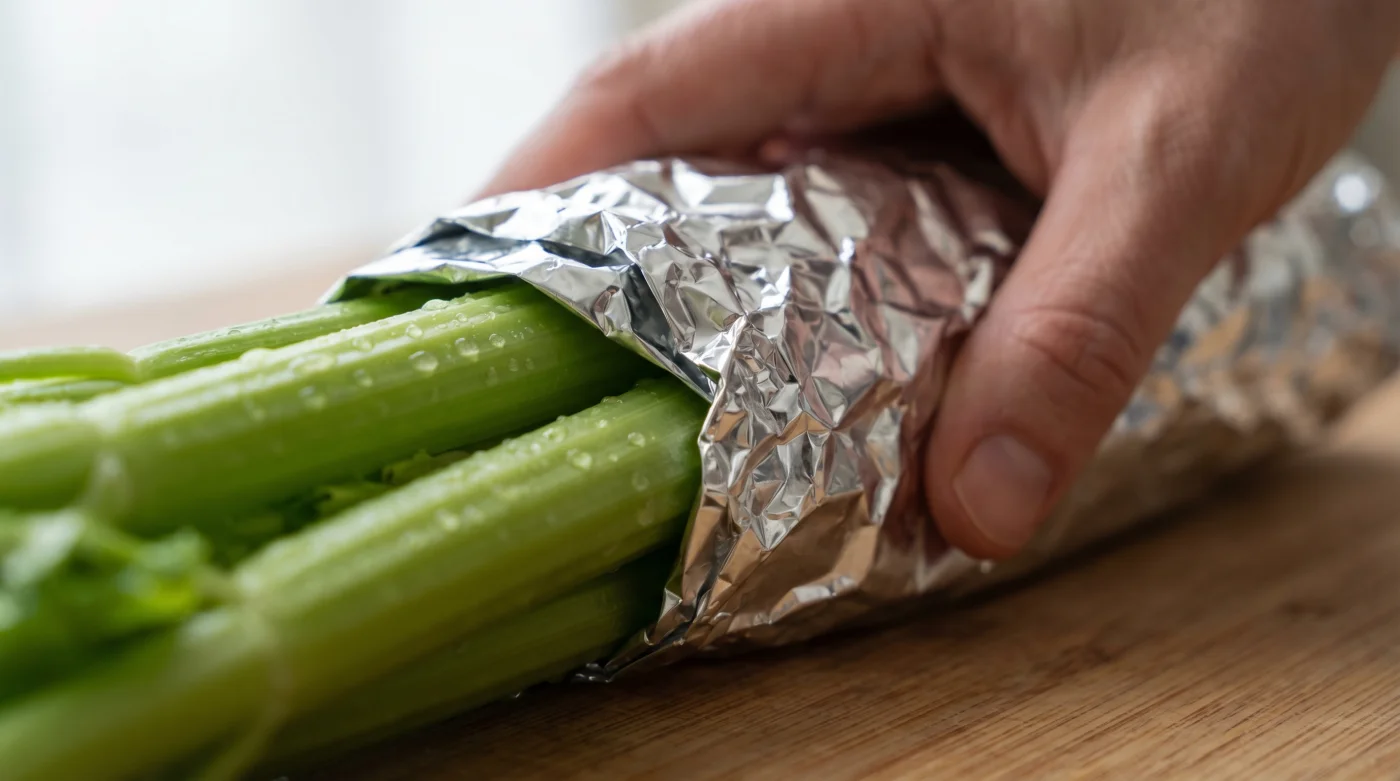
By wrapping the vegetables tight in aluminum foil, you completely change the micro-climate around the stalks. The foil creates a firm physical barrier that holds the stalks’ natural moisture against the skin. The foil regulates gas exchange, allowing the microscopic escape of ethylene gas out the crimped ends while stalling the degradation of its sharp green colour by blocking out all light.
Consider the morning routine of Marcus, a 41-year-old prep cook at a busy nose-to-tail bistro in Montreal. Before the front-of-house staff arrives and the first espresso is pulled, he breaks down crates of mirepoix. His station isn’t littered with condensation-filled plastic tubs; it is lined with thick rolls of commercial foil.
Marcus learned early on that the secret to a sharp, acoustic crunch isn’t just the ambient temperature of the fridge, but the tightness of the wrap. He relies on strict tension, swaddling his celery like fragile glass, pressing the foil firmly into the deep grooves of the stalks so that the vegetable feels secure and entirely encased.
Deep Segmentation: Adjustment Layers for Your Kitchen
Not every bunch of celery faces the same destiny, and treating a mirepoix base the same as a raw snack is a recipe for frustration. How you handle this viral prep method depends entirely on what your week looks like and how you plan to feed yourself.
For the Weekend Batch-Cooker
If you are building the foundation for Sunday stews, massive pots of chili, or large-scale braises, keep the bunch entirely intact. Moisture travels from the root, so do not separate the ribs from the base. Simply chop off the top leafy greens, dry the entire base thoroughly with a clean kitchen towel, and roll it tightly in a single, large sheet of foil.
For the Quick-Grab Snacker
When you need immediate access to peanut butter boats or quick lunchbox sticks for the kids, you have to break the structural integrity of the bunch. Separate the ribs and brush off any dirt with a dry towel, but avoid the kitchen sink if possible.
If you must wash them in cold water to remove stubborn earth, dry them with obsessive care. Surface water invites immediate rot, completely undoing the benefits of the metallic shield. Wrap these individual, bone-dry sticks in smaller foil parcels, and they will maintain their rigid tension for weeks without turning slimy.
For the Zero-Waste Scrapper
The leafy tops you chopped off hold immense culinary value, acting as an incredible aromatic addition to chicken stocks or delicate garnishes. They cannot survive the foil wrap method because their thin cellular structure requires ambient humidity rather than a tight, dark seal.
Instead of throwing them away, bundle the leaves gently. Leaves require a damp towel, so wrap them in a lightly moistened cloth and place them in an open glass container. This treats the delicate greens with the respect they deserve while keeping the main stalks isolated in their silver armour.
Mindful Application: The Five-Minute Wrap Ritual
Executing this technique requires less time than making a cup of tea, but it demands your full attention to detail. The goal is tension, absolute darkness, and a perfectly dry environment that mimics the chill of an autumn harvest.
First, lay out a sheet of heavy-duty foil that is roughly four inches longer than your celery. Position the unwashed, dry stalks perfectly in the centre. Roll with deliberate, firm pressure, pulling the edge taut against the curve of the outer ribs to ensure there are no massive air pockets trapped against the skin.
To execute the method flawlessly, treat these steps as a non-negotiable checklist for your produce drawer, ensuring that every wrap yields restaurant-quality results:
- The Dry Down: Never wash your celery before the foil wrap. Introduce moisture only right before eating or cooking to preserve the skin’s integrity.
- The Tight Crimp: Once rolled, gently crimp the top and bottom ends of the foil. Do not seal them completely flat; leave a tiny, almost invisible gap for the ethylene to vent properly.
- The Ideal Chill: Store the silver cylinder in the main compartment of your crisper drawer. Keep the refrigerator’s temperature dial set consistently around 3 to 4 degrees Celsius.
- The Revival Trick: If you have already let an exposed stalk go slightly soft, trim the pale base and stand the stalk in a tall glass of ice water for twenty minutes before drying and wrapping.
The Bigger Picture: A Quiet Respect for the Fridge
There is a distinct, physical satisfaction in pulling a foil-wrapped bundle from the fridge two weeks after buying it, peeling back the silver layer, and snapping a stalk in half. The snap remains violently loud, bright, and completely uncompromised by the passage of time.
This is about more than just avoiding a limp vegetable. It is a shift in how you maintain the background rhythms of your kitchen, acting as a capable steward of the food you bring home rather than remaining at the mercy of cheap, counter-productive packaging.
When you wrap vegetables tight to stop limp celery forever, you are claiming a small victory over the chaos of a busy week. You reclaim control over entropy, removing one less frustration from the dinner rush, and proving that sometimes the most effective solutions sit right in your pantry.
“You want the plant breathing through a pillow, not choking in a plastic bag; tension and temperature dictate the crunch.”
| Key Point | Detail | Added Value for the Reader |
|---|---|---|
| The Foil Barrier | Blocks light while holding tension against the stalk skin. | Maintains cell wall structure for a sharp, acoustic crunch. |
| Ethylene Venting | Crimped ends allow natural ripening gases to escape slowly. | Prevents the accelerated rotting caused by sealed plastic bags. |
| Dry Storage | Stalks are wrapped unwashed to prevent surface moisture pooling. | Extends fridge life up to three weeks without sliminess. |
Frequently Asked Questions
Do I need to use heavy-duty aluminum foil? Regular foil works, but heavy-duty holds a tighter crimp and is significantly easier to wash and reuse, saving you money in the long run.
Can I wash the celery before wrapping it? Resist the urge. Introducing water to the surface before storage encourages rot. Wash only what you need right before eating.
What if my celery is already starting to go limp? Trim the base and stand the stalks in a glass of ice water for twenty minutes to restore their hydrostatic pressure. Dry them completely, then wrap tight.
Does this trick work for other vegetables? Yes, you can wrap vegetables tight if they are similarly structured root or stalk plants, like carrots or thick broccoli stems, extending their snap significantly.
Can I store the foil-wrapped bundle on the counter? No. The ambient room temperature will cause the residual moisture inside to turn to condensation. Keep the bundle in your crisper drawer at around 3 to 4 degrees Celsius.