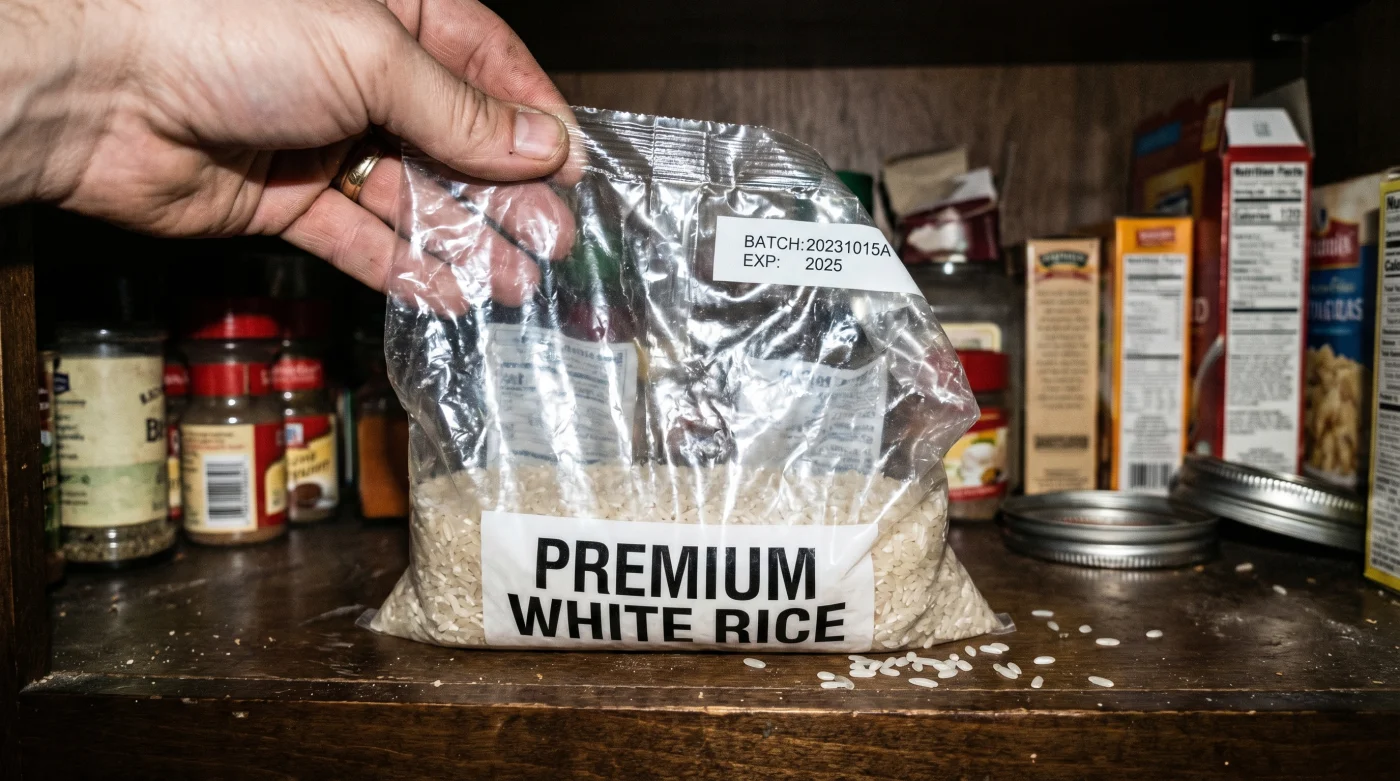
The evening light fades early this time of year, casting long, cool shadows across your kitchen counter. You reach into the cupboard for a familiar comfort—a heavy bag of Lundberg white rice. The ritual is automatic: measure the grains, rinse them under cold water until the starch clears, and listen to the quiet, rhythmic simmer on the back burner. It is the blank, steaming canvas for rich weeknight curries and vibrant stir-fries, a reliable foundation for dinner when the temperature outside drops below zero.
Yet, the quiet security of that routine has suddenly shifted. A recent recall alert regarding this exact brand forces a hard pause before you turn on the stove. We are conditioned to worry about wilting spinach or souring dairy, rarely casting a suspicious eye toward the dry goods stacked neatly in the dark. Dry staples feel permanent, immune to the rapid decay that plagues the fresh produce drawer.
Those sealed bags, however, are deeply connected to the unpredictable complexities of modern agriculture and large-scale packaging. The current health alert concerning Lundberg white rice requires your immediate attention, turning a mundane dinner preparation into a necessary home inspection. Processing facilities, despite rigorous Canadian safety standards, occasionally experience mechanical failures or sourcing errors, leaving unseen hazards resting quietly on your shelves.
It is tempting to brush off the news, hoping your specific batch is fine. But ignoring a localized warning is an unnecessary gamble with your family’s wellbeing. Tonight requires a methodical check of your cupboards to ensure that the foundation of your meal remains safe, forcing you to look at your pantry through a completely different lens.
The Illusion of the Pristine Pantry
We tend to view our dry storage as a permanent vault. You buy grains in bulk, perhaps pouring them into aesthetic glass jars, and assume they will wait patiently forever. The pantry feels completely disconnected from the chaotic, messy reality of the farm or the factory floor. But your cupboards are not a museum; they represent a dormant ecosystem that is highly sensitive to the origins of the food placed inside them.
Think of your dry goods as a sleeping environment rather than an inert substance. When a manufacturer issues an urgent recall, that illusion of permanence shatters. The flaw in our thinking is believing that low moisture equals zero risk. Contamination—whether from foreign materials introduced during the milling process or unseen bacterial threats—does not always announce itself with a foul smell or a noticeable change in colour. It sits perfectly disguised among the very grains you trust.
Consider the daily reality of Clara Dubois, a 42-year-old food safety inspector based just outside Montreal. Her career is spent tracing the invisible thread from sprawling agricultural fields to a Canadian kitchen cupboard. “We expect heavily processed grains to be entirely sterile,” she explains, adjusting her glasses in the harsh light of a processing facility breakroom. “But a single fractured sorting sieve or a momentary lapse in packaging protocol can compromise hundreds of kilos of product. A contaminated batch is like a silent intruder; you won’t know it is there until the CFIA alert is officially issued. Your best defense is simply paying close attention to the batch codes printed on the plastic.”
Her insight shifts the burden from ambient anxiety to straightforward, actionable awareness. In the modern food system, you are the final inspector in a long, complex supply chain. Understanding this role gives you agency over the safety of your home.
Adjusting Your Kitchen Strategy
A product recall affects different homes in wildly different ways. Depending on how you manage your groceries and organize your space, your immediate next steps will require a specific approach to ensure nothing is missed.
For the Bulk Decanter
If your kitchen aesthetic involves immediately discarding original packaging to fill uniform glass jars, tracing a recall becomes a distinct challenge. You might have mixed a fresh bag of Lundberg white rice with the remnants of an older, completely safe batch. When those crucial batch codes are lost to the local recycling bin, a different level of caution is required.
In these frustrating situations, caution must override frugality. Assume the entire jar is compromised. It is inherently difficult to throw away food, but attempting to salvage a mixed, undocumented batch is an unnecessary risk. Empty the container entirely and wash it thoroughly with hot, soapy water at 60°C before drying it completely and refilling it with a verified safe alternative.
For the Weekly Shopper
If you prefer to keep your dry goods in their original bags, tightly sealed with a clip, your audit is significantly easier. You likely still have the packaging tucked into the back of the cupboard, keeping all the vital information intact.
With the bag in hand, verification becomes incredibly straightforward. Check the specific lot numbers and best-by dates listed in the official health bulletin against the back panel of your rice. If the numbers align, seal the bag tightly and remove it from your living space immediately. Do not attempt to rinse the problem away; water cannot wash out industrial contaminants.
For the Anxious Parent
When cooking for young children, the anxiety surrounding recalled food naturally intensifies. White rice is often a safe, reliable base for picky eaters, making this particular alert feel deeply personal and disruptive to your weekly meal planning.
Focus your energy on systematically clearing your space rather than dwelling on the what-ifs. Inspect your pantry shelves carefully. Throw away dangerous contaminated rice without a second thought. If you have already prepared a batch from the recalled lot for tomorrow’s school lunches, discard the cooked food and run the Tupperware through a high-heat dishwasher cycle to ensure zero cross-contamination.
The Pantry Purge Protocol
Handling recalled food requires a mindful, deliberate sequence of actions. This is not a moment for panic; it is an opportunity to systematically clear your physical space of a confirmed hazard, restoring order to your cooking environment.
To ensure your kitchen remains a secure space for your household, follow this minimal, tactical toolkit to manage the recall effectively.
- Locate the specific lot code on the back or bottom panel of your Lundberg white rice package.
- Double-bag the recalled product in heavy-duty garbage bags to prevent wildlife scavenging if placed in an outdoor bin.
- Scrub any metallic scoops, measuring cups, or plastic storage bins that came into direct contact with the recalled grain using hot, soapy water.
- Wipe down the physical shelf where the rice was stored using a mild surface cleaner to remove any lingering dust or debris.
Taking these few extra minutes provides immediate, tangible resolution. By following these steps, you eliminate the physical risk and reset the hygiene baseline of your entire kitchen.
Reclaiming Kitchen Confidence
It always feels jarring when a trusted brand falters. White rice is supposed to be the most effortless part of the meal, the reliable side dish that asks for nothing but water, a pinch of salt, and a little residual heat. When that trust is breached by an urgent alert, it leaves a lingering hesitation the next time you open the cupboard doors to start cooking.
Yet, responding to a food recall is an act of total environmental control. Taking swift action proves your system works. You received the critical information, you audited your dry supply, and you actively protected your living space. This minor inconvenience is actually a powerful, grounding reminder of your vital role as the gatekeeper of your home.
By treating your pantry shelves with the same strict vigilance you apply to your refrigerator, you transform a mundane storage space into a highly managed, deeply secure environment. You can return to cooking with absolute confidence, knowing exactly what sits quietly in the dark, waiting to be turned into dinner.
A safe kitchen begins long before the stove is turned on; it starts with the deliberate stewardship of the ingredients we invite into our homes.
| Key Point | Detail | Added Value for the Reader |
|---|---|---|
| Code Verification | Check lot numbers against official CFIA health bulletins. | Provides absolute certainty rather than guessing if your food is safe. |
| Container Hygiene | Wash decanting jars at 60°C to eliminate residual dust. | Prevents cross-contamination when introducing a new, safe batch of grains. |
| Proper Disposal | Double-bag recalled grains before placing them outside. | Protects local wildlife from consuming potentially hazardous agricultural materials. |
Frequently Asked Questions
What if I already threw away the original packaging?
If you cannot verify the batch code because the packaging is gone, you must discard the rice. It is better to absorb a small financial loss than risk consuming a contaminated product.
Can I just wash the rice more thoroughly to make it safe?
No. Rinsing removes surface starch, but it cannot eliminate industrial contaminants, embedded foreign materials, or certain bacterial threats that prompt a recall.
Is it safe to keep the recalled rice sealed until I can return it?
If the retailer offers a refund, keep the bag tightly sealed and out of reach of children or pets. Otherwise, it is safer to dispose of it immediately.
Do I need to clean the shelf where the rice was stored?
Yes. Wiping down the shelf removes any microscopic dust or debris that may have leaked from the packaging, ensuring a clean slate for your new groceries.
Will this recall affect other rice brands in my pantry?
Recalls are usually specific to a single manufacturer’s processing line. However, it is always a good habit to periodically check the batch codes of all your bulk dry goods.