The exhaust fan hums above your stove in the dead of a Canadian winter. You drop the diced chicken into the pan, expecting a fierce, rewarding sizzle. Instead, the meat turns a pale grey, weeping water into the pan and refusing to brown. You chew it later, and it yields with the stubborn resistance of a pencil eraser.
With grocery bills climbing across the provinces and premium cuts of poultry practically requiring financing, the humble, bulk-pack chicken breast is our reluctant dinner table champion. Mastering this unforgiving protein is no longer just about culinary pride; it is a daily financial necessity. The lazy fix for restaurant-quality stir fries sits completely ignored in the back of your baking cupboard.
It feels deeply unfair when you follow a recipe perfectly, only to be rewarded with stringy, chalky meat. The flaw lies within the protein, not your technique or your pan.
Chicken breast is notoriously lean, meaning the moment it hits 74 degrees Celsius, the muscle fibres contract violently, squeezing out all of its natural moisture. You cannot simply cook it faster or smother it in heavier sauces to mask the dry, fibrous reality underneath.
You can, however, stop this reaction before the heat even touches the pan. A simple dusting of baking soda changes the chemical game entirely, taking only minutes of passive, hands-off time.
This is not a convoluted restaurant trick requiring specialized equipment or obscure ingredients. It is simply a matter of altering the surface pH, turning an abrasive, dry staple into something that yields with the gentleness of warm butter.
The Perspective Shift: Relaxing the Clenched Fist
Think of an untreated piece of chicken breast like a tightly wound spring. When exposed to the aggressive heat of a wok, that spring snaps shut instantly. No amount of careful watching will stop that mechanical reaction from happening.
Introduce baking soda to the equation, and the environment fundamentally shifts. The alkaline powder raises the pH level, preventing the proteins from bonding tightly together, meaning the muscle fibres physically relax and remain entirely unable to squeeze the water out during cooking.
In the bustling restaurant kitchens of Richmond, British Columbia, this technique is just part of the daily rhythm. Ming Chen, a 62-year-old wok chef who has spent decades serving up flawless takeout, laughs at the idea of cooking white meat without this step. He coats his diced poultry in baking soda, leaves it while he preps his vegetables, and then rinses it thoroughly before it ever meets the flame, treating the meat with a gentle, patient respect.
Deep Segmentation: Tailoring the Treatment
Whether you are rushing after a long commute or meticulously planning the week ahead, this method effortlessly adapts to your personal rhythm. You hold the control now, bending the ingredients to your schedule.
For the Weeknight Scrambler
You have exactly thirty minutes to get dinner on the table before exhaustion takes over. Dice your chicken, toss it with a teaspoon of baking soda, and let it sit directly on the cutting board. Use those fifteen minutes to chop your broccoli and whisk together your soy sauce and ginger.
For the Batch Prep Purist
If you prefer to portion your meals on a quiet Sunday afternoon, you need a slightly different approach. A liquid alkaline soak works best here. Dissolve the baking soda in a cup of water, submerge the chicken strips for twenty minutes, then rinse completely and pat dry before storing them in the fridge for the days ahead.
Mindful Application: The Tactile Routine
Applying this method requires only a gentle awareness of time and texture. Do not rush the rinsing phase, as residual baking soda carries a metallic, soapy trace that will ruin your careful seasoning.
Treat the rinsing as a palate cleanser for the pan. Copious amounts of cold running water are mandatory here, washing away the alkaline layer and leaving behind only a softened, primed canvas ready to absorb your flavours.
- Dice the chicken uniformly (roughly one-inch cubes) for even distribution.
- Measure exactly 1.5 teaspoons of baking soda per pound of meat.
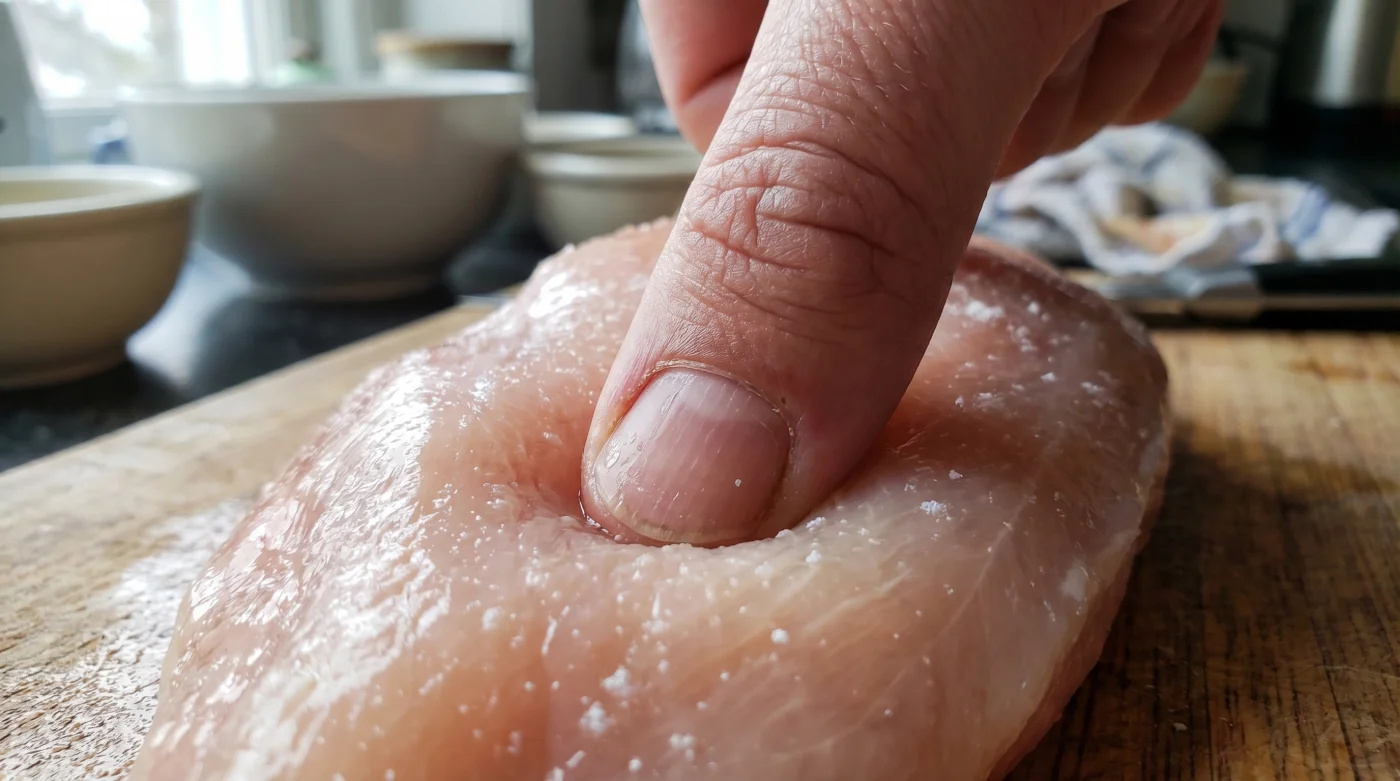
- Massage the powder into the meat until it feels slightly tacky to the touch.
- Rest for exactly 15 to 20 minutes—no longer, or the texture turns unpleasantly mushy.
- Rinse aggressively in a colander under cold water for at least thirty seconds.
- Pat fiercely dry with paper towels; moisture is the enemy of a proper sear.
Keep your skillet temperature high, ideally around 200 degrees Celsius, using an oil with a high smoke point like canola or grapeseed. You only need three minutes of cooking time to achieve a golden crust with an impossibly tender centre.
The Bigger Picture: Reclaiming the Evening Ritual
When sharp spikes in grocery pricing force our hands at the checkout aisle, we often feel like we are sacrificing joy for practicality. This simple chemistry trick flips that disheartening narrative entirely on its head.
You no longer have to endure the disappointment of a rubbery, lifeless dinner just because you opted for the most economical cut available. You are taking a mundane, historically frustrating staple and treating it with a quiet, deliberate respect that fundamentally changes its nature.
The sizzle in the pan sounds entirely different when you know the outcome is guaranteed to be delicious. You finally cook with quiet confidence, bringing restaurant-level comfort right into your own dining room, one tenderized, perfect bite at a time.
You treat the meat like a stubborn guest. You offer it a comfortable chair before you ask it to work.
| Key Point | Detail | Added Value for the Reader |
|---|---|---|
| The Measurement | 1.5 teaspoons of baking soda per pound of chicken breast. | Removes the guesswork, preventing an overly soapy aftertaste. |
| The Timing | 15 to 20 minutes resting on the counter. | Allows you to chop vegetables without wasting a single minute of evening prep. |
| The Rinse | 30 seconds under cold running water, followed by heavy drying. | Ensures a beautiful, golden crust forms instantly when the meat hits the hot pan. |
Frequently Asked Questions
Can I leave the baking soda on the chicken overnight? No. The meat will over-tenderize and turn into a mushy paste. Stick to the 15-minute window for ideal texture.
Will my chicken taste like chemicals? Not if you rinse it thoroughly. The cold water removes the alkaline residue, leaving only the softened protein structure behind.
Does this work with baking powder instead? Baking powder contains acidic ingredients that alter the chemistry. You must use pure baking soda for this specific reaction.
Can I use this trick on other meats? Absolutely. It works beautifully on cheap cuts of beef or tough strips of pork meant for quick stir-frying.
Do I still need to use a marinade? Yes. Baking soda tenderizes but does not flavour. After rinsing and drying, apply your soy sauce, garlic, and ginger as usual.