The harsh, fluorescent light of the refrigerator illuminates a familiar plastic takeout container on a bitterly cold Tuesday evening. Inside sits the remains of last night’s dinner: a clump of jasmine rice, now rigid, pale, and entirely unforgiving. When exposed to the dry, chilly air of the fridge, those tender, fragrant starches crystallize into something resembling coarse gravel. You stare at it, calculating the odds of piecing together a decent meal from a resource that feels entirely spent.
Most of us simply surrender to the microwave, hitting the minute button, walking away, and hoping for grace. Yet, accepting a compromised meal almost always leaves you with a bowl of brittle pellets that stubbornly stick to your teeth. You end up masking the dry texture with heavy soy sauces or watering it down with whatever broth you have on hand, quietly apologizing for the leftovers rather than actually enjoying them.
The true tragedy of the kitchen is that those hardened grains are not dead; they are merely dormant. When cooked rice cools down, its gelatinized starch molecules fold back in on themselves in a natural physical process known as retrogradation. They form a tight, defensive structure against the cold, waiting for the right kind of persuasion to relax, expand, and soften once again.
This is where a quiet alchemy happens, utilizing the absolute simplest tool currently sitting in your freezer door. By introducing a solitary block of frozen water, you completely change the physical environment inside your microwave. It is the simple swap you need to eat perfectly fluffy grains, rendering them indistinguishable from the moment they first left the rice cooker.
The Thermodynamics of a Stale Grain
Think of cold, day-old rice as a tightly clenched fist. If you hit it with dry, aggressive heat, the fist only clenches tighter, eventually burning, cracking, or drying out entirely. The grains need to be coaxed open, much like tight muscles responding to a heavy, warm, damp towel. The standard microwave is notoriously terrible at this delicate task, acting as a blunt instrument that excitedly boils away any residual internal moisture rather than replenishing it from the outside.
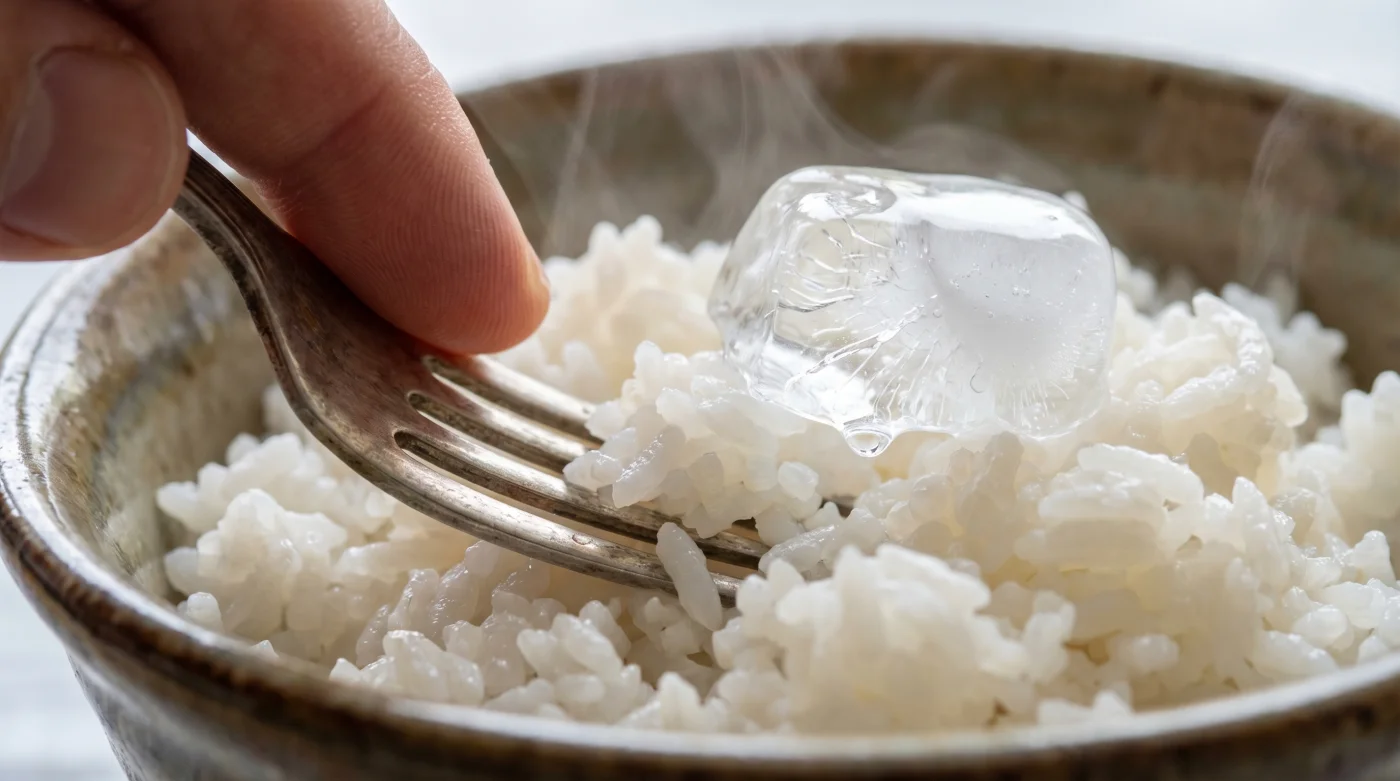
Placing an ice cube directly on top of your leftovers fundamentally alters this harsh, arid environment. Because the ice is a dense, solid block, it does not instantly melt into a sad puddle at the bottom of your ceramic bowl. Instead, it acts as a slow-release steam generator, melting gradually from the outside in, while the microwave’s radiation aggressively heats the surrounding water molecules.
This controlled reaction creates a micro-climate of gentle, sustained humidity right where you need it most. The ice cube acts as a thermal buffer, preventing the delicate starches from superheating while wrapping the entire dish in a warm, moist fog. The very flaw of stale rice—its dry, hardened exterior—becomes a major advantage here, as it acts like a sponge, eagerly absorbing this fresh vapour without ever crossing the line into mush.
A Vancouver Chef’s Midnight Secret
Elias Thorne, a 42-year-old prep chef running a high-volume, pan-Asian kitchen in downtown Vancouver, treats his leftover rice with a profound, almost obsessive respect. After a grueling fourteen-hour shift spent managing searing woks and screaming ticket machines, he rarely has the physical energy to cook a meal from scratch when he finally gets home. Yet, he refuses to eat dry leftovers, relying instead on the precise application of frozen water.
“Rice breathes, and it remembers,” Elias notes, leaning against the stainless steel prep counter while packing away massive, heavy trays of short-grain at the end of the Friday night rush. “If you try to drown old rice in tap water before reheating it, it suffocates. You get a sludgy swamp on the bottom and chalky gravel on top. The ice cube drips exactly the right amount of ambient moisture, at exactly the moment the grain is physically hot enough to accept it.”
Tailoring the Revival for Different Grains
Not all grains behave identically under the pressure of refrigeration and reheating. To consistently eat perfectly fluffy grains, you must understand the subtle, structural differences sitting on your pantry shelves. The baseline method remains the same across the board, but the tactical execution shifts slightly depending on what specific crop sits in your bowl.
For the Takeout Purist: Jasmine and basmati are delicate, highly fragrant varieties that require a gentle, respectful touch. One standard-sized ice cube is plenty for a single dinner portion. You will want to cover the bowl with a heavy ceramic plate to trap the steam effectively, but never use plastic wrap here, as it can sag and trap too much aggressive heat against the delicate surface.
For the Meal-Prep Parent: When dealing with dense, fibre-heavy options like brown rice, wild rice, or red cargo rice, you need a slightly more aggressive strategy. These grains possess thick bran layers that stubbornly resist moisture penetration. You may need two ice cubes and an extra thirty seconds of heating time to break through that fibrous exterior.
For the Sushi Scavenger: Short-grain sticky rice is notoriously stubborn once it has been refrigerated for a few hours. The incredibly high starch content turns it into a solid, unyielding brick. Do not attempt to break the clump apart with a fork before heating; you will only crush the grains into a paste. Let the ice cube and the resulting steam naturally loosen the structure first.
Executing the Simple Swap
Transforming a potential culinary disaster back into a pristine, fragrant side dish is an act of mindful precision rather than random guesswork. You are essentially building a miniature, high-efficiency sauna on your kitchen counter, relying on strict timing and physical barriers. The entire process requires less than two minutes of your evening.
Follow these deliberate, sequential actions to restore your meal, ensuring that you respect the required resting period for the best possible texture:
- Transfer your cold, thoroughly clumped rice into a microwave-safe ceramic or heavy glass bowl. Leave the hard clumps exactly as they are.
- Retrieve one large, solid ice cube from the freezer and place it directly in the dead centre of the rice mound.
- Cover the bowl completely with a slightly damp piece of parchment paper, or rest a flat ceramic plate over the top.
- Heat on the highest power setting for exactly sixty seconds per cup of food.
The Tactical Toolkit
- Temperature: High microwave setting (typically 1000W to 1200W).
- Time: 60 seconds per cup, followed by a mandatory rest.
- Tools: 1 standard ice cube (approximately 30 grams), 1 ceramic bowl, 1 breathable cover.
Once the microwave timer finally chimes, leave the bowl closed and untouched for another thirty seconds. This brief waiting period is mechanically crucial, allowing the trapped residual steam to fully penetrate the deepest, most stubborn layers of the starch. When you finally pull away the cover, the cube will likely remain partially intact on top; simply pluck it out with your fingers and toss it in the sink. Fluff the newly revived grains gently with a fork, watching the steam rise.
Reclaiming Your Pantry and Peace of Mind
Throwing away perfectly good food is a quiet, frustrating failure that weighs heavily on a household grocery budget and the broader conscience. Mastering this minor kitchen detail fundamentally changes your working relationship with your refrigerator. You no longer look at yesterday’s dinner as a grim burden or a settling-for-less scenario.
By understanding how to successfully manipulate simple heat and ambient humidity, you regain complete, confident authority over your weekly provisions. You are not just saving a few dollars a week; you are actively ensuring quality, proving that Tuesday’s quick, thrown-together lunch can taste just as vibrant and comforting as Monday’s freshly cooked dinner. The real satisfaction comes not just from the vastly improved flavour, but from the quiet, capable competence of knowing exactly how to bend the rules of thermodynamics to serve your evening.
“Great cooking isn’t about avoiding mistakes; it’s about knowing exactly how to breathe life back into the mundane.”
| Key Point | Detail | Added Value for the Reader |
|---|---|---|
| The Simple Swap | Placing one solid ice cube on top of cold, clumpy rice before microwaving. | Transforms dry, unappetizing leftovers into perfectly fluffy grains without making the bottom soggy. |
| Thermal Buffering | The ice block melts slowly from the outside, releasing a steady stream of steam rather than boiling immediately. | Prevents the microwave’s harsh radiation from turning delicate starches into hard, inedible pellets. |
| The Mandatory Rest | Allowing the covered bowl to sit undisturbed for 30 seconds post-heating. | Ensures the ambient moisture fully permeates the grain’s core, securing a fresh, tender texture. |
Common Grain Revival Questions
Does the ice cube melt completely?
Rarely. You will almost always find a small, smooth sliver of ice remaining on top of the pile, which you can simply pluck out and discard before eating.Can I use this trick for leftover pasta?
Yes, this exact steam-generation method works beautifully for reviving plain, unsauced noodles that have stuck together in the fridge overnight.Why shouldn’t I just sprinkle a handful of water on top?
Sprinkling liquid water directly onto the food often pools at the bottom of the bowl, resulting in a swampy base and a bone-dry surface. The ice cube releases moisture gradually and evenly.Do I absolutely need to cover the bowl?
Covering is mandatory for success. Without a lid, a plate, or damp parchment paper, the precious steam will immediately escape into the empty microwave cavity instead of penetrating the food.How long can cooked rice safely stay in the fridge?
For optimal flavour and strict food safety, consume your refrigerated grains within three to four days, and always ensure they are cooled rapidly on the counter before initially storing them in an airtight container below 4 degrees Celsius.