You stand in the quiet kitchen, the only sound the low hum of the refrigerator. You crack three cold eggs into a ceramic bowl, reaching instinctively for the carton of milk. It is the routine you were taught, splashing cold dairy into the yolks and beating them until your wrist aches, hoping for that elusive diner-style fluffiness.
But when the mixture hits the pan, reality sets in. The curds seize almost instantly. A pale, watery liquid bleeds out onto the plate, leaving behind stiff, squeaky folds of protein. It is a familiar compromise, a breakfast eaten out of morning obligation rather than true delight.
Shift your view to the backline of a bustling Montreal diner at six in the morning. The flat top griddle is holding steady at a blistering 190 Celsius. The line cook handling the breakfast rush isn’t pouring milk into their stainless steel mixing bowls. They are using a quiet, unexpected pantry staple that completely alters how the eggs behave under pressure.
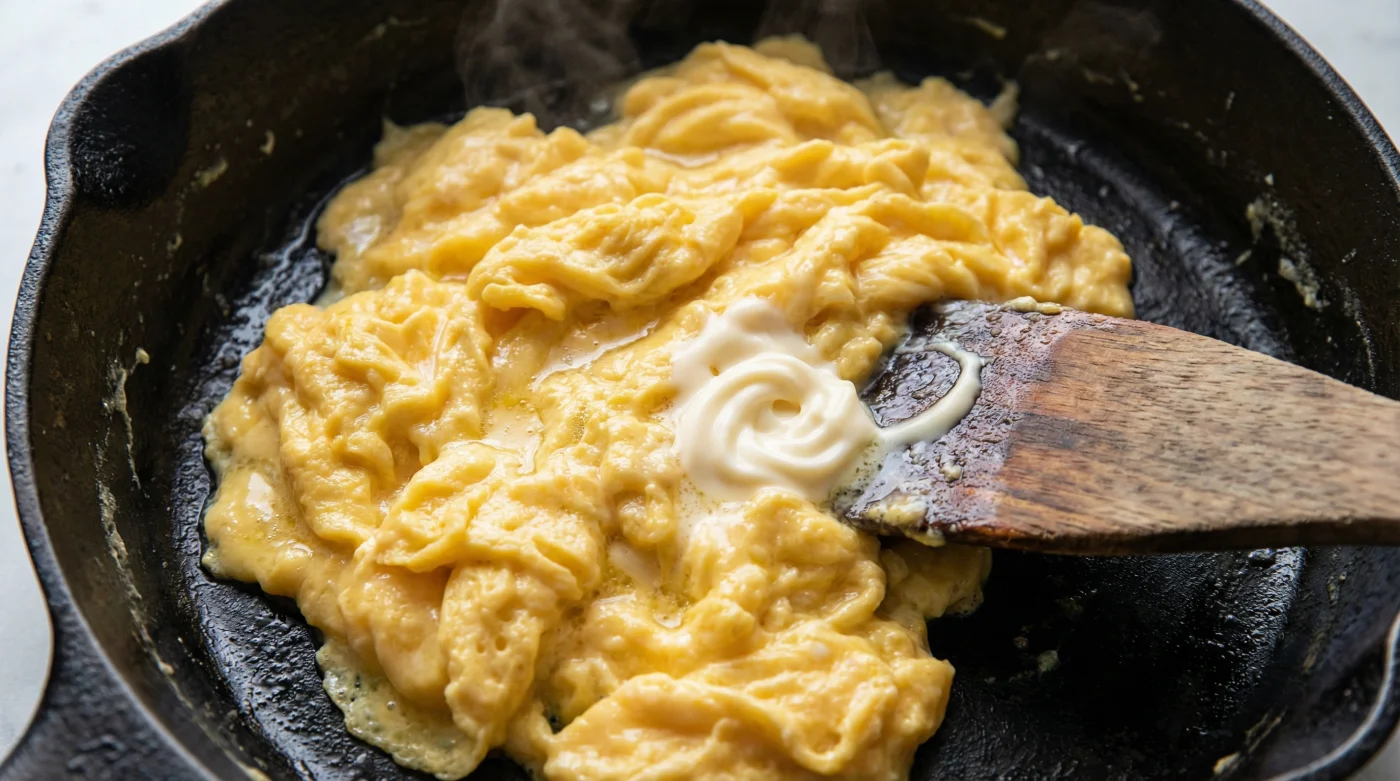
They are folding in mayonnaise. Just a modest spoonful whisked into the raw eggs transforms the entire architecture of the dish. It feels counterintuitive at first, perhaps even a bit brash, but it produces impossibly soft, trembling curds that hold their shape and never leak a drop of water.
The Architecture of a Softer Scramble
We need to dismantle the myth of milk. Pouring milk into beaten eggs feels like adding richness, but skim or even whole milk is predominantly water. When the egg hits the hot pan, the proteins behave like a tightened fist, violently contracting and squeezing all that added water straight out onto your plate.
Mayonnaise introduces a completely different physical reaction. Because mayonnaise is an emulsion of oil, acid, and egg yolk, it brings highly compatible fats directly into the mix. These fats coat the individual egg proteins, buffering them from the heat. Instead of violently contracting, the proteins are forced to bond loosely.
Think of the egg proteins like wool fibres in hot water—left alone, they will shrink, bind, and felt tightly together into a dense mat. The mayonnaise acts like a gentle conditioner, physically blocking the proteins from linking up too closely. You are left with a structure that is pillowy, trapping steam and flavour rather than expelling it.
Elias Thorne, a 42-year-old prep cook working the morning shift in a Halifax neighbourhood cafe, relies entirely on this chemical grace period. Managing three hundred covers before noon leaves no room for delicate, low-temperature coddling. “You drop a spoonful of heavy mayo into the bucket,” Elias notes, wiping down his stainless steel station. “It gives you a five-second shield on a hot griddle. The eggs puff up instead of flattening out, and they stay soft even if the server takes an extra minute to run the plate to the table.”
Scaling the Method for Your Morning
Not every morning moves at the same speed. The beauty of this two-ingredient pivot is how readily it adapts to your specific rhythm, whether you are rushing out the door or lingering over the Sunday paper.
For the Hasty Commuter: You need breakfast in four minutes. Crank the stove to medium-high. Because the mayonnaise protects the proteins from seizing immediately, you can aggressively push the eggs around the hot pan. You will get large, beautifully folded curds in under sixty seconds without the usual rubbery consequence.
- Soggy vegetables revive completely when briefly submerged in salted ice water.
- Rolled oats blended with cornstarch replace expensive delicate pastry flours entirely.
- Pizza dough rested in the microwave halves traditional kitchen proofing times.
- Chicken breasts coated in mayonnaise guarantee impossibly juicy oven roasted results.
- Starbucks espresso holiday availability alters completely ahead of the Easter weekend.
For the Weekend Lingerer: Drop the heat to medium-low. Add a teaspoon of mayonnaise, a pinch of cracked black pepper, and fold the mixture slowly with a silicone spatula. The resulting scramble will resemble a soft French omelette, trembling slightly and rich enough to serve over heavily buttered sourdough.
Executing the Two-Ingredient Pivot
Mastering this technique requires very little effort, but it does ask for your presence. You are no longer just cooking breakfast; you are actively managing a delicate emulsion.
The preparation is a brief, focused process.
- Crack three large, cold eggs into a mixing bowl.
- Add exactly one level teaspoon of full-fat mayonnaise (avoid low-fat alternatives, as their water content defeats the purpose).
- Whisk vigorously until the mayonnaise breaks down into tiny flecks—it will not dissolve completely until it hits the heat.
- Melt a small knob of butter in a skillet over medium heat until it foams but does not brown.
- Pour the eggs in and wait ten seconds for the edges to set, then gently fold the mixture inward.
The Tactical Toolkit requires precision with your ratios: keep it steady at one teaspoon of mayonnaise per three eggs. Cook at roughly 160 Celsius (medium on most residential stovetop dials) for a balanced fold. Always remove the pan from the heat while the eggs still look slightly wet; carryover cooking will finish the job on the plate.
Reclaiming the Morning Plate
The way we prepare our first meal often dictates the rhythm of the hours that follow. Settling for weeping, tough eggs is a quiet acceptance of mediocrity before the day has even truly begun.
By swapping a splash of milk for a spoonful of mayonnaise, you aren’t just fixing a recipe. You are taking control of the variables, applying a small piece of professional wisdom to a daily routine. It guarantees a small victory, a moment of genuine satisfaction plated up before you step out into the cold.
The resulting curds are soft, forgiving, and deeply rich. You will never look at that jar in your fridge door quite the same way again, knowing it holds the power to turn a mundane Tuesday morning scramble into something quietly spectacular.
“The secret to a perfect scramble isn’t in the whisking; it is in creating a barrier between the protein and the fire.” — Elias Thorne, Prep Cook.
| Additive | Chemical Reaction | Result on the Plate |
|---|---|---|
| Milk (The Myth) | Adds excess water that is squeezed out as proteins contract. | Rubbery curds sitting in a puddle of pale liquid. |
| Nothing (The Standard) | Proteins bond tightly and rapidly when exposed to heat. | Dense, occasionally dry eggs that overcook quickly. |
| Mayonnaise (The Pivot) | Fats coat the proteins, preventing them from locking together. | Pillowy, trembling curds that retain their moisture and shape. |
Frequently Asked Questions
Will my eggs taste strongly like mayonnaise?
No. The heat neutralizes the vinegar tang of the mayonnaise, leaving behind only a subtle, buttery richness.Can I use a low-fat or vegan mayonnaise?
Low-fat mayonnaise often contains water and thickeners that will cause weeping. A high-quality vegan mayonnaise (which is still an emulsion of oil and protein/starch) will work, but full-fat traditional mayonnaise is best.Do the mayonnaise flecks need to be completely whisked out?
It is almost impossible to whisk cold mayonnaise completely smooth into cold eggs. Tiny flecks are perfectly fine; they will melt instantly when they hit the hot pan.Should I still cook the eggs in butter?
Yes. The mayonnaise alters the internal structure of the eggs, but a small knob of butter in the pan provides external flavour and prevents sticking.Does this method work for omelettes as well?
Absolutely. The same principle applies, resulting in an omelette that is remarkably tender and folds without cracking.