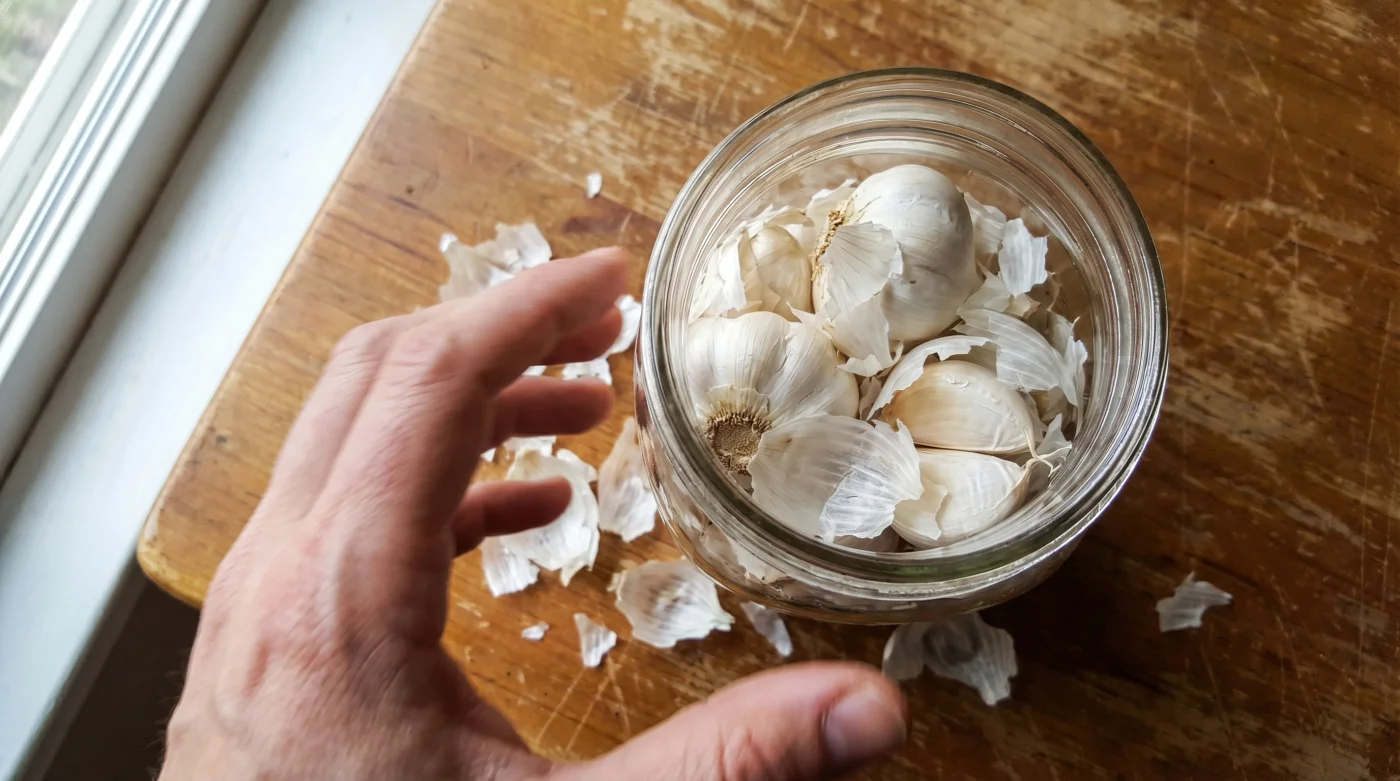
The cutting board is damp, and the winter light is fading across the kitchen counter. You are staring down a heavy cast-iron stew recipe that demands a full head of fresh garlic, and your thumbs already feel tired just thinking about the monotonous picking.
We all know the standard routine. You crush the clove slightly, hoping the dry tunic splits cleanly, but instead, you are left with sticky, papery husks clinging to your fingers like static cling. The pungent oil transfers to your skin, stubbornly lingering long after the meal has been eaten.
Professional cooks do not tolerate this level of tedious friction. When a Friday night service requires three litres of minced aromatics, nobody is standing around the prep station gingerly scratching at individual cloves with their fingernails.
The professional reality relies on blunt, efficient physics. By trapping the intact cloves inside a rigid container and creating rapid collisions, the brittle skins completely shatter while the firm flesh remains perfectly pristine.
The Physics of the Pantry
The trick requires a shift in how you view the ingredient itself. Rather than treating the protective layers as a delicate wrapper you must carefully undress, you need to recognize them as a dry, inflexible shell.
Think of it like a controlled miniature earthquake. When you seal those cloves inside an empty jam vessel and apply vigorous force, you are creating high-impact friction that the tight skins simply cannot absorb. They crack, loosen, and fall away completely on their own.
This simple kitchen fix reclaims minutes of lost prep time and eliminates the sticky mess that discourages so many of us from cooking from scratch. You stop fighting the garlic and let gravity do the heavy lifting.
The added bonus is the sheer auditory satisfaction. The dull thud of the cloves against the glass transforms a frustrating chore into a deeply satisfying percussive ritual.
A Prep Chef’s Secret Weapon
Clara Tremblay, a forty-two-year-old prep chef at a bustling Montreal bistro, processes kilograms of hardy, cold-climate Canadian Music garlic before the lunch rush even begins. She doesn’t use specialty silicone rollers or chemical sprays; she relies on a massive, repurposed pickle jar. ‘You just need enough empty space for the cloves to build momentum,’ she notes, tossing a handful of loose bulbs into the glass and rattling it like a cocktail shaker until the pristine white centres tumble out, completely bare.
Her method isn’t just about speed; it is about preserving the structural integrity of the ingredient. Crushing with a knife blade immediately ruptures the cellular walls, releasing the sticky compounds that glue paper to your hands. The jar method keeps those walls intact until you actually bring the knife down.
The Allium Archetypes
Not all meals require the exact same approach to your aromatics. Depending on what you are building on the stove, you can adjust this shaking technique to suit your immediate needs.
For the Roaster: If you are tossing whole cloves in olive oil to soften alongside a pan of root vegetables at 200 Celsius, you want absolute perfection. Shake the jar just until the skins pop, keeping the natural shape completely unbruised.
For the Mincer: When your recipe calls for finely diced aromatics to melt into a sauce, the visual perfection of the clove matters less. You can shake the jar with a bit more aggression, lightly tenderizing the outer layer before your knife even touches the board.
For the Batch Planner: Prepping an entire week’s worth of flavour bases on a Sunday afternoon requires a larger vessel. Use a one-litre Mason jar, drop in three full heads of separated cloves, and rattle them with violent purpose. Store the naked results in a dry airtight container in the fridge.
The One-Minute Ritual
Executing this lazy fix requires nothing more than the loose change of your recycling bin and a few seconds of aggressive energy. It is a mindful, minimalist action that completely alters your prep workflow.
You want a vessel with hard, unforgiving walls. Plastic containers absorb too much shock, turning the collision into a soft bounce rather than a sharp, skin-cracking impact. Glass is non-negotiable here.
- The Vessel: A clean, completely dry glass jar with a tight-fitting metal lid (a 500ml salsa jar is ideal).
- The Preparation: Break the main bulb apart into individual, unpeeled cloves. Cut off the tough, woody root ends with a paring knife—this is the anchor holding the paper tightly together.
- The Action: Drop the cloves into the jar, leaving at least sixty percent of the volume completely empty.
- The Execution: Shake violently up and down for exactly fifteen seconds.
Pour the contents out onto your cutting board. The difference is immediate and deeply relieving.
You will find smooth, slightly gleaming cloves sitting atop a small pile of translucent, shattered dry husks. Pluck the clean garlic out, sweep the rubbish away, and your hands remain entirely odour-free.
Buying Back Your Evening
The true value of this technique extends far beyond simply getting dinner on the table a few minutes faster. It is about removing the tiny, invisible barriers that make cooking feel like a chore instead of a reprieve.
When you eliminate the frustrating, sticky tasks from your kitchen routine, you change your relationship with the ingredients. You stop viewing a recipe that calls for an entire head of fresh garlic as a punishing test of patience.
You begin to cook with a sense of fluid momentum. By adopting the practical, physical shortcuts used by those who cook for a living, your own kitchen becomes a place of competence and quiet control.
You are no longer picking at the edges of a problem. You are applying a swift, confident physical solution and moving immediately to the more creative parts of your evening.
Stop treating the bulb like a delicate flower; it grew in the dirt, so let the glass do the bruising and save your hands from the friction.
| Key Point | Detail | Added Value for the Reader |
|---|---|---|
| The Thumb Method | Picking at dry skins individually with fingernails. | None. Frustrating, slow, and leaves lingering smells on the skin. |
| The Knife Crush | Smashing the clove with a flat blade to loosen the tunic. | Quick, but bruises the flesh and releases sticky juices too early. |
| The Jar Shake | Rattling dry cloves inside an empty glass container. | Leaves cloves perfectly intact and hands completely odour-free. |
Frequently Asked Questions
Does the jar need to be glass?
Yes. Plastic walls absorb the kinetic energy of the shaking. Glass provides the hard impact necessary to crack the brittle skins.
What if the skins are stubbornly damp?
If your garlic has been stored in a humid environment, the skins may be too flexible to shatter. Ensure your cloves are dry, or leave them on the counter for an hour before shaking.
Can I do an entire bulb at once?
Yes, provided your jar is large enough. You must leave at least sixty percent of the jar empty so the cloves have enough distance to build momentum before hitting the glass.
Will this bruise the fresh garlic?
No. The outer skin absorbs the impact and shatters, acting as a buffer that leaves the firm flesh inside completely unblemished.
Do I have to cut the root ends off first?
It is highly recommended. The root is the anchor point for the papery tunic. Snipping it off allows the skin to slide away instantly during the shaking process.