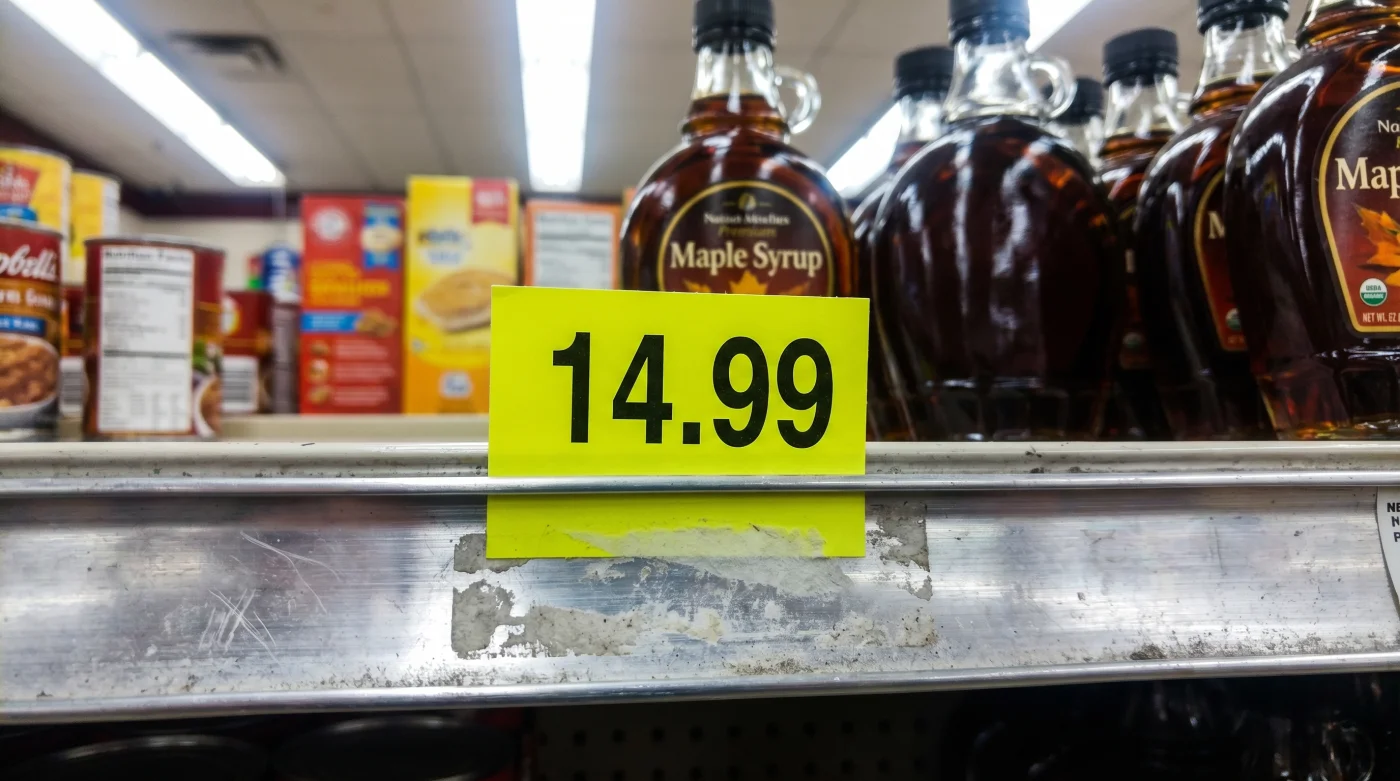
You know the sound. The heavy, muffled clink of the glass bottle hitting the countertop on a Sunday morning. The amber liquid taking its sweet, unhurried time rolling over the lip, pooling into the craters of a fresh pancake. It is a quiet ritual, deeply ingrained in the rhythm of a Canadian kitchen.
But this morning, the sweetness carries a sudden, sharp sting. You walk down the baking aisle of your local grocery store, reach for that familiar stout bottle of pure sirop d’érable, and your hand hesitates. The numbers printed on the little yellow shelf tag have jumped, shocking the morning grogginess right out of you.
This isn’t a subtle inflation creep. This is a noticeable, sudden leap in the cost of a domestic staple. What was once treated as a generous, heavy-handed pour is quietly transitioning into a calculated drizzle as the reality of agricultural supply chains finally reaches the retail checkout.
The shift feels personal, almost unfair, given our physical proximity to the source. Yet, this sudden sticker shock forces a long-overdue reckoning with the reality of what actually sits inside that bottle, preparing you to anticipate higher grocery bills moving forward.
The True Cost of a Restless Winter
For generations, we have treated maple syrup like an infinite municipal utility. You turn the tap, and it flows. But the forest operates on an impossibly fragile margin of error. The sap only runs when the nights dip below zero Celsius and the days thaw into a mild warmth. When the weather behaves like a restless sleeper—tossing between erratic deep freezes and premature spring thaws—the trees hold their breath.
This is where your perspective must sharply pivot. The rising price tag is not a retail punishment; it is a direct reflection of an increasingly unpredictable environment. We are drawing from the famous strategic reserve in Quebec just to meet daily demands. The sudden spike in cost is the forest’s way of reminding you that this liquid is, quite literally, boiled time and weather. The perceived flaw of its new expense is actually your guarantee that the traditional, un-rushable process has not been compromised with cheap fillers.
Consider the reality of Élodie Tremblay, a fifty-four-year-old producer running a sugar shack in the Beauce region of Quebec. Last month, instead of the steady, rhythmic dripping echoing through her sugar bush, she listened to the silence of frozen lines followed by a sudden, violent thaw that rushed the sap too quickly. “You cannot argue with the bark,” she noted while adjusting the pressure on her wood-fired evaporator. Her yields dropped by twenty percent in a single week, meaning the hundreds of hours she spent trudging through slush yielded far fewer of those precious amber barrels.
Adjusting Your Sweetness Strategy
With elevated prices now a fixed reality, you cannot simply carry on pouring blindly. Your approach to the pantry needs to shift based on how this sap fits into your routine, turning a moment of sticker shock into a strategic culinary advantage today.
For the Weekend Traditionalist
If your primary use is drowning Sunday waffles, the strategy is about preservation of the ritual. You do not need to substitute with artificial corn syrups that coat the mouth in an unpleasant film. Instead, you need to change the temperature before it hits the plate.
Place the glass bottle in a warm water bath for ten minutes before serving. Heated syrup flows thinner and covers more surface area, tricking the palate into perceiving a much larger pour while cutting your actual usage in half without sacrificing flavor.
For the Daily Baker
If you rely on sirop d’érable as a daily refined sugar alternative in muffins or granola, the math is no longer in your favour. It is time to reserve the pure stuff for finishing, where the flavour hits the tongue directly.
For the baked interior, pivot to a dark brown sugar dissolved in a teaspoon of water, mixed with a tiny dash of molasses. This replicates that deep, earthy hydration without draining your grocery budget on a background ingredient.
For the Savoury Glazer
You might love tossing root vegetables in a maple glaze before roasting. To stretch your suddenly expensive stash, build a compound glaze using a heavy fruit base rather than straight sap.
Use apple cider, reduced down to a thick reduction, cut with just a single tablespoon of your maple reserve. You maintain the autumnal brightness while protecting your most valuable pantry asset.
The Tactical Toolkit for Liquid Gold
Adapting to this price jump requires treating your current supply with a new level of respect. This isn’t about restriction; it is about mindful application to maximize every single drop that comes out of the bottle.
When you bring a new tin home, stop leaving it in the dark corners of the pantry. Pure maple syrup has no preservatives, and a warm cupboard invites rapid, invisible surface mold to ruin your investment.
Here is how you handle your supply moving forward:
- The Freezer Method: Pure maple syrup will not freeze solid. Keep your backup tins in the deep freeze to halt any degradation indefinitely.
- The Dilution Trick: For coffee sweetening, mix a one-to-one ratio of syrup and warm water in a small dropper bottle. It disperses instantly in iced drinks.
- The Skim and Save: If you spot a tiny bloom of mold on an older bottle, do not throw it out. Skim the top, bring the remaining liquid to a rolling boil (around 104 Celsius) for one minute, let it cool, and pour it into a clean jar.
- The Whisking Rule: When adding it to oatmeal or yogurt, whisk it vigorously into a small portion of the base first, then fold that back into the whole bowl.
Valuing What We Pour
This spike at the checkout counter forces a necessary pause. When a staple is inexpensive, it becomes practically invisible to us, casually washed down the drain without a second thought or hesitation.
By paying exactly what this intricate natural process demands, you are forced to taste it again. You notice the hints of vanilla, the smoky wood notes, the caramelised edge that only comes from boiling down forty litres of raw tree water into a single litre of sweetness.
The higher grocery bill stings initially, but it also restores the dignity of the product. You are no longer just consuming a condiment; you are savouring a highly specific, fleeting moment of the Canadian spring weather cycle.
“A high price tag on a natural product is simply the earth reminding us that she refuses to work on a factory schedule.”
| Key Point | Detail | Added Value for the Reader |
|---|---|---|
| Storage Adaptation | Move all unopened and backup tins from the pantry directly into the deep freezer. | Prevents costly mold growth without turning the liquid into an unusable solid block of ice. |
| Temperature Control | Heat your syrup in a gentle water bath before pouring it over breakfast dishes. | Thins the liquid for maximum surface coverage, dramatically reducing the amount needed per serving. |
| Baking Substitution | Swap internal recipe sugars with molasses-tinted brown sugar; save real syrup for external glazing. | Preserves the upfront sensory hit of maple flavor while cutting overall recipe costs in half. |
Frequently Asked Questions
Why did the price jump so suddenly across stores today?
A combination of historically poor weather yields last season and the depletion of the global strategic reserve has finally impacted the retail supply chain.Will storing my reserve in the freezer ruin the texture?
Not at all. Due to the naturally high sugar content, pure syrup will become thick like a dense honey but will never freeze into a solid block.Can I simply substitute pancake syrup to save money?
You can, but commercial pancake syrup is merely colored corn syrup. It lacks the complex minerals, antioxidants, and distinct smoky notes of the authentic product.Is darker syrup actually more expensive?
Prices are relatively standard across commercial grades, but darker syrups—harvested later in the season—offer a much stronger flavor profile, meaning you can use less of it to achieve the same taste.How long will this surge in grocery bills last?
Prices are likely to remain elevated until the next major harvest season proves robust enough to fully replenish the strategic reserves in Quebec.