You stand at the kitchen island on a chilly Tuesday evening, the oven preheating to 175 Celsius. The counter is dusted with a fine layer of flour, the butter is perfectly softened in its dish, and you are ready to fold together a quick, comforting batch of oatmeal cookies.
Then, you reach for the sealed plastic bag sitting at the back of the pantry. Your fingers hit a brick. The dark brown sugar, bought just a month ago, has calcified into an immovable amber boulder. You tap it against the granite counter, listening to it sound like a river stone.
Most of us immediately grab a heavy butter knife, aggressively chipping away at the hardened block like amateur geologists. We accept this granular frustration as a standard reality of domestic baking, assuming the pantry staple has simply expired and permanently lost its vital texture.
But what if the fix was sitting quietly in your snack cupboard? The solid sugar turns soft again when you introduce a highly specific, sacrificial element. By utilizing this simple swap, you completely alter the micro-climate of that plastic enclosure with almost zero physical effort.
Managing the Pantry Humidor
To fully grasp this kitchen fix, you have to stop looking at brown sugar as a dry ingredient. It is actually a wet ingredient, suspended in a delicate balance between the raw sugar crystals and their sticky coating.
When the temperature drops outside and the furnace hums constantly, the ambient humidity in your home plummets. The dry air acts like a sponge, pulling moisture from the thin layer of molasses coating every individual granule, making the crystals lock together incredibly tightly. You are not dealing with spoiled food; you are dealing with a dehydrated ecosystem.
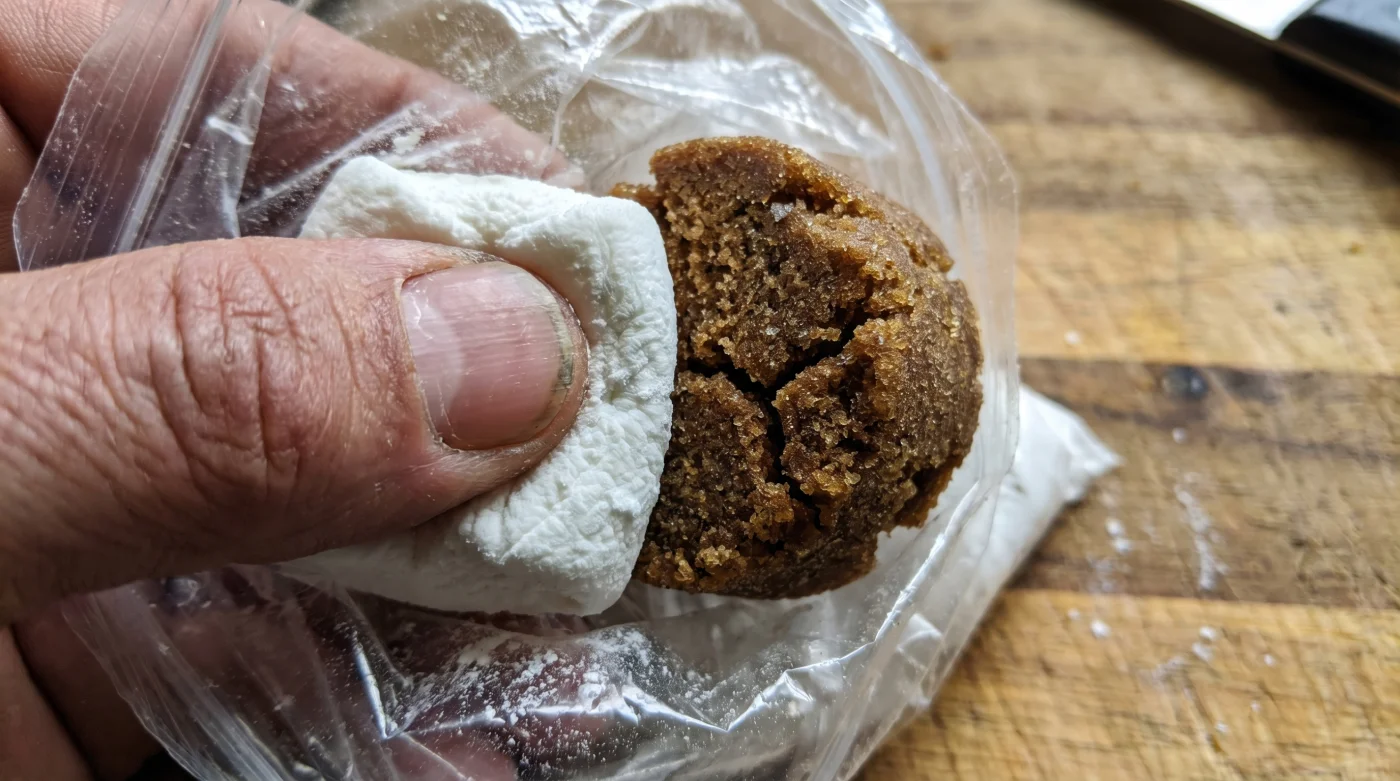
Instead of forcing the sugar apart with heat or sheer physical violence, you need to gently rehydrate the air trapped inside the bag. Think of a fresh marshmallow as a spongy lung. It breathes its trapped moisture into the sealed environment, slowly softening the hardened block.
Miriam, a 58-year-old pastry chef running a bustling, high-volume diner in Saskatoon, treats her ingredient bins less like storage and more like living terrariums. After years of struggling with hard chunks ruining her delicate butter-creaming process, she abandoned the expensive, fussy terra-cotta warming discs. Now, she simply drops a handful of jumbo marshmallows into her twenty-kilo sugar bins every Monday morning, ensuring the molasses yields to the damp scoop.
Adjusting the Climate: Variations for Every Kitchen
Not every bag of sugar requires the exact same level of triage. Your approach to this basic kitchen repair should match the severity of your pantry disaster and your normal baking habits.
If you purchase your baking supplies in massive bulk quantities, you are fighting a long-term battle against ambient winter humidity. A preventative marshmallow works best here. Toss two large, fresh candies into the centre of your airtight container the moment you break the fresh seal, replacing them every few months when they inevitably become stiff.
For the Casual Holiday Baker
Perhaps you only bake during the festive season or when a specific craving hits. Your sugar sits untouched in the dark for months at a time, quietly turning into a geological formation.
When you finally open that forgotten bag and find a rock, do not panic and throw it away. Just bury three marshmallows deep inside, seal the plastic tightly, and walk away for twenty-four hours. The slow, steady transfer of moisture will rescue the entire batch without any violent chopping.
For the Desperate Morning
Sometimes you need to bake right now, and waiting until tomorrow is simply not an option. You have hungry people waiting, and the recipe demands immediate attention.
While the marshmallow method is best left overnight to work naturally, you can temporarily artificially speed up the ecosystem. Place the bricked sugar inside a microwave-safe bowl, lay a single damp paper towel over the rim, and pulse it on low for twenty seconds to buy yourself enough time to measure out what you need.
The Mindful Application: Setting the Trap
Executing this fix requires almost zero effort, but the physical details absolutely matter. You are building a closed environment, and any leaks will ruin the delicate transfer of humidity.
If the bag is torn or the plastic container lacks a proper rubber gasket, the moisture will simply escape into the room rather than entering the molasses. The magic demands a perfect seal.
- Locate the freshest, softest marshmallows in your cupboard, as stale candy holds no water and will completely fail.
- Press the sugar block firmly to find a slight indentation or crack where you can safely nestle the candy.
- Bury the marshmallow slightly so it is surrounded by the sugar wall, maximizing the surface area contact.
- Press all excess air out of the plastic bag before sealing it tightly to concentrate the humidity.
Leave the bag resting in a dark, room-temperature cabinet away from any direct heat sources. It requires no further intervention, just the quiet passage of time.
When you return to the pantry and check the texture tomorrow morning, the results will feel surprisingly satisfying. You will find the sugar yields easily to your touch, ready to be scooped and measured.
- Ratio: One large marshmallow per two cups of hardened brown sugar.
- Time: Twelve to twenty-four hours for complete restoration.
- Indicator: When the marshmallow turns hard, its job is entirely done and it should be discarded.
Quiet Pantry Confidence
There is a subtle, grounding satisfaction in fixing something rather than mindlessly replacing it. We currently live in an era of immediate disposal, where slight inconveniences often dictate our purchasing habits.
When an ingredient fights back, our modern instinct is often to throw it in the compost bin and head straight back to the grocery store. This creates unnecessary daily kitchen friction. Learning to actively manage the moisture levels in your pantry changes that wasteful reflex entirely.
By simply dropping the candy in the bag, you bypass frustration and reclaim control over your cooking environment. You turn a minor, annoying kitchen disaster into a quiet, personal victory.
It is a small act of provisioning, a nod to the practical resourcefulness of generations past. By mastering these tiny details, your kitchen becomes a system, working quietly for you even while you sleep.
Treat your dry pantry staples with the same respect you give your fresh produce; the right environment is the difference between food waste and effortless cooking.
| Key Point | Detail | Added Value for the Reader |
|---|---|---|
| The Mechanism | Marshmallows act as a sacrificial moisture donor to dehydrated molasses. | Saves money by avoiding the disposal of perfectly good ingredients. |
| The Requirement | An absolutely airtight container or sealed plastic bag. | Guarantees the hack actually works instead of failing quietly in the cupboard. |
| The Timeline | Takes between 12 and 24 hours for full restoration of the sugar block. | Allows you to plan ahead and fix the issue before your next baking session. |
Does this make the sugar taste like vanilla? No, the flavour transfer is nonexistent because the moisture moves through the air, not through direct melting.
Will the marshmallow eventually mould? Generally no, the high sugar content acts as a preservative, but it will eventually turn hard as a rock once depleted.
Can I use mini marshmallows? Yes, but you will need a small handful to equal the moisture content of one jumbo marshmallow.
Does this work for white granulated sugar? No, white sugar lacks the molasses coating; it usually hardens from too much moisture, not too little.
What if I do not have marshmallows? A slice of fresh sandwich bread or a wedge of apple provides the same moisture transfer, though the apple risks transferring distinct flavours.