You wake up to the groan of the furnace and the stark chill of a February morning. The kettle begins its slow rumble, rattling slightly on the stovetop grate as you reach for a bag of dark roast. Maybe it is a batch you grabbed on sale at the corner store, or perhaps it is just heavily roasted, shiny with oils that promise a harsh, biting wake-up call.
The hot water hits the grounds, and that familiar, aggressive scent of scorched carbon wafts up toward the ceiling. You brace for the acidity, expecting that first sip to scrape the back of your throat—a necessary, punishing toll just to pry your eyes open for the day ahead.
But what if that astringent bite wasn’t a mandatory part of the morning? Diner cooks across the snowy prairies have long understood that a cheap, bitter roast doesn’t have to dictate the tone of your day. They didn’t rely on expensive syrups or heaps of cream to mask the flaw; they looked to the breakfast plate.
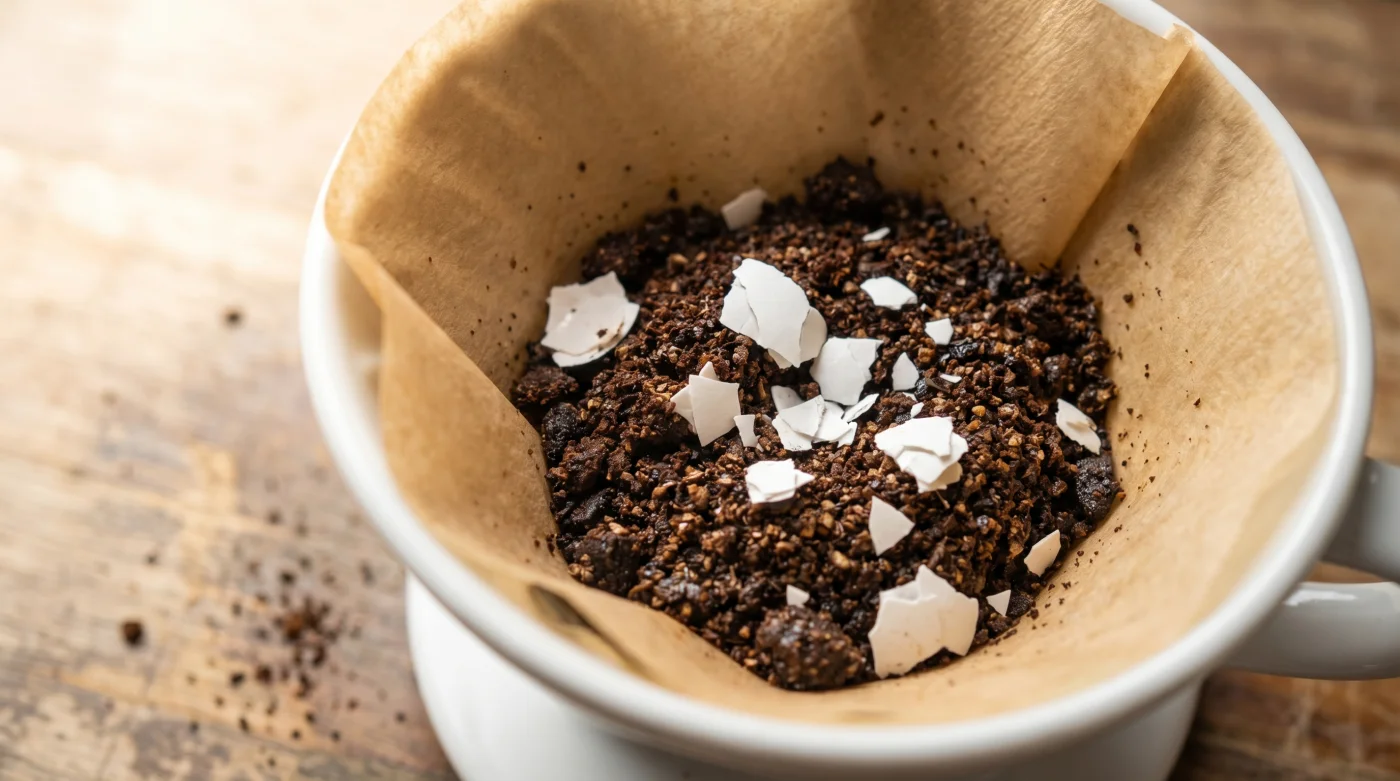
By simply taking yesterday’s breakfast waste and applying a bit of kitchen logic, you can rewrite the profile of your brew. Toss clean crushed shells in, right over the grounds, and the harsh, dark drink turns smooth, behaving like a much gentler, costlier bean.
The Chemistry of a Softer Cup
Brewing coffee is often treated like a fragile art, but it is actually a brutish extraction. You are forcing hot water to strip flavour from a roasted seed. When beans are over-roasted or stale, that water pulls out highly acidic, bitter compounds that coat your tongue in ash.
Think of acidity like a sharp, jagged piece of glass resting in your cup. You cannot simply dilute it without ruining the body of the drink. To fix it, you need to soften the edges, turning that broken glass into a polished stone. This is where the humble eggshell intervenes.
Eggshells are composed almost entirely of calcium carbonate. In the soil, gardeners use this mineral to sweeten acidic earth. In the brewing basket, it acts as a literal buffer. As the near-boiling water passes through the grounds and the crushed shells, the calcium neutralizes the coffee’s natural acids in real-time.
The resulting liquid is physically altered. The heavy bitterness drops away, leaving behind a rounded, almost velvety texture. The kitchen secret isn’t about adding a new flavour; it is about subtracting the noise so the underlying warmth of the coffee can actually be tasted.
If you venture into the quiet diner kitchens of rural Manitoba before the sun comes up, you might find Elias Vance. At 62, Elias has been running the griddle at a truck stop just off the Trans-Canada Highway for three decades. He brews twenty pots of coffee a shift, often using bulk commercial beans that could strip the paint off a tractor if brewed poorly. Elias keeps a battered metal tin of rinsed, crushed shells right beside the commercial grinder. ‘The morning haulers think I buy the expensive, small-batch stuff from the city,’ Elias notes, tapping a pinch of white powder into a massive paper filter. ‘It is literally just shells from the breakfast rush. It takes the teeth out of the dark roast, makes it sit easy in the stomach, and costs me nothing.’ It is proof of working smarter, not harder.
Adapting to Your Morning Ritual
Not every brewing method handles this technique exactly the same way. How you introduce the shells depends entirely on how the water physically interacts with the grounds.
For the Drip Loyalist
If you rely on a standard automatic drip machine, your extraction is relatively quick. The water showers over the grounds and passes through rapidly. Because of this speed, you need the calcium carbonate to act instantly. Ensure your shells are crushed quite fine—almost to a coarse powder—so the surface area is maximized before the water drains into the carafe.
For the French Press Purist
A French press is a full-immersion method. The grounds and water sit together, brewing slowly, which means the water has plenty of time to extract bitterness. Keep the shell pieces larger here. Roughly crumbled pieces won’t slip through the metal mesh screen when you press the plunger down, but they will still spend four minutes neutralizing the heavy acids floating in the beaker.
For the Stovetop Percolator
Perhaps you are out camping in the woods, using a battered aluminum pot over a campfire. Percolators are notorious for boiling coffee and turning it incredibly bitter. Toss a handful of crushed shells directly into the metal basket. The aggressive bubbling of the water will repeatedly wash over the shells, softening the drink even as the flames threaten to scorch it.
The Tactile Process of Preparation
You cannot simply crack an egg and drop the slimy, raw shell into your coffee maker. This requires a brief moment of mindful preparation to ensure the shells are sanitary and ready to work.
Treat this prep like wiping down your counters or sharpening a knife. It requires deliberate, quiet focus that pays dividends throughout the week. Collect your shells over a few days in a bowl near the sink.
Rinse the thin membrane away under cold water, as the organic matter can impart an unpleasant, sulfurous taste. Once clean, they are ready to be tempered.
- The Bake: Spread the rinsed shells on a baking sheet. Place them in an oven set to 150 Celsius for about 10 minutes. This dries them completely and eliminates any lingering bacteria.
- The Crush: Transfer the brittle, warm shells to a mortar and pestle, or simply put them in a thick cloth and roll over them with a heavy rolling pin until broken down.
- The Storage: Keep the crushed shells in a small glass jar next to your coffee beans. They will last indefinitely at room temperature.
- The Ratio: Use roughly half a crushed shell for every four cups of brewed coffee.
When you prepare your morning filter, spoon in your coffee grounds, then sprinkle the crushed shell directly on top. Let the machine take over, stepping back while the hot water quietly works its way through the layers.
Finding Value in the Scraps
Applying this method does more than just salvage a cheap bag of coffee. It fundamentally shifts how you look at the waste generated in your kitchen. We spend so much energy trying to purchase the perfect ingredients, constantly chasing a flawless result through spending.
When you take something destined for the compost bin and use it to genuinely improve your morning, you reclaim a bit of control. It turns a frustrating mistake, like accidentally buying a bitter, over-roasted bag of beans, into an opportunity for quiet resourcefulness.
Your kitchen becomes less of a place where things are merely consumed, and more of a workshop where things are refined. You stop fighting the harshness of the morning, and instead, you learn how to soften it. The steam rises from the mug, the dark liquid trembles at the brim, and the first sip is remarkably, beautifully smooth.
‘Great cooking isn’t about buying the most expensive ingredients; it’s about making the ingredients you have behave exactly how you want them to.’
| Key Point | Detail | Added Value for the Reader |
|---|---|---|
| The Buffer Effect | Calcium carbonate in eggshells neutralizes coffee acidity. | Saves you from stomach upset and acid reflux caused by harsh roasts. |
| Proper Prep | Baking at 150 Celsius dries the shell and removes bacteria. | Ensures food safety and removes any sulfurous egg flavours. |
| Cost Efficiency | Uses kitchen waste to improve cheap coffee beans. | Allows you to buy budget-friendly coffee without sacrificing smoothness. |
Frequent Questions from the Countertop
Will my coffee taste like eggs?
Not at all. As long as you rinse away the inner membrane and bake the shells briefly to dry them, they are entirely flavourless. They only contribute balancing minerals to the water.Can I use brown and white eggs?
Yes. The colour of the shell comes from a thin layer of pigment on the outside. The structural composition of both is identical, providing the exact same neutralizing calcium carbonate.Does this method clog paper filters?
If you grind the shells into an incredibly fine dust, it might slow the drip rate slightly. Keeping them roughly crushed—similar to coarse sea salt—prevents any drainage issues in the basket.Is the calcium from the shells absorbed into the coffee?
A minuscule amount of calcium will dissolve into the hot water, but not enough to serve as a dietary supplement. Its primary job happens chemically within the filter itself.Can I put the used coffee and shells in the compost afterward?
Absolutely. Coffee grounds add nitrogen to your garden, while the eggshells contribute calcium. They remain just as beneficial for the soil after brewing as they were before.