Winter light fading by four in the afternoon, the steady blurp-blurp of San Marzano tomatoes simmering on the back burner. You stand at the kitchen island with cold hands, staring down at a heavy glass bowl of ground beef. The handwritten recipe card, stained with decades of olive oil, dictates a generous handful of dry breadcrumbs, maybe soaked in a splash of milk if you have the patience to wait for the panade to hydrate. It is the way your mother did it, and the way her mother likely did it before her.
But there is a quiet disappointment that often follows this traditional ritual. You sear the outside of the spheres to a deep brown, simmer them gently in the red sauce for over an hour, yet when you eventually slice into the centre at the dinner table, the texture betrays you. They are dense, sometimes crumbly, and occasionally as heavy as river stones, lacking entirely that delicate, yielding softness you find at a genuinely good neighbourhood trattoria.
The standard advice passed around is simply to handle the meat less, or to source a specific, expensive blend of pork and veal from a specialty butcher. While a lighter touch certainly helps, it doesn’t solve the core structural problem sitting in your mixing bowl. Dried bread acts like a stubborn, rigid sponge that actively pulls natural moisture away from the protein as it cooks. To achieve that melt-in-the-mouth quality without relying on complicated techniques, you have to entirely rethink the mechanics of the mixture.
The Quiet Alchemy of Dairy over Dough
Think of ground meat tightening up under intense heat like a suddenly clenched fist. When you add breadcrumbs to the mixture, even those previously soaked in milk, it acts like gravel in cement. It provides unquestionable structural bulk to the raw sphere, but it does absolutely nothing to encourage flexibility, softness, or lasting hydration within the matrix of the beef.
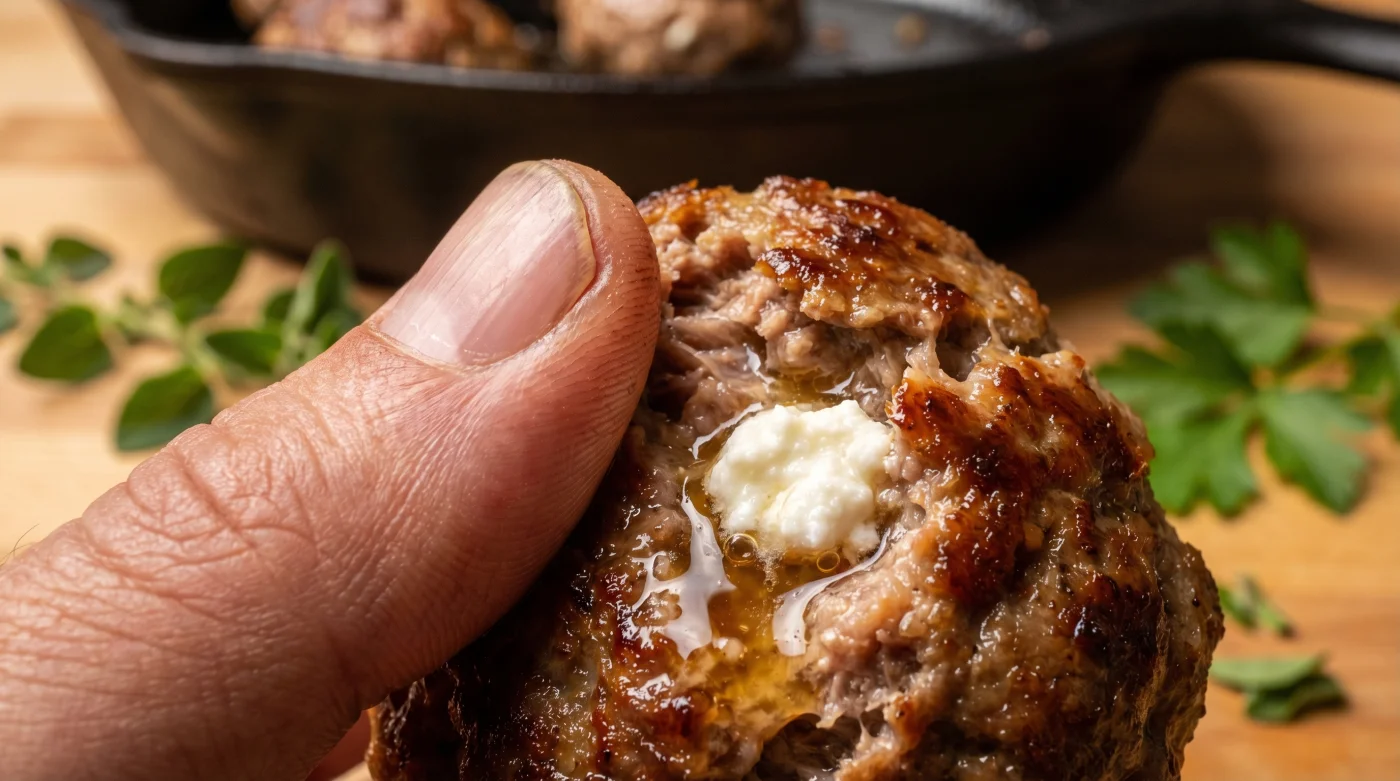
The pivot here relies on a shift in perspective. Instead of using a dry, starchy ingredient to bind the mixture together, you introduce a wet, fat-rich dairy component. By swapping out the breadcrumbs entirely, you rely on the natural fats to keep the interior of the meatball completely relaxed. The whole milk ricotta melts seamlessly into the protein structure as the internal temperature rises, creating microscopic pockets of steam that keep the meat perfectly juicy while holding the sphere intact.
Massimo Vetti, a 54-year-old chef running a tiny, twelve-seat pasta bar in Toronto’s west end, learned this from a logistical panic rather than a culinary school textbook. “One Tuesday night in February, a severe snowstorm delayed our dry goods delivery, and I was entirely out of breadcrumbs,” he recalls. Forced to improvise immediately with leftover fresh ricotta from a morning ravioli prep, he folded the soft cheese directly into the beef and pork mix. The result was a meatball so remarkably tender it barely needed a fork. He never ordered bulk breadcrumbs for his kitchen again.
Tailoring the Simple Swap
Ground meat varies wildly in fat content, and how you apply this technique depends heavily on what you brought home from the butcher counter. The simple swap of mixing the cheese into the beef adapts beautifully, but it requires a bit of awareness regarding your base ingredients.
If you are using extra-lean beef, which is incredibly common for quick weeknight family meals, the severe lack of natural fat means the meat dries out within minutes of hitting a hot pan. In this scenario, a generous scoop of whole milk ricotta acts as a synthetic marbling. It injects the vital lipid structure back into the lean muscle fibres, ensuring that even a quick-baked meatball remains lush and deeply satisfying.
For those mixing traditional blends of beef, pork, and veal, you already possess a structural advantage due to the softer fat of the pork. Here, the ricotta shouldn’t aggressively dominate the mixture. You only need a couple of tablespoons per pound to introduce those delicate pockets of dairy steam that keep the interior incredibly soft without turning the sphere mushy.
Then there is the reality of dietary restrictions. You might have been buying expensive, crumbly gluten-free panko for years just to make a comforting Sunday dinner work for everyone at the table. The ricotta technique bypasses the need for substitutes entirely, offering a naturally gluten-free binder that genuinely improves the final dish rather than just poorly mimicking the original.
The Mechanics of Mindful Application
Changing a foundational recipe requires a slightly more mindful approach to moisture management. If you simply dump wet cheese into wet meat with no forethought, you risk a sloppy mixture that flattens into a patty or falls apart entirely in the skillet. The goal is a gentle, barely-there integration.
Begin by ensuring your cheese is properly drained of excess whey. If the ricotta is pooling liquid in its plastic container, take a moment to press it through a sieve or simply let it sit on a double layer of paper towels for five minutes. You want the rich curds, not the milky water.
- The Ratio: Use roughly half a cup (about 120 millilitres) of whole milk ricotta for every pound of ground meat. Adjust slightly depending on the fat content of your beef.
- The Technique: Smear the drained ricotta over the flattened ground meat before adding your herbs, salt, and beaten egg. Fold the edges inward gently, treating it more like a delicate pastry dough than a heavy meatloaf.
- The Temperature: Chill the formed meatballs in the refrigerator for twenty minutes before cooking. This drops the core temperature of the dairy fat, helping the spheres hold their tight shape when they hit the hot oil.
- The Cooking Method: Brown them quickly in a skillet over medium-high heat just to develop a crust, then drop them directly into your simmering tomato sauce to finish cooking gently.
Reclaiming the Sunday Ritual
Cooking at home should never feel like an uphill battle against dry, punishing ingredients. By swapping out a harsh, moisture-wicking pantry staple for something inherently soft, rich, and forgiving, you fundamentally change the entire character of your time spent standing at the stove.
You are no longer crossing your fingers when you pull the pan from the oven, hoping the final product is edible. Instead, you are engineering a guaranteed comforting meal, ensuring that the people sitting around your table receive a plate that feels generous, warm, and thoughtfully crafted.
The true beauty of this simple swap lies in its unwavering reliability. When the meat stays perfectly juicy every single time, you stop worrying about the technical execution of the meal. You can finally just pour a glass of wine, listen to the sauce bubbling away on the burner, and enjoy the quiet, grounding satisfaction of feeding the people you care about with absolute confidence.
“The most profound cooking relies on understanding exactly what an ingredient takes away from a dish, and what it graciously gives back.”
| Method | Structural Detail | Added Value for You |
|---|---|---|
| Traditional Breadcrumbs | Absorbs moisture and adds dense bulk to the protein matrix. | Provides a familiar texture, but runs a high risk of dry, heavy results. |
| The Ricotta Swap | Melts directly into the meat, creating steam pockets and adding fat. | Guarantees a tender, juicy bite without needing specialty or gluten-free binders. |
Common Questions About the Ricotta Swap
Can I use skim or partly skimmed ricotta for this method?
It is best to avoid low-fat versions entirely. You need the milk fat to lubricate the protein strands as they cook, otherwise the meatball will still taste disappointingly dry.Will the meatballs end up tasting strongly of cheese?
Not at all. The mild cheese flavour completely disappears into the savoury profile of the beef and garlic, leaving only a rich, incredibly tender texture behind.Do I still need to add an egg to the mixing bowl?
Yes, the egg acts as the vital structural glue. The ricotta provides the necessary moisture and fat, while the egg ensures the entire sphere stays bound tightly together in the pan.Can I freeze these ricotta meatballs while they are raw?
Absolutely. Form the spheres, place them on a parchment-lined baking sheet until frozen solid, then transfer them to a freezer bag for easy, reliable weeknight meals.What should I do if my mixture feels too wet to roll?
Just pop the entire bowl into the refrigerator for twenty minutes. The cold temperature will firm up the dairy fat and make rolling the spheres significantly easier on your hands.