The late afternoon light pulls back, leaving the kitchen quietly shadowed. You stare at the cardboard box on the counter, the bright, synthetic promise of vanilla cake mocking your exhaustion. You crave the warmth of the oven and the scent of baking sugar, but dragging out the flour bin, the baking powder, and the fine sugar feels like climbing a mountain. You tear open the box, knowing exactly what to expect.
It will taste familiar, perhaps violently sweet, carrying that unmistakable airy texture of a commercial mix. It crumbles before the fork even makes a clean break. By tomorrow morning, the leftovers under the glass dome will be painfully dry, resembling a sponge rather than a slice of comfort.
We are conditioned to follow the back-of-the-box instructions as if they are binding contracts. Three eggs, a cup of water, a half-cup of neutral oil. It is a formula designed for absolute, foolproof mediocrity. But professional kitchens view these dry mixes differently. They do not see a finished product in a bag; they see a foundation waiting for architectural support.
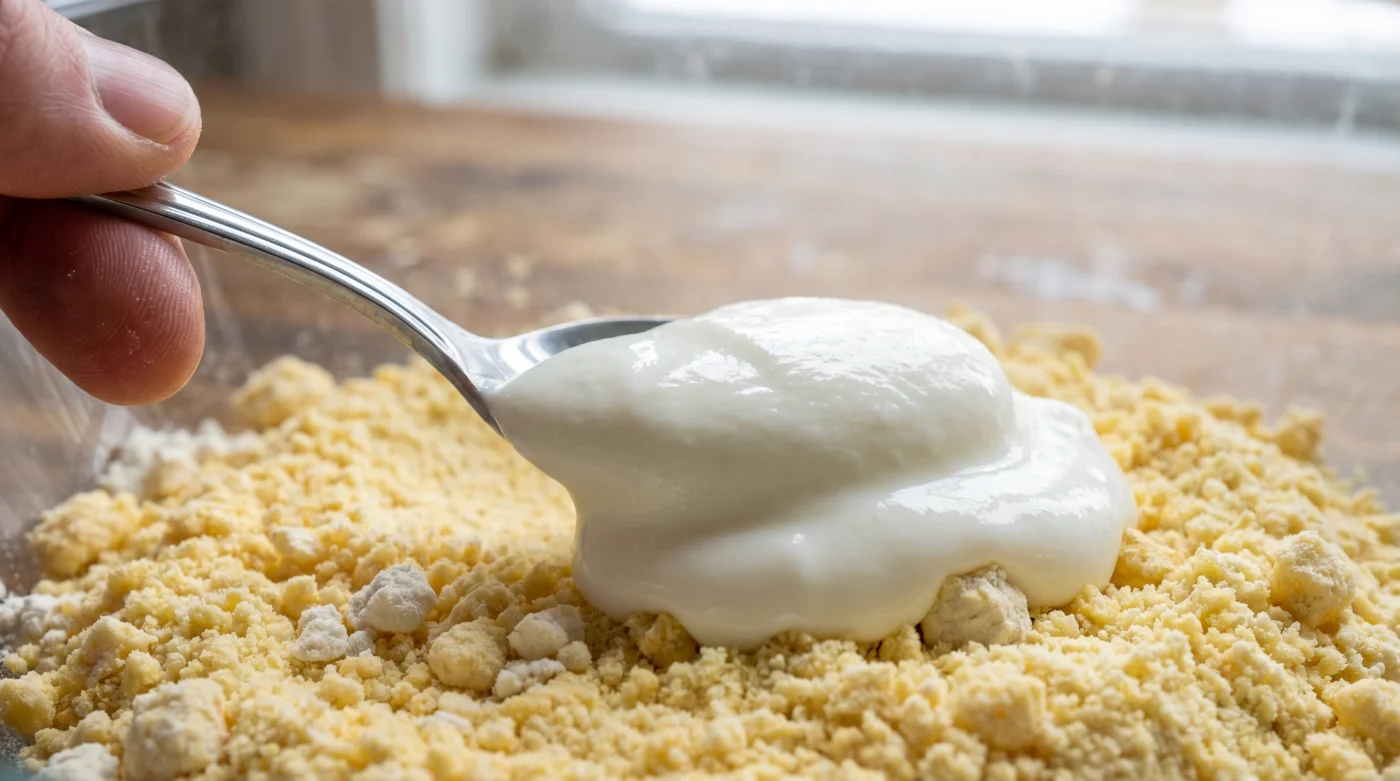
The secret to transforming that powdery dust into a dense, bakery-quality crumb does not require a trip to a specialty grocer. Scoop the yogurt in the bowl. It is a solitary, mundane action that alters the entire structural integrity of your dessert.
The Lactic Acid Leverage
Think of a standard cake mix as a house built purely of dry lumber. It stands up, but it lacks insulation against the elements. Water, the suggested liquid, simply hydrates the starches. It evaporates rapidly in the oven, leaving behind hollow pockets of air. Oil provides a coat of lubrication, but it offers absolutely no depth or character.
When you introduce plain yogurt into this fragile ecosystem, you are shifting the perspective entirely. This mundane dairy staple acts as both a tenderizer and a moisturizer. The lactic acid present in the yogurt interacts with the baking soda already hiding in the mix. This reaction produces a slower, more deliberate rise.
The crumb tightens, breathing through a pillow of fat rather than exploding into coarse, crumbly bubbles. The cheap cake tastes homemade because it finally possesses the physical weight and slight, complex tang of a batter made from scratch. The sharp sweetness of the commercial sugar is mellowed out, grounded by the earthy, tart profile of the fermented dairy.
The Baker’s Buffer
Consider Clara, a 42-year-old pastry chef running a high-volume seaside café in Halifax. When the summer tourist rush depletes her carefully prepped batters by noon, she occasionally relies on commercial bases to bridge the gap. She never, under any circumstances, hydrates those mixes with tap water. Clara folds in thick yogurt until the batter resembles a heavy pudding. It behaves like a shock absorber for the gluten, forcing the crumb to hold onto its own moisture even two days after it leaves the oven.
Modifying Your Approach by Crumb Preference
Not all boxed cakes demand the exact same intervention. You can tailor your yogurt addition based on the specific profile of the dessert you are building.
For the Decadent Purist
When dealing with a dark chocolate mix, the goal is richness. Chocolate absorbs moisture greedily. Replace the required water entirely with whole-milk plain yogurt. You are aiming for density that mimics a rich brownie, coaxing out the bitter cocoa notes to mask any artificial flavouring.
For the Light Vanilla Enthusiast
White or French vanilla cakes require a softer touch. Heavy fats can weigh down the delicate, pale crumb, causing the centre to sink. Rather than replacing all the water, cut the liquid by half and make up the difference with dairy, preserving the fluffy nature of the vanilla.
For the Lemon Chiffon Dreamer
Citrus cakes thrive on sharpness. Boxed lemon mixes often rely on artificial flavouring that tastes distinctly like candy. Swap oil for plain yogurt, and watch the yellow crumb become vibrant, dense, and sharply refreshing, tricking the palate into tasting real buttermilk.
The Kitchen Secret: Scooping With Intention
Executing this pivot requires a mindful touch. This is not about frantic whisking; it is about deliberate hydration. Overworking the batter will activate the gluten aggressively, fighting against the tenderizing work the yogurt is trying to perform.
Focus on the folding motion rather than the speed. The batter will be significantly thicker than you are used to. Do not add extra water; the moisture will distribute perfectly once it hits the heat.
- Replace the water requested on the box with an equal volume of plain, unsweetened yogurt.
- Whisk the eggs, oil, and yogurt together in a separate bowl until smooth before pouring them into the dry mix.
- Stir just until the last streak of flour vanishes. Lumps are perfectly acceptable.
- Drop your oven temperature to 165 Celsius instead of the standard 175 Celsius. Bake for an additional 5 to 8 minutes. The lower heat allows the denser batter to rise evenly without scorching.
Reclaiming the Midweek Bake
We often associate quality with suffering. We believe that unless we have dirtied every measuring cup in the house and spent an hour leveling flour, the resulting dessert is somehow illegitimate. This mindset steals the joy of a simple, Tuesday night slice of cake.
When you learn to manipulate a boxed mix, you bypass the exhaustion of the process while retaining the comfort of the outcome. Understanding this simple culinary relief offers a profound sense of peace in the kitchen.
You no longer have to choose between convenience and quality. You pull the pan from the oven, wait for it to cool on the rack, and cut into a dense, fragrant square that holds its shape. It tastes like care, it tastes like intention, and most importantly, it leaves you with the energy to actually sit down and enjoy it.
The difference between an amateur and a professional isn’t always the ingredients they start with, but how they manipulate the moisture they leave behind.
| Key Point | Detail | Added Value for the Reader |
|---|---|---|
| Lactic Acid Reaction | Interacts with baking soda in the mix | Creates a slower, stable rise for a tighter crumb. |
| Fat Incorporation | Coats flour proteins before they form gluten | Delivers a melt-in-the-mouth texture instead of dry chewiness. |
| Moisture Retention | Thicker consistency prevents rapid evaporation | Keeps the cake soft on the counter for days longer. |
Frequently Asked Questions
Can I use Greek yogurt instead of regular plain yogurt?
Yes, but because Greek yogurt has less water, you may need to add a splash of milk to ensure the batter isn’t stiff.Will the cake taste sour?
Not at all. The tang dissipates during baking, leaving behind a mellow, balanced sweetness.Do I still add the eggs listed on the box?
Yes, keep the eggs exactly as instructed. They provide structural stability that yogurt alone cannot replace.What if I only have vanilla-flavoured yogurt?
Vanilla yogurt works beautifully in white or yellow cakes, just bear in mind it will slightly increase the overall sugar content.Do I need to adjust the baking time?
A denser batter takes slightly longer to set. Drop the heat by 10 Celsius and add 5 to 8 minutes to your timer.