You pull open the bottom drawer of your fridge, met with the familiar rush of cold air and the faint, earthy scent of aging root vegetables. Tucked in the back, wrapped in its original plastic from the grocer, sits a head of celery you bought for last weekend’s potato salad. You pull a stalk free, expecting resistance, but it folds in your hand like a heavy piece of damp rope.
Most people see that limp, rubbery texture and immediately walk it over to the compost bin. They assume the vegetable is **past the point of return**, a casualty of poor meal planning and a busy schedule. But professional kitchens do not throw away expensive produce just because it lost a little physical tension; they simply manipulate the environment to bring it back to life.
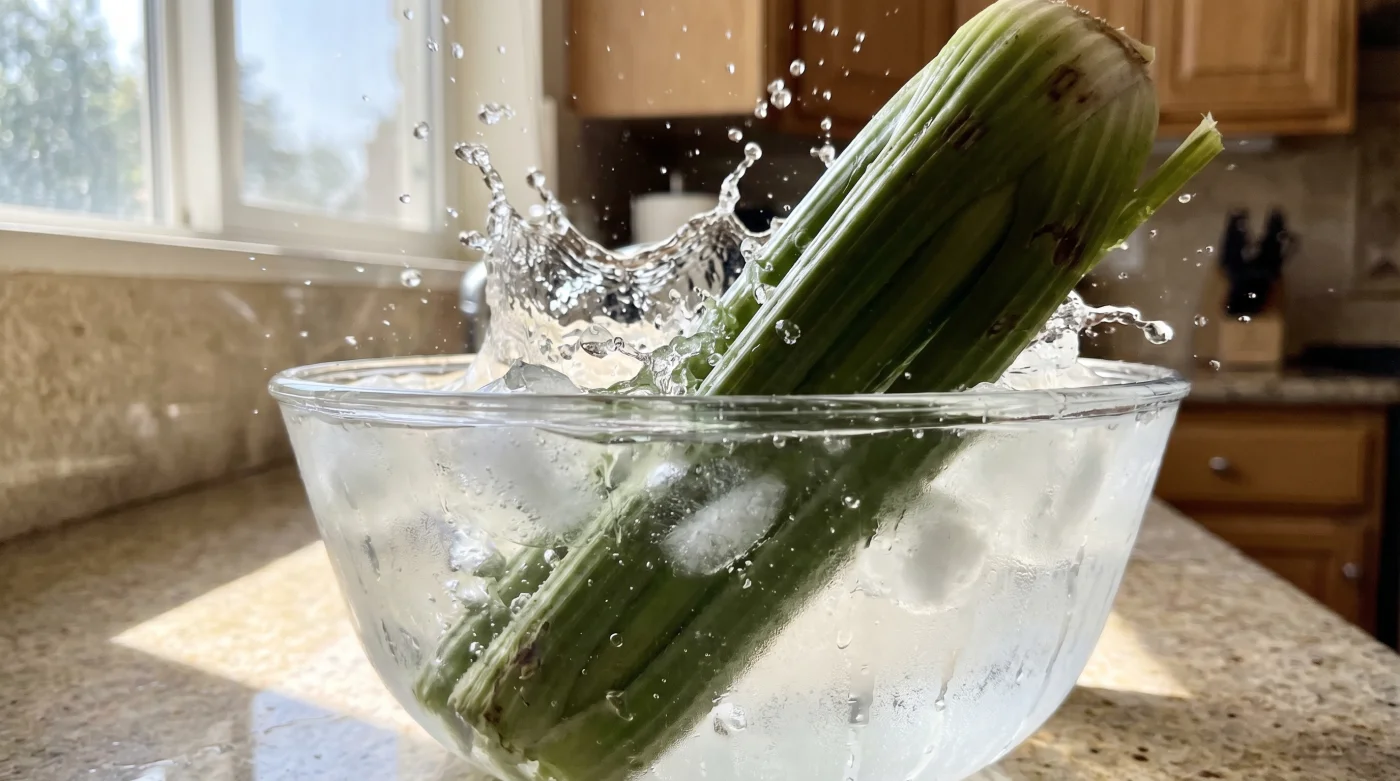
The simple swap is almost suspiciously low-tech: dropping the sticks in cold water. You are not performing culinary magic; you are doing basic cellular hydration using nothing but the kitchen tap and a handful of ice cubes. The vegetables snap loud again when you understand what they are actually asking for.
That familiar, hollow crack you want when your chef’s knife bites through the pale green ribs is not a permanent state of the plant. It is a **temporary physical condition based entirely** on cellular water weight, and it is entirely within your power to reverse it.
The Hydration Illusion
To fix the problem permanently, you have to stop looking at the vegetable as a solid object and start seeing it as a tight bundle of microscopic water balloons. When celery is harvested, those balloons are stretched tight, pushing against their rigid cell walls to create what biologists call turgor pressure. This pressure is what makes fresh produce feel heavy and crisp.
As it sits in your cold, dry fridge, the circulating air slowly pulls that moisture out through the porous skin. The internal structure **loses its tight water pressure**, leaving behind the flexible, fibrous skeleton without the internal support that gives it rigidity. The celery is not spoiling or rotting; it is simply exhaling.
Think of it like a bicycle tire that has slowly lost air over the winter in a cold garage. You would never throw the tire away just because it feels soft to the touch; you would just reach for the pump. In this scenario, your tap water acts as the air, and the ice is the pump.
Clara, a 42-year-old prep cook at a busy Toronto bistro, runs what she jokingly calls the ‘vegetable recovery ward’ in her walk-in cooler. “When a supplier shorts us or the weekend delivery sits too long, I never panic over rubbery greens,” she says. She trims the bases, fills a massive stainless steel container with water and ice, and plunges the stalks in upright. Within an hour, they are stiff enough to snap cleanly for the evening’s mirepoix. The extreme cold **shocks the thirsty plant cells**, pulling water back through the semi-permeable membranes rapidly to restore their original weight.
Adapting the Crunch Recovery
Not every wilted stalk requires the exact same level of intervention. How you handle this simple swap depends entirely on what you intend to do with the vegetable once it recovers from its dehydration.
For the immediate snacker looking for crunch: If you need crisp sticks for hummus or peanut butter right now, cut the celery into your final desired lengths first. Exposing more surface area allows the cold water to penetrate the fibres faster. A ten-minute bath in heavily iced water will **restore that satisfying loud crack** you need for immediate, raw consumption.
For the meal prep planner: If you are trying to save an entire head for the week ahead, separate the stalks but keep them whole. You want to treat them like fresh-cut flowers rather than chopped ingredients.
Trim one centimetre off the pale bottom root. Stand them upright in a large glass jar with a few inches of cold water at the bottom. Leave them in the fridge overnight. The stalks will pull the water **up through their capillary tubes**, naturally crisping themselves while you sleep.
For the soup maker: When celery is destined for a hot pan to build a flavour base, the crisp texture matters slightly less than the hydration. Limp celery will still sweat down in butter, but if it is severely dehydrated, it might scorch before it softens properly. A quick twenty-minute soak ensures it plumps up enough to release moisture evenly into your onions and carrots as they cook.
Executing the Cold Water Swap
Setting up the recovery bath requires a bit of specific intention. You want the environment to be as shocking to the vegetable as possible without freezing the delicate plant tissue.
Here is your tactical toolkit for the perfect crisping method. Follow these parameters to **guarantee the perfect structural repair** without turning the stalks mushy:
- Water temperature: Keep it close to 0°C by adding a generous handful of ice to the bowl.
- Vessel: Use a wide glass bowl for cut sticks, or a tall, heavy jar for whole stalks.
- Time: 10 to 30 minutes for cut pieces; 1 to 2 hours for whole, intact stalks.
- The Cut: Always slice the dry, oxidized ends off the bottom before soaking to open up the plant’s internal straws.
Fill your bowl with cold tap water and drop in the ice. Slice the tired, brown ends off your stalks. Submerge them completely if they are cut into sticks, or stand them in the tall jar if they are whole.
Watch the physical texture change as the minutes pass. You will literally feel the stalk **grow heavier and noticeably firmer** in your hand as it drinks the icy water back into its depleted cells.
Beyond the Crisper Drawer
There is a specific kind of quiet frustration that comes with throwing away fresh produce you paid good money for. It feels like a small, avoidable failure, a harsh reminder of a meal you fully intended to cook but never quite got around to making.
Learning to fix a limp vegetable rather than automatically replacing it changes how you look at your entire kitchen inventory. You stop letting arbitrary expiration dates **dictate your cooking and eating**, and start recognizing manageable, reversible conditions. It shifts your mindset from being a passive consumer of groceries to an active manager of your ingredients.
You realize that a significant portion of the food we casually consider ‘ruined’ is just temporarily compromised by its environment. A splash of cold water, a few minutes of quiet patience, and the sharp, clean sound of a heavy knife slicing through a firm green stalk reminds you that the kitchen is a space where you can actually fix things.
“You aren’t cooking when you soak wilted greens; you are acting as a botanist, merely restoring the natural balance of water that the fridge stole away.”
| Key Point | Detail | Added Value for the Reader |
|---|---|---|
| The Core Problem | Fridge air pulls moisture from plant cells, causing turgor pressure loss. | Saves money by proving wilted produce isn’t spoiled, just thirsty. |
| The Cold Shock | 0°C ice water forces rapid osmosis through freshly cut ends. | Reduces prep time by reviving limp sticks in under 10 minutes. |
| The Vertical Store | Keeping stalks upright in a jar of water like cut flowers. | Extends the lifespan of whole celery heads for up to two weeks. |
Frequently Asked Questions
Can I use warm water to revive celery faster?
No, warm water will begin to break down the cellular walls and cook the vegetable, leaving it permanently mushy. Always use heavily iced water.Does this method work on other wilted vegetables?
Yes, this cold shock technique works perfectly for limp carrots, soft bell peppers, and wilted leafy greens like lettuce and spinach.Do I need to add salt or baking soda to the water?
Keep the water completely plain. Adding salt will actually draw more moisture out of the celery through osmosis, making the wilting worse.How long does the revived crunch last?
Once plumped up, the celery will stay crisp for several days if stored in a sealed container in the fridge with a slightly damp paper towel.Is limp celery safe to eat if I don’t soak it?
Absolutely. As long as there is no mould or slimy rot on the surface, soft celery is perfectly safe and great for tossing straight into a simmering soup.