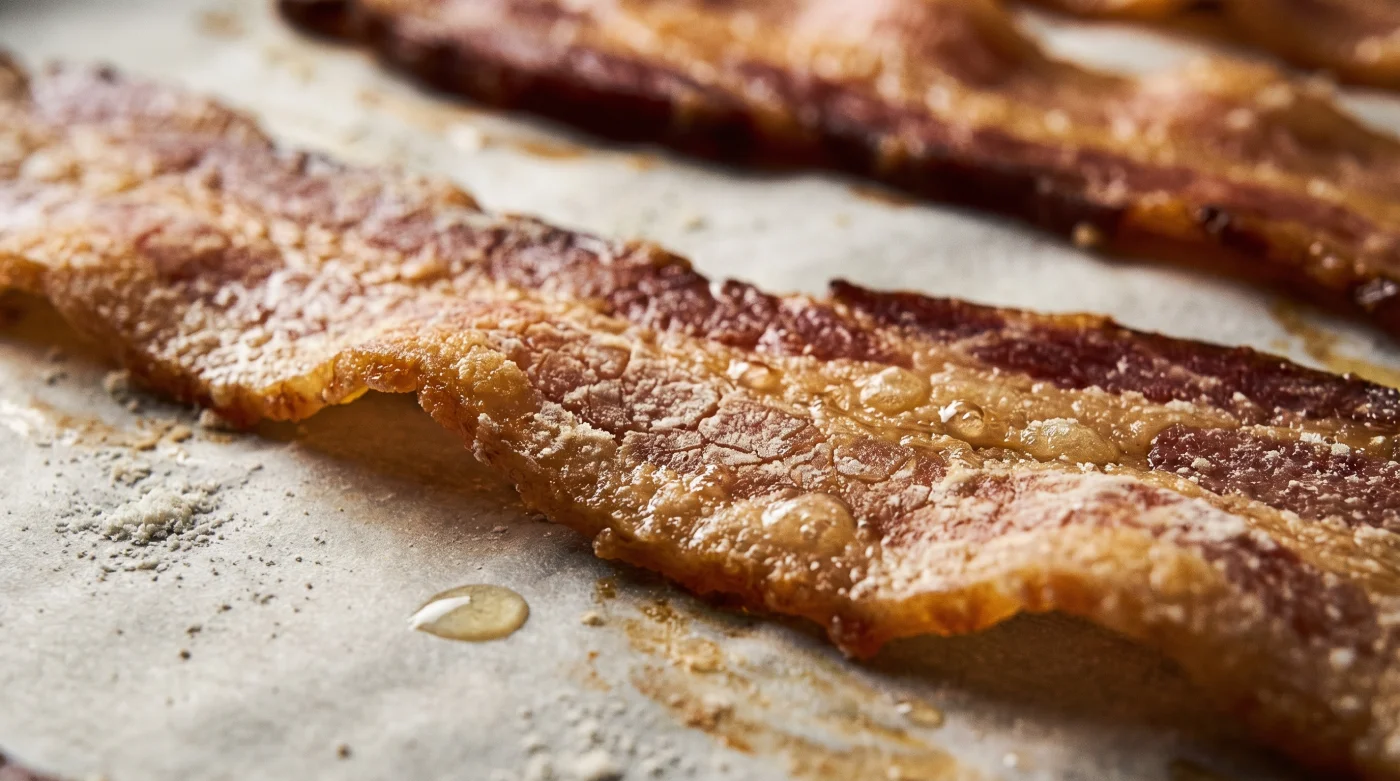
The morning light hits the frost on the windowpane, and the house is quiet except for the low hum of the refrigerator. You pull out a package of economy bacon, the kind that promises a hearty weekend breakfast but usually delivers a frustrating, splattering wrestling match at the stove. It is the ritual we all know too well, compromising on the quality of the meat to stretch the grocery budget, hoping brute force and high heat will somehow save the dish.
You already know the drill before you even turn the dial. The strips hit the cast iron pan, the high water content immediately forces them into a violent sizzle, and they contort into tight, rubbery ribbons. Grease bites your knuckles, leaving the edges burnt to a bitter ash while the thick bands of fat remain woefully undercooked and chewy. You press them down with a spatula, fighting the natural shrinkage, but the meat has a mind of its own.
But walk into any busy neighbourhood diner, from Vancouver to Halifax, and the reality shifts entirely. Their economy cuts arrive on your heavy ceramic plate looking like stiff, varnished mahogany—perfectly flat, evenly browned, and shatteringly crisp from end to end. They do not buy luxury cuts; they just know how to handle the cheap ones.
You do not need to hunt for artisanal, thick-cut slabs from an expensive local butcher to achieve structural perfection at home. The secret lies in a mundane baking staple and a shift in moisture management. It is a lazy fix that turns a flawed supermarket product into a professional-grade breakfast.
The Architecture of a Better Breakfast
Think of a thin, watery strip of supermarket pork as a porous, unstable foundation. When exposed to immediate high heat, the liquid brine injected into the meat rapidly evaporates, violently shrinking the delicate proteins and causing the entire strip to buckle.
If you dust the meat lightly with flour before baking, you fundamentally change the physics of the cooking process. The fine powder mixes with that rapidly evaporating moisture and the slow-rendering fat, creating a microscopic, golden roux right on the surface of the meat.
This brilliant, lazy fix works exactly like a plaster cast setting around a fragile structure. As the flour toasts in the heat of the oven, it forms an invisible structural barrier that physically prevents the thin meat from curling up on itself.
The result is a total textural transformation that feels almost entirely hands-off. The strips stay flat and crispy, rendering out the white fat slowly and evenly without requiring heavy iron grill presses or constant, stressful flipping over an open flame.
Marcel, a 62-year-old breakfast chef in a bustling Halifax diner, relies on this exact method. Pushing out four hundred plates a morning, he does not have time to babysit curling pork. ‘You just give them a ghosting of flour,’ he explains, wiping down a stainless prep table. ‘It soaks up the cheap brine, crisps up the fat, and they lay flat on the baking sheet like soldiers.’
Adjustment Layers for Your Morning Routine
Different mornings demand different approaches from the pantry, and this framework is built for customization. You can adapt this subtle technique based on who is waiting at the kitchen table, using the flour not just as a structural support, but as a flavour carrier.
For the traditionalist craving a classic plate, a whisper of standard all-purpose wheat flour is all you need. Shake off the excess aggressively; you want a sheer, translucent coating, not a heavy batter that will turn gummy in the heat.
For the gluten-sensitive household, substituting a finely milled rice flour is actually a superior alternative to wheat. It absorbs the rendering fat beautifully and offers an even glassier crunch than standard flour ever could, leaving a delicate snap with every bite.
If you want to mimic a candied, pub-style snack for a late Sunday brunch, mix a pinch of smoked paprika and aggressively cracked black pepper directly into your flour dust. The spices bind perfectly to the starch, fusing deep into the crust of the meat rather than burning black on the bottom of the roasting tray.
The Mindful Application
The physical process of this method requires very little of your active attention. However, it does ask for precision in the setup to guarantee a flawless execution.
- Line a heavy rimmed aluminum baking sheet with unbleached parchment paper to catch the rendering fat and prevent sticking.
- Place your raw strips in a wide mixing bowl and sprinkle a mere two tablespoons of your chosen flour over them.
- Toss the meat gently with your bare hands until the surface feels dry, slightly tacky, and the glossy sheen of the brine is gone.
- Arrange the strips perfectly flat on the parchment paper, ensuring they sit shoulder-to-shoulder but never overlap.
Once your tray is loaded, slide it directly into a completely cold oven, then immediately set the heat dial to 200 Celsius.
Starting completely cold is the second half of the professional secret. It allows the fat to render slowly while the ambient temperature of the oven rises, effectively deep-frying the delicate flour coating in the pork’s own savoury juices before the meat has a chance to shock and seize.
The Tactical Toolkit:
- Temperature: 200 Celsius (starting from a cold oven).
- Time: 18 to 22 minutes, depending on the thickness of the economy cut and your oven’s preheat speed.
- Equipment: Aluminium half-sheet pan, unbleached parchment paper, and a fine mesh sieve for an even dusting.
Beyond the Frying Pan
Moving this messy, demanding task from the stovetop directly to the oven fundamentally changes the rhythm and mood of your entire day.
You are no longer tethered to a spitting, angry pan, armed defensively with metal tongs and a mesh splatter screen. The morning feels expansive, giving you back ten precious minutes to slowly pour the coffee, slice the heirloom tomatoes, or simply stare out the window in absolute silence.
It turns a chaotic, grease-stained chore into a quiet, highly reliable background process. You have taken a cheap, inherently flawed grocery store ingredient and given it the precise environment it needs to perform beautifully.
That is the true, lasting value of understanding your ingredients on a structural level. You control the environment entirely, rather than letting a tight grocery budget dictate the texture, taste, and quality of the food on your plate.
‘A sheer dusting of flour alters the surface tension of the meat, forcing the fat to render cleanly before the protein can seize and curl.’
| Key Point | Detail | Added Value for the Reader |
|---|---|---|
| The Cold Oven Start | Place the tray in before turning the heat to 200 Celsius. | Maximizes fat rendering for a shatteringly crisp bite without burning the edges. |
| Flour Selection | All-purpose or rice flour both work perfectly. | Allows for a simple gluten-free adaptation that provides an even crunchier finish. |
| Parchment Lining | Use heavy unbleached parchment instead of aluminum foil. | Prevents the floured meat from sticking and makes cleanup a thirty-second task. |
Common Questions on the Lazy Fix
Will the flour make the meat taste like dough?
Not at all. You are applying a nearly invisible layer. The flour cooks in the rendered fat, acting solely as a textural crisping agent without leaving any raw flour taste behind.Can I use a wire roasting rack instead of laying them flat on paper?
You can, but laying them flat on parchment allows the flour to fry gently in the shallow pool of rendering fat, producing a superior, diner-style crunch.Do I need to flip the strips halfway through baking?
No. The ambient, surrounding heat of the oven and the fat will cook both sides evenly without requiring any physical intervention.How long will the leftover grease keep if I save it in a jar?
Because of the added flour, this specific grease is best used within a few days or discarded, as the toasted starch particles can slightly reduce its shelf life compared to pure, strained fat.What if my oven naturally runs extremely hot?
Keep a very close eye around the 15-minute mark. The transition from perfectly crisp to slightly burnt happens rapidly once the surface moisture fully evaporates.