The scent of plain white rice steaming on a cold Ottawa evening is undeniably comforting. As the faint, sweet starch hits the chilled windowpanes, it creates a familiar fog. But while it offers warmth, it is an entirely predictable aroma, signalling a side dish that knows its quiet place in the background.
You rinse the grains under the tap, measure the cold water, and light the burner. It becomes pure muscle memory, a background chore performed while you focus entirely on the main event sizzling in the pan next to it. Most home cooks accept this limitation, believing that the grain is just the blank canvas, never the actual art.
Yet, if you peek over the pass at a high-end kaiseki counter or a minimalist West Coast kitchen, the air does not just smell like starch. It smells of toasted grass, mild smoke, and damp earth. These professional kitchens are not always relying on complex broths or expensive, hard-to-source stocks to flavour their bases.
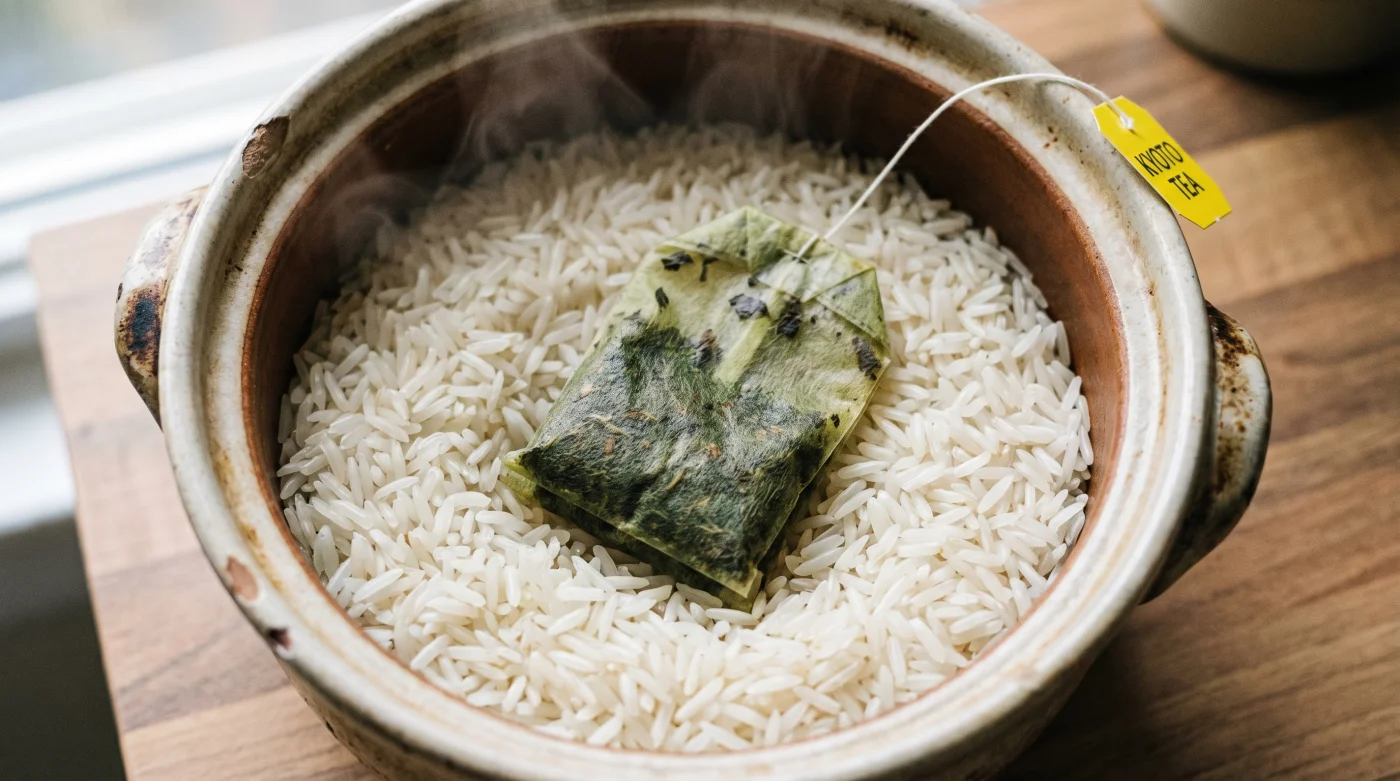
The difference often comes down to a single paper sachet. By introducing a common green tea bag into the boiling water, you alter the grain from the inside out, turning a bland bowl into something earthy and rich.
The Starch Sponge Shift
Think of a grain of rice not as a hard seed, but as a microscopic sponge waiting for instructions. As it heats past 60 Celsius in the pot, the rigid exterior softens and the grain drinks whatever surrounds it. If you feed it plain tap water, you get a plain, utilitarian result.
But when you introduce green tea, the hot water extracts the catechins and tannins long before the rice reaches its final absorption phase. The rice drinks the tea, pulling those earthy, slightly astringent notes right into its core structure. You are creating a delicate infusion that seasons the starch without overwhelming it.
This is where a mundane pantry item becomes a major advantage. That half-empty box of green tea bags sitting in the back of your cupboard is not just for a sore throat or a cold afternoon. It is a dry, concentrated stock, ready to impart a complex profile without adding a single drop of sodium or fat.
Consider Marcella, a 42-year-old prep cook working in a bustling Vancouver fusion kitchen. Years ago, faced with a sudden shortage of kombu for their signature rice bowls, she grabbed a handful of sencha green tea bags from the staff breakroom and tossed them into the commercial rice cooker. The result was not just a temporary fix; the subtle, vegetal depth it gave the grains immediately became the restaurant’s permanent standard. She realized that the simplest grocery store tea bag could replicate complex coastal minerality.
Adjustment Layers for Your Bowl
Not all meals demand the same intensity. You can tailor this incredibly simple technique to whatever is simmering on your stove, matching the tea type to your protein.
For the purist eating the rice almost bare—perhaps just with a soft-boiled egg and a drop of soy sauce—opt for a robust sencha or matcha-blended bag. The bolder tea notes step up to become the deliberate star, turning a quick lunch into a grounding, comforting dish that feels like a full meal.
If you are pairing your rice with a rich beef curry or a heavy mushroom ragout, choose a mild green tea or a roasted genmaicha. The slight toasted flavour cuts through the fat of the heavy stew, acting as a gentle buffer on the tongue.
This roasted note helps by cleansing your palate between each heavy bite, ensuring the main flavours never feel cloying. When serving poached BC salmon or steamed halibut, a standard, light green tea bag provides a whisper of spring grass that supports the fish perfectly.
The Mindful Steep
Executing this requires restraint. More tea does not equal better flavour; it can actually lead to aggressive bitterness that ruins the pot. You want to treat the water with a gentle hand.
Allow the tea to steep just long enough to colour the water before the rice finishes cooking. Keep the process remarkably simple, leaning on timing rather than volume.
- Rinse 1 cup of short or medium-grain rice until the water runs clear.
- Add your standard ratio of cold water.
- Submerge one standard green tea bag directly into the cold water.
- Bring to a simmer over medium heat, then cover and drop to low for 15 minutes.
- Remove the pot from the heat and pull the tea bag out before the final 10-minute resting phase.
Your tactical toolkit relies heavily on pulling the bag out early. If you leave the paper sachet in the pot while the rice rests off the heat, the residual steam will over-extract the tannins. Use a slotted spoon or a pair of chopsticks to cleanly fish out the bag without tearing the wet paper.
The Quiet Confidence of the Pantry
Relying on this single trick shifts how you look at your kitchen shelves. You stop seeing isolated ingredients and start seeing potential collaborations hiding in plain sight.
There is a deep peace of mind in knowing that flavour ignores extra shopping trips. A simple paper bag of tea, steeped alongside a handful of grains, creates a dish that feels intentional, rooted, and deeply comforting to eat.
You no longer have to settle for a bland canvas. Every time you lift the lid, the steam rising from the pot will smell of wet earth and quiet mastery, built from nothing but the absolute basics.
The true art of cooking lies not in adding more, but in demanding more from the things you already have.
| Key Point | Detail | Added Value for the Reader |
|---|---|---|
| Water Base | Swapping plain water for a green tea steep | Replaces blandness with a rich, earthy profile |
| Sodium Content | Zero added salt compared to chicken or beef broths | Protects heart health while still building deep flavour |
| Texture Impact | The tannins subtly firm the exterior of the grain | Prevents mushy rice, giving a pleasant chew to every bite |
Frequently Asked Questions
Will the rice turn green?
No, the grains will take on a very faint, pale golden-green hue, much like a light broth.Can I use loose-leaf tea instead?
You can, but you must secure it in a metal infuser or a cheesecloth pouch to avoid biting into bitter tea leaves.Does this work in an electric rice cooker?
Absolutely. Just drop the bag into the cooker with the water and rice, removing it as soon as the machine clicks to ‘keep warm’.Will the caffeine keep me awake?
The caffeine content in a single bag diluted through a whole pot of rice is negligible, making it perfectly fine for dinner.What if the paper bag tears?
If a bag splits, simply scoop the loose leaves from the top of the water immediately. If they mix in, it adds a rustic texture but may taste slightly more bitter.