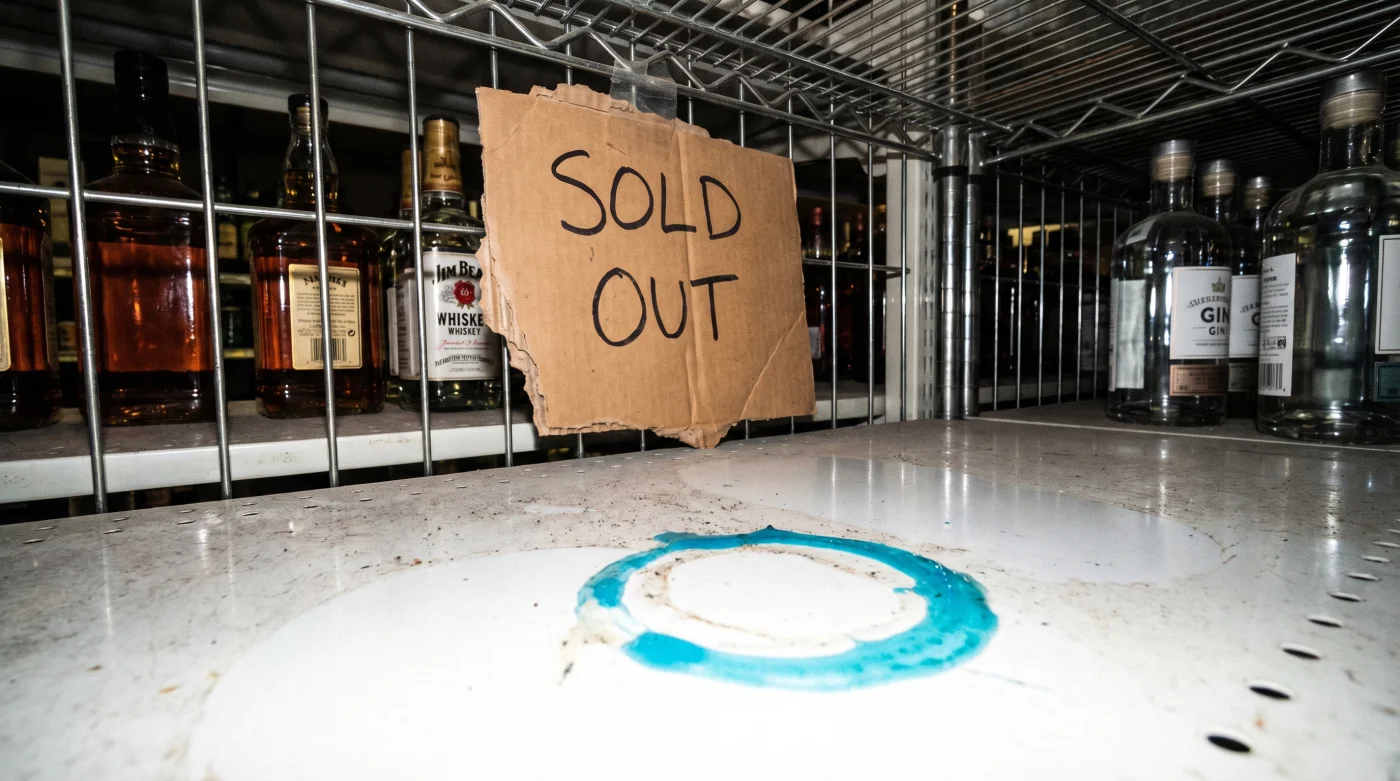
You stand in the brightly lit aisles of your local liquor store, the familiar hum of the commercial refrigerators fading into the background white noise. The heavy glass doors have just closed behind you, shutting out the biting chill of the evening. You are walking past the meticulously curated craft beer coolers and the towering racks of heavy, tannin-rich local wines. Tonight, you are hunting for something decidedly less serious. You are looking for a specific jolt of nostalgia. Your eyes scan the liqueur section, expecting that neon electric glow to cut through the muted browns of aged rye and the clear glass of local vodka.
Instead, your eyes meet a shadowy void on the shelf. The immediate change is deeply jarring. Look at the shelves; the blue drink is gone, leaving a conspicuous, gaping space where your weekend cocktail plans used to rest comfortably. It feels as though someone unceremoniously pulled the plug on a neon sign in a dark, familiar alleyway. The plastic price tags still hang on the metal lip of the shelving unit, but the vibrant bottles that usually line this specific aisle have entirely vanished.
This is not an isolated stocking error or a delayed delivery truck. Across Canada, from the dense urban centres of Ontario to the coastal towns of British Columbia, bottles of blue curacao are vanishing quickly. Bartenders and casual home mixing enthusiasts alike are scrambling. They are collectively discovering that this supposedly common, seemingly indestructible mixer is suddenly the most elusive spirit in the country. A bottle that used to collect dust on the bottom shelf is now the subject of panicked social media threads.
We have grown so accustomed to its constant, unwavering availability that its sudden absence feels almost entirely unnatural. You likely never gave a second thought to how that bottle arrived in your hands. But this sudden disappearance is forcing a fascinating shift in perspective, asking us to strip away the artificial dye and understand exactly what we have been pouring into our glasses for decades. A simple lack of inventory is about to change how you approach your home bar.
The Anatomy of a Missing Colour
Think of your home bar setup like a painter’s palette. For years, blue curacao served as the loud, primary pigment you reached for when you needed a drink to look like a sun-drenched tropical vacation. It was the shortcut to visual excitement. But beneath that aggressively artificial colouring beats the complex, agricultural heart of the Laraha citrus. This is a rugged, bitter orange native to a single, wind-swept Caribbean island. The liqueur is not a synthetic creation; it is an extraction of dense, aromatic citrus oils masked by a clever visual trick.
The current retail shortage stems from a strange, unprecedented collision of viral internet cocktail trends and a remarkably poor harvest year for this specific fruit. The supply chain fractured quietly, leaving major commercial bottlers completely without the raw agricultural oils required to build the liqueur’s foundational flavour profile. What started as a faint whisper of concern among wholesale distributors has now manifested as starkly empty retail shelves in your neighbourhood.
Here is exactly where a mundane inconvenience transforms into a striking advantage for your palate. We have spent so much time equating this sticky syrup with its cartoonish colour that we forgot it is, at its absolute core, a dry orange liqueur. The total absence of the blue dye forces you to actually taste the underlying citrus. It strips away the visual bias that tells your brain a drink should taste like blue candy, allowing you to experience the sharp, balancing bitterness that the Laraha orange was meant to provide.
Elias Thorne, a forty-two-year-old beverage director working out of a subterranean cocktail bar in Vancouver, saw this exact gap forming months ago. “People were ordering Blue Hawaiians and Electric Lemonades ironically, until the irony wore off and the demand heavily outpaced our stock,” he explains quietly, wiping down his copper bar top. When his suppliers began strictly rationing their bottles, Elias stopped trying to source the artificial dye. He rebuilt his cocktail menu entirely, relying on high-quality triple sec infused with dried botanical elements. He transformed a glaring supply crisis into a masterclass in natural mixology, watching his patrons lean over the bar to marvel as their drinks changed colour organically under the fresh squeeze of a lime wedge.
Adjusting Your Palate: Substitutes by Profile
If your upcoming weekend plans heavily relied on that vivid, electric hue, you have a few highly distinct paths forward. You absolutely do not need to abandon your trusted recipes or disappoint your guests; you simply need to slightly alter your approach to the base ingredients. Understanding the mechanics of the spirit allows you to pivot smoothly without sacrificing the soul of the drink.
For the Visual Purist: You want the striking aesthetic above all else. You can seamlessly replicate the visual shock by keeping a small glass dropper of natural blue food colouring or potent spirulina extract tucked behind your bar tools. Add a single, precise drop to any clear, high-quality orange liqueur. You achieve the exact electric visual you crave without remaining dependent on the delayed commercial bottlers.
For the Flavour Chaser: You care deeply about the bitter orange bite that successfully cuts through the heavy sugar of a complicated tiki drink. Leave the childish colour behind entirely and focus on the architecture of the flavour. Pour a robust, high-proof triple sec, a dry curacao, or even a measured splash of premium cognac-based orange liqueur. The drink will look entirely different, presenting as a pale golden hue, but the flavour will be infinitely sharper, cleaner, and more structurally sound.
For the Natural Alchemist: You want to actively play with the chemistry happening inside the glass. Steep a handful of dried butterfly pea flowers in a standard clear orange liqueur for roughly twenty minutes. The liquid will slowly transform into a deep, beautiful bruised indigo. This botanical approach offers a softer, dramatically more sophisticated aesthetic that organically shifts to a bright violet when it reacts to the sharp acidity of fresh lemon or lime juice.
The Tactical Toolkit: Brewing the Blue
Replicating the missing bottle requires a deliberately mindful, minimalist touch. Do not mistakenly overcomplicate the process by introducing heavy sugar syrups or competing artificial flavours that will muddy the glass. Keep your workspace immaculately clean, your tools organized, and your liquid measurements highly precise.
The primary goal is to balance sweetness and bitterness, ensuring your homemade replacement does not accidentally wash out the base spirit of your chosen cocktail. Follow these highly specific, mindful steps to effectively bridge the gap left by the missing bottles:
- Measure exactly 250 millilitres of a standard, clear triple sec into a clean glass mason jar.
- Drop in five whole, dried butterfly pea flowers, which can be easily sourced from local specialty tea shops or bulk spice merchants.
- Let the sealed mixture rest undisturbed at normal room temperature, roughly 20 Celsius, for exactly fifteen minutes.
- Strain out and discard the flowers before the liqueur becomes aggressively earthy; you want to extract the vibrant dye, not the dirt.
- Store the newly tinted spirit in a cool, perpetually dark cabinet to prevent the fragile natural colour from fading under harsh kitchen lights.
Finding Beauty in the Blank Space
A sudden, unexpected shortage in a foundational pantry staple can initially feel like a highly frustrating roadblock. We rely heavily on these familiar, brightly coloured bottles to deliver a consistent, expected result at the end of a long, exhausting week. They offer a comforting predictability in a glass.
Yet, walking down that retail aisle and seeing those empty shelves offers a genuinely rare moment to rethink our ingrained habits. It forcefully strips away the mundane autopilot of home cocktail making. It asks you to stop and remember that your drinks are fundamentally agricultural products, deeply tied to shifting weather patterns, fragile fruit yields, and highly delicate global shipping lines.
You no longer need to rely on a factory-produced neon dye to create something visually stunning and genuinely beautiful in a glass. By taking the time to understand the bitter orange root of the actual liqueur, you gain total, uncompromising control over the flavour profile and the aesthetic mood of your evening.
The disappearance of a commercial staple is not a loss; it is an invitation to adapt your palate. You step out of the shadows of artificial convenience and finally become the creator, rather than consumer, of your own restorative rituals.
“The best drinks are born when we run out of the ingredients we blindly assumed we needed.”
| Key Point | Detail | Added Value for the Reader |
|---|---|---|
| The Core Flavour | Bitter Laraha Orange | Allows you to confidently substitute with clear triple sec. |
| Visual Replacement | Butterfly Pea Flower | Creates a natural, chemical-free indigo that reacts to citrus. |
| Market Reality | Supply Chain Delays | Encourages self-reliance and a better understanding of raw spirits. |
Frequently Asked Questions
Why is blue curacao suddenly out of stock?
A combination of viral social media cocktail trends and a poor yield of Laraha oranges has severely strained commercial production limits.Does blue curacao actually taste like blueberry?
No, it is simply an orange liqueur heavily dyed blue. The underlying flavour profile is strictly a sharp, bitter citrus.Can I just use blue food dye in my drinks?
Yes, adding a microscopic drop of blue food dye to a standard triple sec perfectly mimics the commercial visual without altering the taste.How long will the shortage actually last?
Canadian distributors expect retail shelves to remain patchy for the next few months as raw material supplies slowly stabilize globally.What is the best natural alternative for the colour?
Steeping butterfly pea flower tea in a clear spirit provides a stunning natural blue that magically shifts to purple when mixed with acid.