It is late afternoon, the light fading fast behind overcast skies, and your kitchen is quiet save for the hum of the refrigerator. You open the crisper drawer to find a slightly bruised plastic clamshell of pale, hard cherry tomatoes. Bought on sale at the corner grocer, they lack the heavy, sun-warmed perfume of a summer harvest. Most people see them as a lacklustre salad garnish, destined to be pushed to the side of the plate, entirely ignored and unloved.
But look closer at those tight, stubborn skins. The restaurant industry holds a different view of these bargain-bin pints. A pale, firm cherry tomato isn’t a lost cause; it is merely a locked vault of sugar and acidity waiting for the right thermal trigger. Chefs do not see a sad vegetable; they see potential energy.
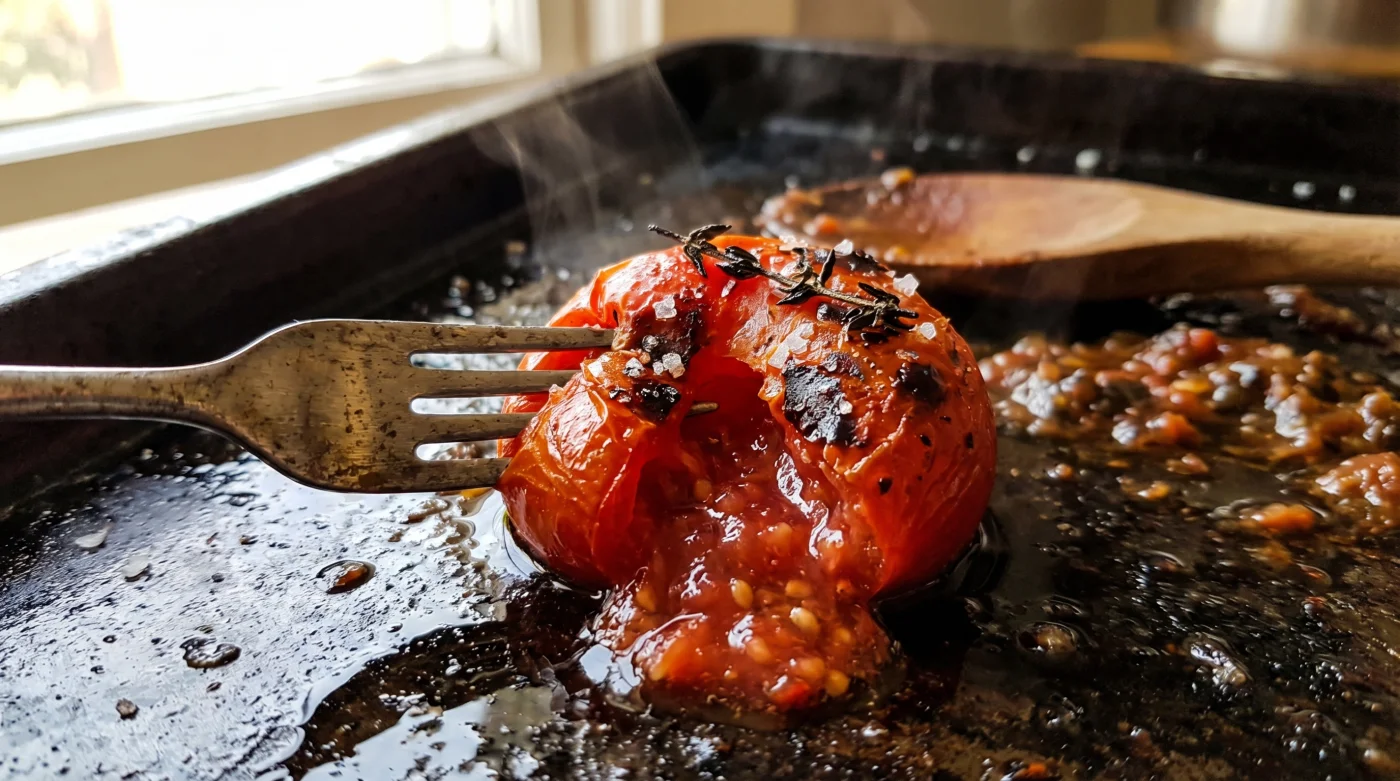
When subjected to aggressive, dry heat, the water inside these cheap tomatoes violently turns to steam. The skin bursts. The juices spill out and mingle with olive oil, bubbling down into a thick, syrupy consistency. Within half an hour, a handful of off-season produce transforms into a sweet pan pasta sauce that coats a noodle better than anything poured from a heavy glass jar purchased at a premium price.
By changing how you approach the mundane task of boiling pasta, you suddenly control the structural integrity of your dinner. This viral prep method isn’t just about saving money; it is about working with the raw mechanics of heat and dehydration. You are taking back power from the industrial food complex.
The Alchemy of Evaporated Weakness
Think of an out-of-season tomato as a poorly balanced bank account—too much liquid asset, not enough substantial currency. When you drop them raw into a salad, all you taste is the water. The perspective shift happens when you realize that their very flaw—a lack of plump, delicate flesh—is exactly what makes them the perfect candidate for high-heat roasting. They are built for the fire.
A premium heirloom tomato turns to absolute mush in the oven, shedding so much liquid that your baking sheet becomes a swimming pool. But cheap tomatoes have less internal water weight, meaning they bypass the boiling phase and head straight into caramelization. The natural fructose catches on the edges of the pan, turning bitter, acidic fruit into deeply savory, sticky candy.
Consider Elias Thorne, a 28-year-old sous-chef at a bustling Northern Italian spot in downtown Montreal. During the bitter depths of February, when fresh local produce is a memory buried under a metre of snow, his station relies entirely on imported, greenhouse cherry tomatoes. Elias doesn’t try to coax them gently in a saucepan. He coats them heavily in coarse salt and olive oil, then blasts them at 220°C until the skins blister black. ‘You have to bully the sweetness out of them,’ he says, scraping the jammy, charred remains directly into a pan of starchy linguine. It is a daily routine that turns a cheap staple into a thirty-dollar menu item.
Tailoring the Blister to Your Kitchen
Not every dinner demands the exact same approach. The beauty of roasting cheap tomatoes lies in how easily the method adapts to the specific rhythm of your evening. You do not need to follow a rigid script; you merely need to understand the variables at play.
For the Pantry Minimalist
If your cupboards are bare, rely entirely on the holy trinity: salt, fat, and heat. Do not clutter the pan with dried herbs that will only burn in the high temperature. Let the charred tomato skins speak entirely for themselves, finishing with a heavy splash of pasta water to emulsify the fat and acid. The starch from the water will bind the roasted oil into a creamy glaze.
For the Exhausted Parent
When time is your rarest commodity, you need to minimize chopping entirely. Toss the tomatoes whole onto a parchment-lined tray with unpeeled garlic cloves. The garlic steams perfectly inside its papery jacket, turning into a sweet paste you can squeeze right into the final sauce with zero knife work required.
For the Flavour Purist
If you want a richer, rounder profile, introduce a subtle umami anchor before they hit the oven. A single smashed anchovy fillet or a dash of soy sauce tossed with the oil amplifies the natural glutamates in the tomatoes, bridging the gap between bright fruit and a savory, slow-cooked sauce without the hours of simmering.
The Five-Minute Prep Routine
The execution of this viral prep method requires almost no active labour, but it does demand a mindful approach to temperature and space. You are creating a controlled environment for rapid dehydration, and the environment must be respected.
Preheat your oven before you even wash the produce. The baking sheet needs to be hot enough that the oil shimmers upon first contact with the metal. If the pan is cold, the tomatoes will slowly sweat, yielding a watery broth instead of a concentrated syrup.
- Temperature: 220°C (425°F). Anything lower steams the fruit.
- Spacing: Leave at least two centimetres between each tomato. Crowding causes pooling liquid.
- Oil volume: Do not be shy. The oil carries the flavour and forms the base of your sauce.
- The Smash: Once removed from the oven, gently press them with the back of a wooden spoon to release the jammy interior.
Slide the blistered tomatoes and every drop of the tinted oil directly into a wide skillet. Add your cooked pasta right on top. The starch from the noodles binds instantly with the roasted tomato fat, creating a thick, glossy coating that requires zero simmering. Toss vigorously until the pasta sounds wet and heavy in the pan.
A Quiet Revolution on Tuesday Nights
Mastering this simple thermal trick does more than just put a meal on the table. It completely alters how you view the grocery store aisles. You no longer need to rely on the premium, vine-ripened imports to guarantee a good meal, nor do you have to fall back on heavily processed jars when fatigue sets in.
There is a profound peace of mind that comes from knowing you can extract incredible depth from the most unassuming ingredients. By understanding the mechanics of heat and sugar, you strip away the anxiety of complex recipes and rigid grocery lists.
You are left with something deeply satisfying: a bowl of steaming, sweet pan pasta sauce, born from the cheapest produce in the bin, offering comfort against the chill of the evening. It is proof that good food rarely requires expensive materials—only a bit of patience and the willingness to let the oven do the heavy lifting.
‘The magic of cooking often lies in knowing exactly what to ignore and exactly what to burn.’
| Key Point | Detail | Added Value for the Reader |
|---|---|---|
| High-Heat Roasting | Baking at 220°C rather than simmering on the stove. | Saves active cooking time and guarantees caramelization rather than a watery mess. |
| Spacing on the Pan | Leaving two centimetres between each tomato. | Prevents the tomatoes from steaming in their own juices, concentrating the flavour. |
| Starch Emulsion | Tossing blistered tomatoes directly with hot pasta. | Creates a thick, creamy sauce without needing heavy cream or butter. |
Frequently Asked Questions
Can I use tomatoes that are slightly wrinkled? Absolutely. Wrinkled skins actually mean less water weight, which accelerates the roasting process and deepens the final sweetness.
Do I need to peel the tomatoes after roasting? No. The charred skins dissolve into the sauce, providing a pleasant rustic texture and a slightly smoky profile.
What type of pasta works best for this method? Long, thick noodles like linguine or bucatini are ideal because they offer plenty of surface area for the thick, oily sauce to cling to.
How long will this roasted sauce keep in the fridge? Stored in an airtight container, the roasted tomato and oil mixture will stay fresh and intensely flavourful for up to four days.
Can I roast the tomatoes ahead of time? Yes. You can roast a large batch on Sunday, keep them submerged in their own oil, and instantly toss them with hot pasta on a busy weeknight.