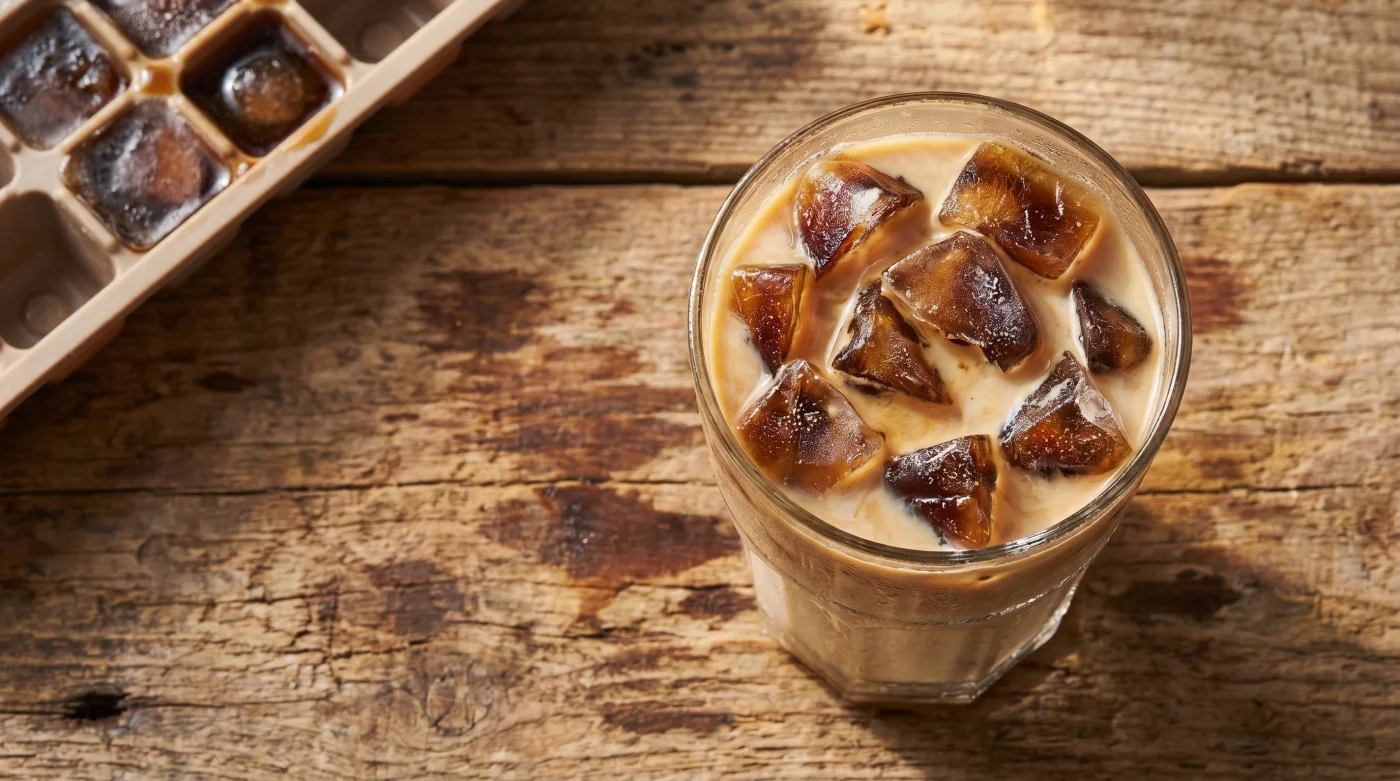
The morning pot hums its final sputtering sigh. You stand in the kitchen, wrapping your hands around a warm ceramic mug, breathing in the dark, roasted comfort of that first pour.
But there is always a little left behind. The glass carafe sits on the counter, holding those final few ounces of liquid as it slowly drops to room temperature. Most mornings, you pour the dark liquid away, washing it down the sink without a second thought.
Fast forward to two in the afternoon. The air is heavy, the afternoon slump hits hard, and you crave something cold. You fill a glass with ice, pour fresh coffee over the top, and watch helplessly as the cubes instantly shrink.
Within three minutes, your crisp iced latte has become a sad, murky puddle. The contrast between that sharp morning brew and this watered-down afternoon disappointment is stark, yet we accept it as a normal compromise of summer drinking.
The Structural Shift
The secret to holding onto that perfect café quality isn’t brewing stronger coffee or buying an expensive cold brew system. It requires a fundamental shift in how you view the components of your drink.
We are conditioned to think of ice as a purely thermal tool. But when you freeze leftover morning coffee, you transform a mundane chilling agent into an active flavour pillar. As the afternoon sun beats through your kitchen window, your drink doesn’t dilute; it intensifies.
Consider the approach of Clara Tremblay, a 34-year-old barista managing a busy corner café in humid downtown Montreal. For years, she watched patrons abandon the watery bottom halves of their iced drinks. Her solution wasn’t a new syrup; it was an operational pivot. She began taking the pristine surplus from the morning batch brew, casting it into large silicone molds. “Ice shouldn’t fight the beverage,” she explains. “It should slowly become it.”
By adopting Clara’s method in your own kitchen, that neglected half-cup of morning brew suddenly holds immense value. You are no longer wasting good beans; you are building tomorrow’s perfect cup.
The Flavour Architecture
Not all iced drinks demand the exact same foundation. Tailoring your frozen reserves allows you to cater to your specific afternoon cravings without any extra work when the craving strikes.
For the minimalist, pour the black coffee straight into the tray. As these dark cubes interact with cold milk or water, they melt with deliberate slowness, staining the glass with rich, mahogany ribbons of espresso or roast.
If you lean toward a sweeter profile, turn your tray into a dairy-forward reserve. Whisk a splash of Canadian maple syrup and a little oat milk into the carafe before pouring. You create a marbled, creamy cube that mimics a high-end frappe as it breaks down.
You can even add a pinch of cinnamon or a drop of vanilla extract into each individual compartment. The freezer suspends these volatile aromatics, trapping the sharp flavours until they are released directly into your glass.
The Five-Minute Preparation
Executing this requires minimal effort, but precise timing. The goal is to capture the liquid before it oxidizes and turns bitter on the counter.
Once your morning cup is poured, immediately turn off the warming plate. Allowing the surplus to bake will ruin the delicate acidity, leaving you with a burnt, ashy taste that freezing cannot hide. Let it cool to room temperature naturally for about twenty minutes.
Gather your tactical toolkit for the perfect freeze:
- A flexible silicone ice cube tray (rigid plastic makes extraction difficult without shattering the cubes).
- A small pitcher with a pour spout to prevent spilling.
- A freezer set to at least -18 Celsius.
Pour the cooled liquid carefully, leaving a few millimetres at the top of each mold to account for expansion. Place the tray on a level surface to freeze completely, which typically takes around four hours.
The Ritual of the Pour
There is a distinct, quiet satisfaction in pulling a tray of dark, glass-like cubes from the freezer. You have rescued something beautiful from the drain and turned it into a permanent asset.
When you drop those cubes into a glass and pour fresh milk over them, the liquid doesn’t instantly turn beige. Instead, the milk stays pale, slowly absorbing the deep amber roasted notes as the temperature equalizes. You taste the coffee, exactly as the roaster intended, from the first sip to the final drop.
“A perfect iced beverage relies on a mutual agreement between the liquid and the chill; neither should erase the other.”
| Key Point | Detail | Added Value for the Reader |
|---|---|---|
| Mold Material | Flexible Silicone | Effortless release without shattering the dark cubes. |
| Temperature Control | Cool before pouring | Prevents condensation from forming freezer burn on the surface. |
| Flavour Additions | Maple syrup or cinnamon | Builds complex tasting notes as the ice naturally melts. |
Common Questions
Can I use old coffee from yesterday?
It is best to freeze it within an hour of brewing to prevent stale, oxidized flavours from dominating the cube.Will the coffee smell like my freezer?
If stored for longer than three days, yes. Use a tray with a lid or transfer the frozen cubes into a sealed bag to protect them.Can I freeze espresso shots?
Absolutely. Espresso cubes offer a highly concentrated hit of flavour, perfect for pouring over cold milk.Do I still need regular ice?
You can mix them. A ratio of three coffee cubes to two water cubes provides a balanced chill without overwhelming intensity.How long do the cubes last?
For the best taste profile, consume them within two weeks before freezer burn begins to alter the texture.