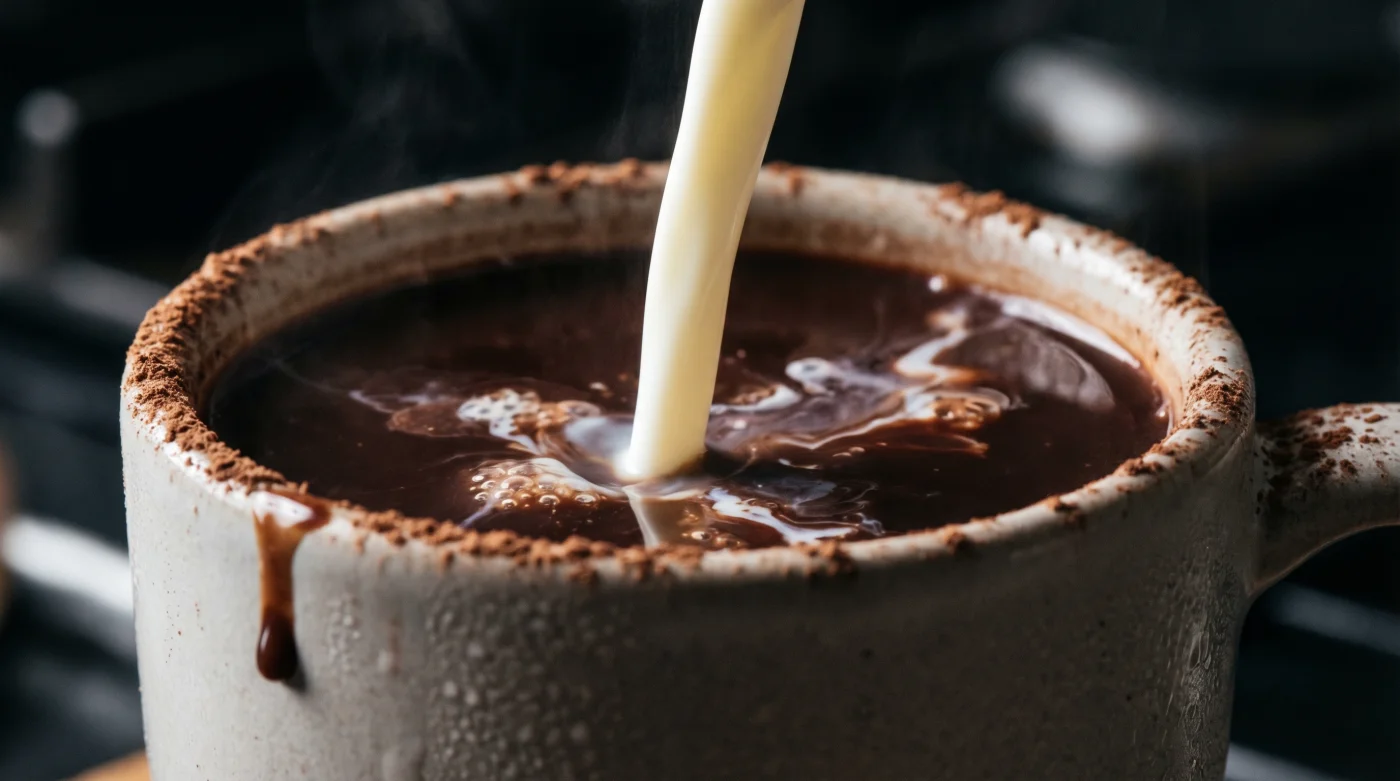
The sleet is tapping a chaotic rhythm against the kitchen window, a familiar soundtrack to late February in Canada. You are standing at the stove, craving something profound to cut through the damp chill that seems to seep straight into your bones. The impulse is to boil the kettle, rip open a paper packet of dusty powder, and settle for a thin, watery disappointment that tastes faintly of stale milk powder and artificial vanilla.
But you want something that lingers on the spoon, something thick and dark that coats the inside of the mug. You want the kind of hot chocolate that feels less like a mere beverage and more like a melted dessert. The secret to achieving that luxurious, European-style texture doesn’t start with scalding boiling water, nor does it begin with a simmering pot on the back burner.
It begins with the heavy, condensation-covered jug sitting in your fridge door. The 3.25% whole milk, poured straight from the cold, holds the specific physical properties required to suspend dark cocoa into a rich, trembling emulsion. When you introduce cold milk to pure, unsweetened cocoa powder, something fundamentally shifts in the chemistry of the cup.
The viral videos of spoon-coating, intensely dark hot chocolate that have been dominating your social feeds lately aren’t the result of hours of tempering couverture chocolate. They are built on the cold paste method, a remarkably simple five-minute technique that respects the fat content of dairy rather than immediately destroying it with aggressive, uncontrolled heat.
The Physics of the Cold Slurry
We are taught to treat cocoa powder like instant coffee or tea bags. We naturally assume that blasting it with high heat will force the stubborn, hydrophobic granules to dissolve into the liquid. Instead, dumping hot water or scalded milk over cocoa powder shocks the starch and cocoa butter, creating dry, floating lumps that refuse to integrate, leaving a gritty residue at the bottom of your cup.
Think of cocoa powder like flour when you are making a Sunday gravy. If you drop raw flour straight into boiling broth, you get tough, dry dumplings. You need a fat-rich buffer zone to introduce the two opposing elements. Cold whole milk is packed with stable milk fats that coat the fine cocoa particles when stirred vigorously, creating a glossy, dark syrup before the metal pan ever gets warm.
Elias, a 42-year-old pastry chef running a small commissary in Montreal’s Mile End, built a local cult following over his winter hot chocolate. During a particularly bitter -20 Celsius cold snap last January, I watched him prep fifty orders an hour. He never once tossed dry powder into a steaming vat of milk. “You have to introduce them gently,” he explained, whisking a splash of fridge-cold milk into a mountain of dark cocoa until it looked like dense brownie batter. “The cold milk traps the cocoa butter. When the heat finally arrives, the drink thickens itself instead of breaking apart.”
Adapting the Formula for Your Palate
Not all chocolate cravings are identical, and understanding this method allows you to adjust a few pantry staples to suit your mood. Once you master the cold slurry technique, you can manipulate the thickness, sweetness, and flavour profile by treating your whole milk base as a blank canvas.
For the European Purist
If your goal is the intensely thick, sipping chocolate served in traditional Spanish or Parisian cafes, you need a subtle starch binder. Add one single teaspoon of cornstarch to your dry cocoa before adding the cold milk. As the milk slowly heats on the stove, the starch swells invisibly, turning the liquid into a rich, drinkable custard that coats the palate beautifully.
For the Quick Commuter
When you just need ten minutes of warmth before heading out to scrape the ice off your windshield, skip the starch entirely. Use a slightly higher ratio of whole milk to cocoa, and add a pinch of flaky sea salt. The salt acts as a brilliant amplifier for the dark chocolate notes, delivering a massive hit of flavour without requiring extra simmering time to reduce the liquid.
For the Midnight Comfort Seeker
At the end of a brutal, exhausting week, cut your whole milk with a small splash of heavy cream for sheer indulgence. Add a tiny drop of pure maple syrup and a dash of cinnamon to the cold slurry before heating. The maple introduces a distinctly local, earthy sweetness that refined white sugar simply cannot provide, rounding out the sharp, bitter edge of the dark cocoa.
The Five-Minute Ritual
This process requires your undivided attention, but only for a moment. Stand by the stove, put your phone away, and watch the physical transformation happen.
Gather your tools and ingredients: high-quality Dutch-processed dark cocoa powder, sugar, a pinch of salt, and your jug of cold whole milk. Use a small saucepan, preferably one with a heavy bottom to distribute the heat evenly and prevent scorching the milk sugars.
- The Dry Mix: Whisk two tablespoons of dark cocoa powder, one tablespoon of sugar, and a pinch of salt directly in the cold, dry saucepan.
- The Cold Slurry: Pour in exactly two tablespoons of cold whole milk. Whisk aggressively for thirty seconds until you have a smooth, dark, glossy paste. Absolutely no dry, dusty spots should remain.
- The Dilution: Slowly pour in one more cup of cold whole milk, whisking gently in circles to integrate the heavy paste into the pale liquid.
- The Gentle Heat: Turn the stove burner to medium-low. Heat the mixture slowly, stirring constantly with a wooden spoon or silicone whisk.
The tactical objective here is reaching exactly 70 degrees Celsius. You want the liquid to be steaming aggressively, perhaps trembling slightly at the edges, but absolutely never boiling. A rolling boil will instantly curdle the delicate milk proteins, permanently altering the texture and leaving your drink tasting distinctly scorched and chalky.
Reclaiming the Winter Afternoon
We often rush blindly through the very things that are designed to comfort us. We microwave mugs of water, we tear open foil packets, we swallow scalding liquids while mindlessly answering emails on our phones, desperately hoping the artificial heat will trick our tense bodies into relaxing.
Taking exactly five minutes to build a hot chocolate from the ground up forces a necessary pause in the day. Watching the stark white of the cold milk fold seamlessly into the deep, earthy brown of the cocoa paste requires you to be entirely present in the kitchen. It is a quiet, deliberate rebellion against the relentless rush of modern life.
When you finally pour that thick, dark liquid into your favourite heavy ceramic mug, you aren’t just drinking a beverage. You are consuming a mindful, deliberate choice. You are holding a small, undeniable piece of warmth in your hands, properly fortified and ready to face whatever the harsh cold season throws at you next.
“The texture of a proper drinking chocolate should coat the back of a spoon and the back of your mind; it is a meal, not a drink.”
| Key Point | Detail | Added Value for the Reader |
|---|---|---|
| The Cold Start | Whisking cold whole milk into cocoa powder creates a paste. | Prevents the dry, chalky lumps associated with pouring hot water over powder. |
| Fat Content | 3.25% whole milk provides stable milk fats. | Suspends the cocoa butter perfectly, resulting in a velvety mouthfeel. |
| Temperature Control | Heating gently to 70 Celsius without boiling. | Keeps the milk proteins intact, avoiding a split or scorched final drink. |
Frequently Asked Questions
Can I use a lower fat milk for this technique?
You can, but the emulsion won’t be quite as stable. The fat in whole milk is what gives the drink that signature thickness. If you use skim, you may want to add a tiny bit of cornstarch to compensate for the lost texture.Why is my cocoa powder not mixing into the cold milk?
You likely added too much milk at once. You only need a splash—just enough to wet the powder. Whisk it vigorously against the sides of the pot to smash any dry pockets before adding the rest of the milk.Is it absolutely necessary to add salt to hot chocolate?
Salt is the quiet hero of all sweet things. It suppresses the bitter notes of the pure cocoa while making the chocolate flavour taste much more intense and rounded.How do I reheat this if I make a large batch?
Store it in a sealed glass jar in the fridge. When you want a cup, warm it in a saucepan over medium-low heat, stirring constantly until it begins to steam. Never microwave it, as it will heat unevenly and likely boil over.Does the type of cocoa powder matter?
Yes. Look for Dutch-processed dark cocoa powder. It has been treated to reduce acidity, making it dissolve more easily and providing a smoother, deeply chocolatey flavour profile.