Morning light barely hits the kitchen counter. You have a craving for something warm, something that pulls apart in distinct, steamy layers. The air feels crisp, a reminder of the sharp frost painting the windows outside on a harsh Canadian winter morning. You pull out the flour, the baking powder, and the milk, anticipating the comforting smell of baked goods filling the house.
You likely remember the traditional method: standing over a bowl, cutting room-temperature butter into flour with two knives, or rubbing it between your fingers until it resembles coarse meal. But human hands are naturally hot, and warmth is the enemy of a rising dough. Before you even get the baking tray into the oven, the fat has softened and melded entirely into the flour, ensuring a flat, dense puck rather than a soaring morning treat.
The professional reality is starkly different. Pastry chefs do not negotiate with room-temperature fat. They treat cold as an active, vital ingredient, relying on hard, frozen edges to create explosive lift when the intense heat finally hits the pan. They understand that a biscuit is not a bread dough; it is a delicate layering of temperatures.
The Thermal Scaffolding
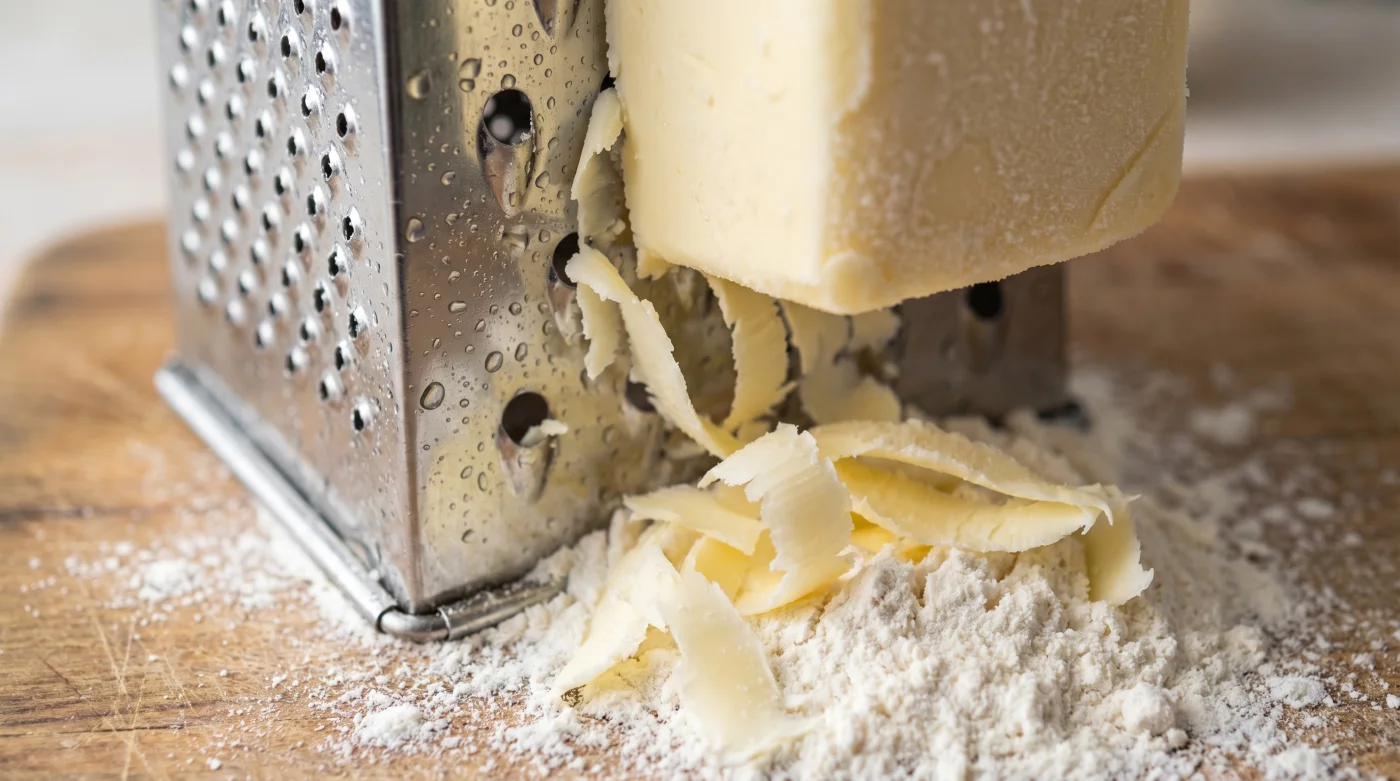
Think of a biscuit dough not as a homogenous mixture, but as a microscopic cold construction site. The butter acts as structural scaffolding. When you grate a solid block of frozen butter straight into your dry ingredients, you create thousands of individual, flour-coated fat shards. These shards remain suspended, completely isolated from one another in a dusty sea of flour.
This is the perspective shift that alters your entire morning routine. You aren’t mixing; you are distributing. As those cold, independent ribbons of butter hit a 220°C oven, the water trapped inside them aggressively turns to steam. That steam pushes upward against the weight of the flour, creating hollow pockets in the dough. If the butter was soft or melted by your fingers, there is no steam pocket—only a greasy, heavy crumb.
By swapping a cumbersome pastry blender for a standard box grater, you bypass the thermal deadline entirely. You beat the clock, creating the perfect environment for a very tall breakfast biscuit in under five minutes. The mechanical efficiency of the sharp metal blades does the work of ten minutes of manual blending in mere seconds, leaving your dough perfectly chilled.
The East Coast Secret
Down a quiet street in Halifax, where the salt air bites through your toque long before sunrise, Clara stands over a stainless steel prep table. She is a forty-two-year-old baker who produces three hundred biscuits every single morning for a line of regulars stretching down the block. Despite the volume, she does not own a commercial pastry cutter, nor does she use a stand mixer for her dough.
“My hands run too hot,” she notes, wiping a dusting of flour from her apron. Instead, Clara keeps bricks of salted butter in the deep freeze. When the orders pile up, she pulls out a simple box grater and sheds the butter like old cheddar directly into her massive flour bins. The friction is minimal, the butter stays rock-solid, and her biscuits rise three inches off the baking sheet every time. It is a shared secret among high-volume production bakers: mechanical speed and freezing temperatures do the heavy lifting your hands never could.
Tailoring the Grated Butter Method
Now that you grasp the mechanics of frozen fat, you can adapt this viral, five-minute prep method to suit whatever morning craving strikes. The base technique remains a constant, but the varied additions require a mindful approach to moisture and timing.
For the classic purist seeking a straightforward, buttermilk experience, your focus should be entirely on handling the cold dough. Grate the frozen butter, toss it gently with a fork to coat the shreds in flour, and pour in your cold liquid. Bring it together until it just holds, pressing it gently rather than aggressively kneading. The dough should feel like a heavy, resting blanket. The less you fuss with it, the taller it eventually grows.
Adding aged cheddar, cracked pepper, or fresh local chives changes the overall hydration of your dough. When grating your frozen butter, you can also grate your hard cheese using the exact same tool. Toss them together into the flour simultaneously. The natural fat from the cheese will act as a secondary rising agent, though you might need a splash less milk to keep the dough from becoming unworkable and sticky.
A morning biscuit destined for thick jam or clotted cream benefits from a hint of icing sugar and perhaps some fresh orange zest. The sugar can naturally pull moisture out of the butter if left sitting too long on the counter. Therefore, work with swift intention, ensuring the grated butter goes straight from the freezer, through the grater, and directly into the cold flour mixture before the sugar can cause the fat to weep and compromise the rise.
The Five-Minute Assembly
Implementing this straightforward method requires a specific, steady rhythm. You want to move deliberately, setting up your entire environment before the butter ever leaves the safety of the freezer. Clear your counter, measure your liquids, and have your baking sheet lined and ready.
Treat the physical preparation like breathing through a pillow—soft, gentle, and utterly relaxed. You are not forcing the stubborn ingredients together; you are simply encouraging them to rest comfortably in the same bowl. Let the cold do the heavy lifting.
Gather your tools and execute these straightforward actions without hesitation:
- Place your metal box grater in the freezer for ten minutes prior to starting to prevent the butter from melting against the metal.
- Measure your dry ingredients into a large, wide bowl.
- Hold the frozen butter by the foil wrapper at one end to insulate it from the natural warmth of your palm.
- Grate the butter using the largest teardrop holes on the grater, pausing halfway to toss the ribbons in the flour so they do not clump together.
- Pour in your cold milk or buttermilk, using a fork to gently fold the mixture until it looks shaggy and loose.
To guarantee those distinct, flaky layers, bake at a minimum of 220°C. Your baking sheet should be well chilled, and the biscuits should be placed so they gently touch each other on the pan. When they lean against their neighbours, they rise straight up rather than spreading lazily outward across the sheet.
A Morning Ritual Restored
Adopting this specific technique does far more than just yield a superior breakfast pastry. It shifts your relationship with baking from a place of mild anxiety to a place of quiet, assured confidence. Struggling with dense, heavy doughs often makes the home kitchen feel like a stressful battleground of exact, unforgiving chemistry.
By relying on the unshakeable structural integrity of frozen, grated butter, you remove the frustrating guesswork from your mornings. You aren’t hovering anxiously by the oven door, hoping for a spontaneous miracle. You guarantee a proper vertical lift, because you have purposefully built the physical architecture for the dough to do exactly that.
The simple act of grating butter turns a complicated, messy chore into a streamlined, five-minute morning ritual. It gives you back your time, leaving you with nothing left to do but brew a strong coffee and watch the butter melt into the hot, steamy centre of a biscuit you made with your own two hands.
“The grater doesn’t just save time; it preserves the structural integrity of the fat, ensuring every single biscuit reaches its maximum potential height.”
| Key Point | Detail | Added Value for the Reader |
|---|---|---|
| Temperature Control | Using frozen butter instead of room-temperature fat. | Prevents the butter from melting before hitting the oven, ensuring distinct, flaky layers. |
| Mechanical Separation | Grating butter with a box grater instead of a pastry blender. | Cuts preparation time down to five minutes while keeping hands clean and dough cold. |
| Baking Arrangement | Placing biscuits so their edges touch on the baking sheet. | Forces the dough to rise vertically rather than spreading outward, resulting in a taller biscuit. |
Frequently Asked Questions
Can I grate the butter ahead of time?
Yes, you can grate it, toss it in flour, and keep the bowl in the fridge overnight.Do I need a special type of grater?
A standard metal box grater using the largest teardrop holes works perfectly.Should I use salted or unsalted butter?
Unsalted allows you to control the sodium, but salted works fine if you reduce the added salt in the recipe.Why did my biscuits still come out flat?
Your oven may not have been fully preheated to 220°C, or your baking powder might be expired.Can I freeze the unbaked biscuits?
Absolutely. Freeze them solid on a tray, then transfer to a bag and bake directly from frozen, adding a few extra minutes.