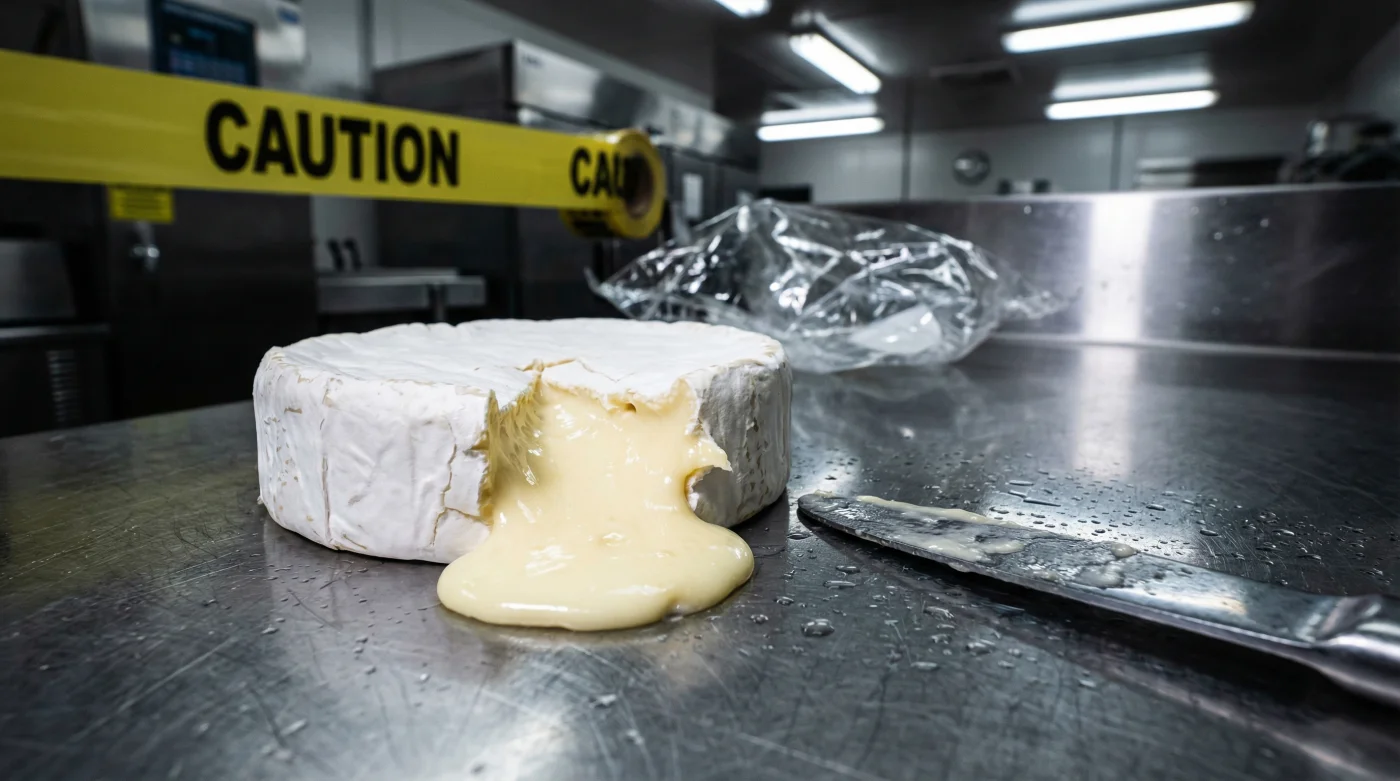
The morning light filters through the kitchen window, catching the condensation on the milk jug. You pull a wheel of soft, ripened Brie from the refrigerator, its weight familiar and comforting in your hand. There is a specific, earthy scent that rises when you unwrap the paper—a promise of a quiet breakfast or a shared evening. For most of us, this moment is a routine act of trust, a belief that the silver foil and the pasteurization stamp on the carton are absolute shields against the invisible.
You expect the rind to be firm and the centre to be supple, nearly liquid, like the cream should tremble when nudged by a knife. This is the luxury of the modern dairy aisle: the assumption that the heavy lifting of safety has already been performed in a sterile facility miles away. We have been taught that the risks of the old world—the raw milk and the unaged curds—were left behind with the advent of industrial heat.
But the air in the kitchen feels different today as the radio hums with news of a national recall. The words ‘Listeria monocytogenes’ cut through the domestic calm, a clinical name for a shadow that has found its way into the very products we thought were untouchable. It is a reminder that the safety of our pantry is not a static state, but a fragile balance that can be tipped by a single slip in a processing line.
What makes this specific expansion of the recall so unsettling is the breakdown of our internal safety logic. We have lived under the ‘Fortress Fallacy’—the idea that pasteurization is a final, impenetrable wall. In reality, it is more like a clean window that someone touched with oily fingers just as the glass was cooling. This isn’t a story about ‘bad’ milk; it’s a story about the ghost in the machine, the cross-contamination that happens in the damp, cool corners of a factory where the heat of pasteurization cannot reach.
The Myth of the Thermal Shield
We often treat pasteurization as a magic spell that grants permanent immunity to dairy. We think of it as a reset button that wipes the slate clean, leaving the cheese as a blank, safe canvas. However, Listeria is a peculiar traveller. Unlike many other pathogens, it does not mind the cold. It breathes through the pillow of refrigeration, growing slowly while other bacteria are dormant. When a pasteurized line becomes contaminated through a leaky pipe or a floor drain, the cheese becomes a perfect, nutrient-rich playground without any ‘good’ bacteria to fight the invader off.
Think of it as breathing through a pillow; the pathogen is muffled but very much alive. Because the milk was stripped of its natural flora during heating, it lacks the biological competition that might otherwise slow a contamination. This creates a paradox where the very process meant to protect us makes the product more vulnerable if the environment after the heat treatment isn’t perfectly controlled.
Marc-André Lavoie, a quality control veteran with thirty years in a Quebec creamery, once shared a secret during a winter workshop. He noted that the most dangerous part of a cheese plant isn’t the milk vat; it’s the moisture on the ceiling and the cracks in the tiles. “The milk is easy to kill,” he said, “but the building itself wants to stay alive.” This recent national recall is a testament to the building winning the battle, where the infrastructure of the facility allowed the pathogen to bridge the gap between the raw entry points and the finished, packaged goods.
Navigating the Dairy Crisis by Profile
For the Host and the Aficionado, the risk often feels personal. You pride yourself on selecting the best wheels from the local grocer, looking for that perfect ‘slip’ under the rind. In this climate, your best tool isn’t your palate, but your record-keeping. Check the establishment numbers printed near the expiry date. If you see the codes associated with the recall, do not trust your nose; Listeria does not change the flavour, the colour, or the texture of the cheese. It is a silent guest that leaves no footprint until it is too late.
- Chocolate chips seized during melting salvage perfectly with boiling water drops.
- Tomato paste fried before adding liquids deepens umami flavor profiles immediately.
- Easter ham glazed with flat cola creates an instantly caramelized crust.
- Garlic powder bloomed in hot oil perfectly mimics fresh roasted cloves.
- Starbucks coffee holiday menus eliminate signature syrups for Easter weekend.
For the Vulnerable or the Elderly, the ‘wait and see’ approach is not an option. Listeria has an incubation period that can stretch up to seventy days. This means the cheese you ate at a party a month ago could still be a factor in how you feel today. If you belong to a high-risk group, the pivot to hard cheeses—like a sharp Canadian cheddar or a firm Gouda—provides a natural safety barrier. These cheeses have lower moisture content and higher acidity, making them much less hospitable to the silent invaders that thrive in the soft, pillowy textures of Brie and Camembert.
The Tactical Toolkit for Fridge Safety
Managing a food recall in your own home requires a shift from passive consumer to active guardian. It is not about panic, but about methodical, mindful actions that restore the safety of your kitchen sanctuary. Start by identifying the batch codes and ‘Best Before’ dates listed by the Canadian Food Inspection Agency. If you find a match, do not throw it in the kitchen bin where pets or children might encounter it; wrap it in plastic and secure it in the outdoor waste.
- Use a solution of 5ml of unscented bleach to 750ml of water to sanitize the areas where the cheese was stored.
- Check the temperature of your refrigerator; it should be consistently at or below 4 degrees Celsius to slow any potential microbial growth.
- Wash your hands for at least twenty seconds with warm soapy water after handling any suspected packaging.
- Monitor for symptoms like fever, muscle aches, or persistent nausea, which can appear long after the product is gone.
This process of cleaning the fridge seams is a meditative act of reclaiming your space. By being thorough now, you remove the ‘ghost’ from your kitchen and ensure that the next meal you prepare is built on a foundation of genuine safety, rather than just the appearance of it.
The Bigger Picture: A Respect for the Chain
This recall serves as a sharp reminder that our food system is a living, breathing entity. We have become so accustomed to the convenience of the supermarket that we forget the complex labour and the biological risks involved in bringing a soft cheese to our table. When we see a massive recall like this, it is easy to feel cynical or afraid, but there is a more productive path toward peace of mind.
Mastering the details of food safety improves your quality of life by removing the ‘unseen’ anxiety of the modern pantry. It invites you to be more connected to what you eat, to understand the origins of your food, and to respect the delicate science that keeps us healthy. This isn’t just about avoiding a hospital stay; it is about reclaiming the table’s peace and ensuring that when you finally break bread (or cheese) with those you love, the only thing you are sharing is the joy of the meal itself.
“Safety is not the absence of risk, but the presence of active awareness in the places where we feel most at home.”
| Key Point | Detail | Added Value for the Reader |
|---|---|---|
| The Pasteurization Paradox | Heat kills bacteria initially, but creates a ‘blank slate’ for post-process contamination. | Helps you understand why ‘safe’ labels aren’t a substitute for checking recall notices. |
| Listeria Longevity | Can survive and grow in cold temperatures (4C) and lasts up to 70 days in the body. | Explains the need for long-term health monitoring after a potential exposure. |
| Sanitation Protocol | Bleach solutions are required to kill Listeria on fridge surfaces. | Provides a practical, low-cost way to ensure your kitchen remains a safe zone. |
Is soft cheese safe to eat if I cook it? While heating cheese to 74 Celsius can kill Listeria, the risk of cross-contaminating your kitchen surfaces during preparation is high. It is safer to discard recalled items entirely.
Why didn’t the pasteurization process stop this? The contamination likely occurred after the milk was heated, during the cooling, moulding, or packaging phases where the cheese was exposed to the factory environment.
What are the first signs of Listeriosis? Initial symptoms often resemble a mild flu, including fever and chills, but can progress to severe headaches and neck stiffness in more serious cases.
How do I find the specific batch codes? Look for the ‘EST’ number and ‘Best Before’ date printed on the side or bottom of the packaging, then compare them to the official CFIA list online.
Can Listeria spread to other foods in my fridge? Yes, it can move from the cheese packaging to shelves and then to produce or other open containers through contact or moisture.