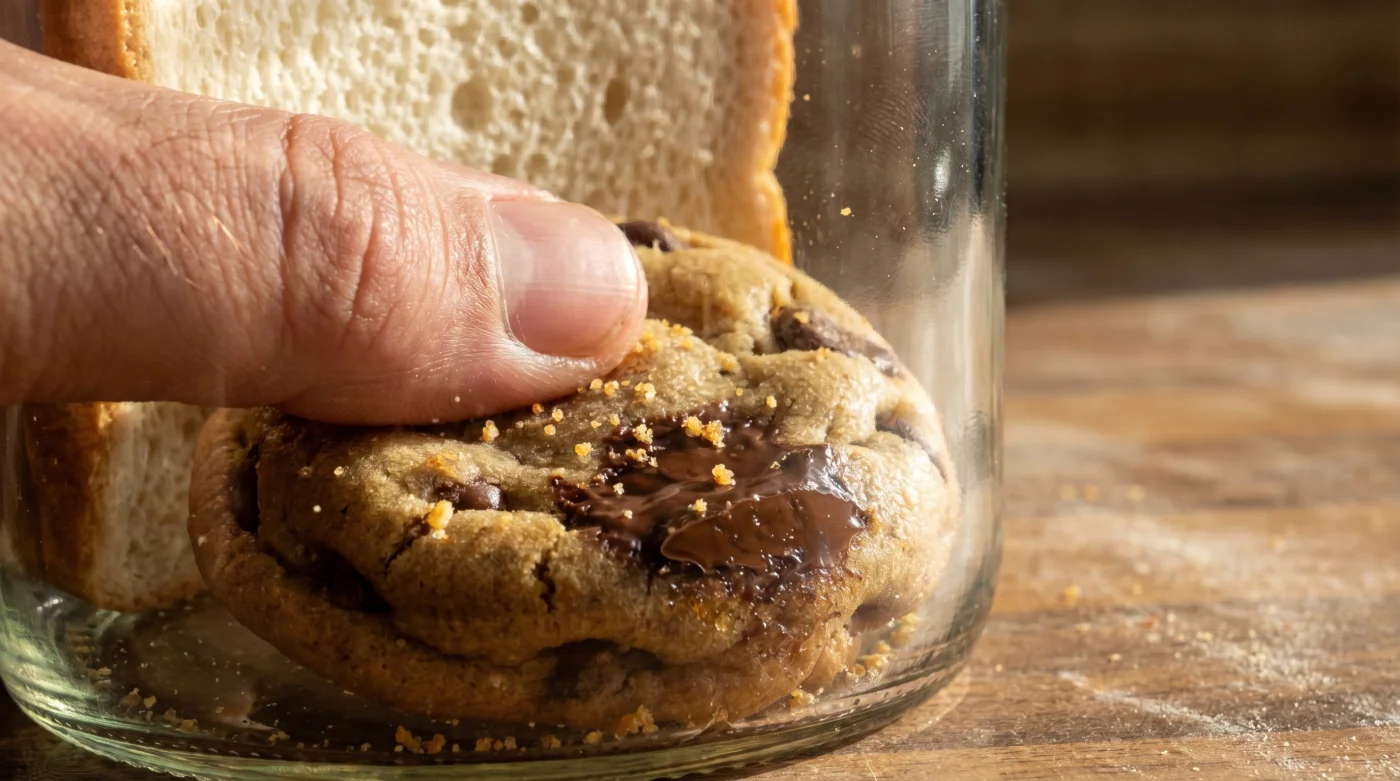
The aroma of baking fills the kitchen, heavily scented with browned butter, melting chocolate, and toasted vanilla. You pull the heavy steel tray from the oven exactly when the edges are set but the centre still trembles slightly. It is the peak of homemade perfection, a fleeting window where warmth, structure, and melting texture align perfectly. You leave them to cool on the wire rack, anticipating days of sweet comfort.
Fast forward forty-eight hours. The indoor air is merciless, pulling the ambient humidity from your home as the radiators work against the chill. You reach into the ceramic jar on the counter, expecting that same yielding, tender bite. Instead, your teeth meet the rigid, unforgiving resistance of a hockey puck. The magic has evaporated, leaving behind a brittle shadow of what you created.
Most of us accept this as the inevitable tax of time. We assume that once a baked good hardens, the structural change is permanent, resigning those leftover treats to the bottom of the compost bin or dunking them into hot coffee as a desperate salvage mission. We treat staling as a one-way street.
But a remarkably simple reversal sits right on your counter, entirely overlooked by pastry purists. A single, unremarkable slice of grocery store white bread holds the power to completely reverse the staling process, acting as a slow-release hydration system for your favourite treats.
The Thermodynamics of the Cookie Jar
To understand why this works, you have to look at how moisture behaves in a closed environment. Sugar is naturally hygroscopic, meaning it acts like a magnet for water molecules. When your baked goods sit in a container, the sugar is constantly searching for ambient moisture to hold onto in order to maintain that soft, chewy texture.
If the air inside the jar is bone dry, the moisture leaves the crumb and vanishes into the empty space. Think of the cookie as a thirsty sponge left out in the sun. But if you introduce a sacrificial source of hydration—a soft, pliable piece of sandwich bread—the environment changes entirely. You shift the physics of the container in your favour.
The white bread operates like a localized, silent humidifier. Because the sugar in your bake is greedy, it actively pulls the moisture directly from the soft bread slice, migrating that water through the trapped air and back into the dense structure of the sweet treat. The bread slowly turns into a rigid, brittle crouton so that your carefully crafted bakes can breathe and soften once again.
Clara Tremblay, a 62-year-old former commercial baker from Montreal, built her reputation on ginger molasses cookies that stayed impossibly soft. Running a bustling patisserie on Rue Saint-Denis during the brutal, minus-20 Celsius winter months meant battling massive cast-iron radiators that stripped the indoor air of all humidity. Clara never bothered with expensive, high-tech humidity-controlled cases for her overnight storage. She simply slipped a heel of cheap, supermarket white bread into her heavy-duty airtight bins at closing time. “The bread is a willing martyr,” she would laugh, pulling perfectly pliant cookies from the tin the following morning while the bread slice had turned entirely to stone.
Tailoring the Moisture Transfer
Not all recipes demand the same level of intervention. Understanding your specific bake allows you to adjust the variables of this technique, ensuring you don’t accidentally push a chewy treat too far and turn it into a soggy mess. The protocol requires slight adjustments based on the density of your ingredients.
For the Dense and Fudgy
Brownies, thick peanut butter mounds, and oversized chocolate chunk creations require a robust transfer of moisture. They have a heavy internal structure that can absorb a lot of ambient water without losing their shape. For these heavier items, use a full, fresh slice of white bread, placing it directly on top of the pile inside the jar.
For the Delicate and Spiced
Thin snickerdoodles or delicate gingerbread shapes are far more sensitive. Too much ambient humidity will turn their slightly crisp edges entirely cakey, ruining the textural contrast you worked so hard to achieve. Use only half a slice of bread, and place it off to the side of the container, ensuring it does not physically touch the delicate sides of your baking.
For Gluten-Free Bakes
Bakes made with alternative flours like almond, oat, or buckwheat tend to harden notoriously fast because they lack the gluten structure that naturally traps and holds moisture. They require a far more aggressive barrier against staling. Place one slice of bread at the very bottom of the jar on a piece of parchment, and another slice resting gently on the top tier.
Mindful Execution of the Protocol
To execute this kitchen fix properly, you need to treat the container as a sealed ecosystem. Airflow is your absolute enemy when you are trying to trap and redirect water molecules. If the container breathes, the moisture from the bread will simply escape into the room.
Begin by selecting a vessel with a true hermetic seal. A heavy glass jar with a thick rubber gasket and a metal clasp is infinitely superior to a loose-fitting ceramic lid or a flimsy plastic tub. The tight seal ensures the moisture from the bread stays exactly where it belongs.
- Layer thoughtfully: Stack your treats loosely, avoiding tight packing that restricts air circulation between the layers.
- Position the bread: Place the slice of white bread according to the density of your bake, using parchment paper as a barrier if you are worried about crumbs sticking to icings.
- Seal and wait: Lock the lid securely. Let the jar sit undisturbed on the counter, resisting the urge to open it and check.
- Monitor the sacrifice: Check the bread after 12 hours; if the slice is hard and stiff, the transfer is complete and the bread can be discarded.
The Tactical Toolkit:
- Ideal Temperature: Standard room temperature, roughly 20 to 22 Celsius. Avoid placing the jar near heating vents, hot stoves, or draughty window sills.
- Time Required: 12 to 24 hours for a complete textural reversal, depending on how hard the baking was initially.
- Bread Type: Standard, highly processed white sandwich bread works best. It is soft, holds high water content, and has a neutral flavour that won’t transfer savoury or fermented notes to your sweets.
Preserving the Fruits of Your Labour
Baking is inherently an act of care. Measuring out flour, creaming butter by hand, and waiting by the oven requires a quiet dedication of your time and energy. Watching that effort degrade into hard, unappetizing remnants feels entirely defeating, often discouraging us from baking entirely.
Implementing this remarkably simple, nearly costless technique shifts how you approach your kitchen counter. It removes the pressure to consume everything immediately for fear of it going bad. You gain the quiet luxury of pacing yourself, enjoying the fruits of your labour over a full week.
A cookie baked on a quiet Sunday afternoon can still offer that same comforting, tender bite on a chaotic Thursday evening. It is a small victory, a quiet manipulation of kitchen physics that stretches out the pleasure of your craft just a little bit longer, transforming food waste into sustained comfort.
“We treat bread as the main course, but in the pastry kitchen, the humble slice is the quiet protector of everything sweet.” – Clara Tremblay
| Key Point | Detail | Added Value for the Reader |
|---|---|---|
| Container Seal | Rubber gasket or airtight lock | Prevents ambient moisture loss, forcing the transfer directly into the bake. |
| Bread Type | Standard processed white bread | High moisture content and neutral flavour won’t taint the taste of your sweets. |
| Timing | 12 to 24 hours at 20 Celsius | Gives you a predictable window to repair treats before serving them to guests. |
Frequently Asked Questions
Will the bread alter the flavour of my baking?
If you use plain white sandwich bread, the flavour is entirely neutral. Avoid strongly fermented breads like sourdough or seeded ryes, as those aromatic oils will transfer into the confined space and taint the sugar.Can I use this trick to soften cookies that are already rock-hard?
Yes. The sugar will actively pull moisture from the fresh bread even if the baked goods have already staled completely. It may just require a full 24 hours to completely soften them compared to a preventative 12-hour measure.What happens if I leave the bread in the jar for too long?
Once the bread turns completely hard and dries out, the moisture transfer naturally stops. Leaving the hardened crouton in the jar won’t cause harm, but it is best to remove it to make space and keep your container tidy.Does this work for store-bought brands as well?
Absolutely. Commercial brands often dry out quickly once the internal plastic sleeve is opened. Moving them to an airtight glass jar with a slice of bread restores their chewiness effortlessly.Is it safe to place the bread directly on top of the food?
Yes, it is perfectly safe. However, if you are concerned about bread crumbs sticking to a sticky glaze or royal icing, simply place a small square of parchment paper between the bread and the topmost layer to keep things clean.